Finding reliable window washing near me can feel overwhelming when you’re managing commercial properties in Vancouver. With business parks spanning Burnaby, Richmond, and downtown hubs competing for quality tenants, clean windows aren’t just about aesthetics—they directly impact tenant satisfaction and operational costs.
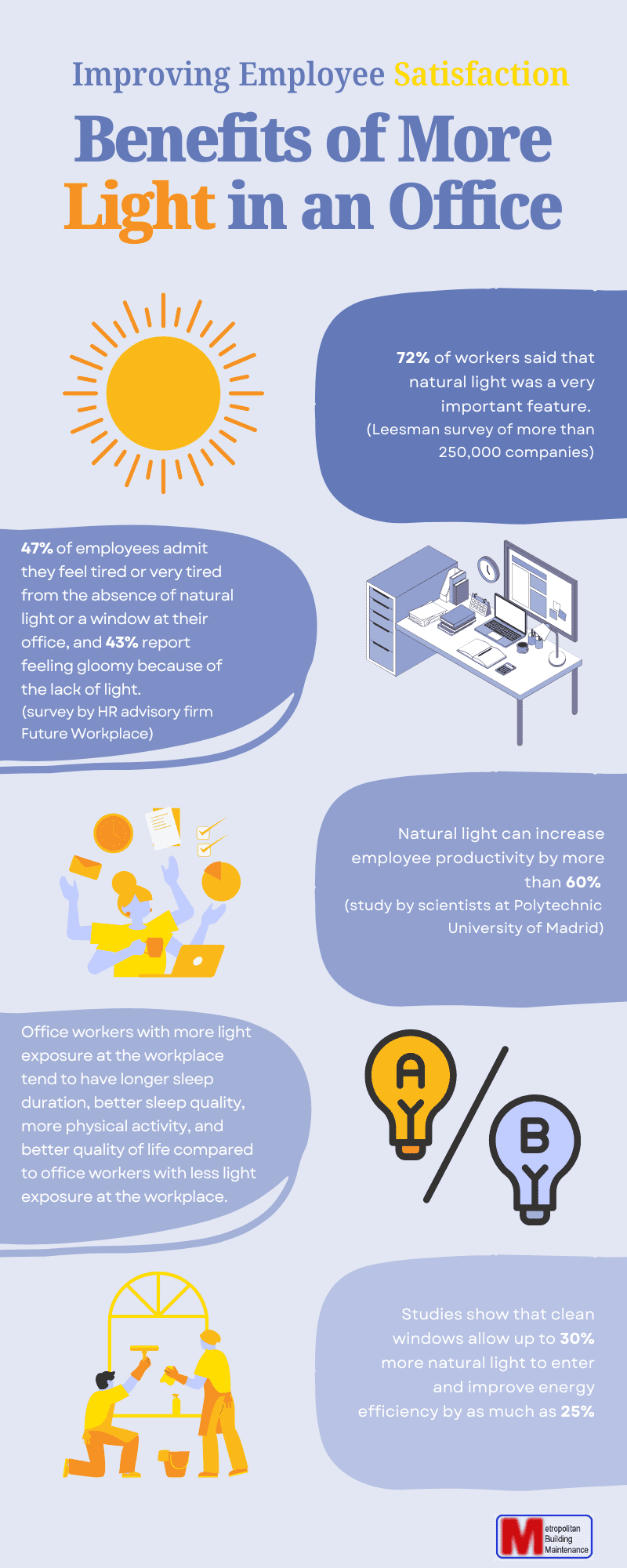
Professional window washing services for commercial properties involve specialized cleaning of exterior and interior glass surfaces using techniques that deliver streak-free results. For offices and business parks, these services go beyond basic cleaning to improve natural light penetration, which studies show can reduce reliance on artificial lighting by 20-30% and lower utility bills by 5-15%.
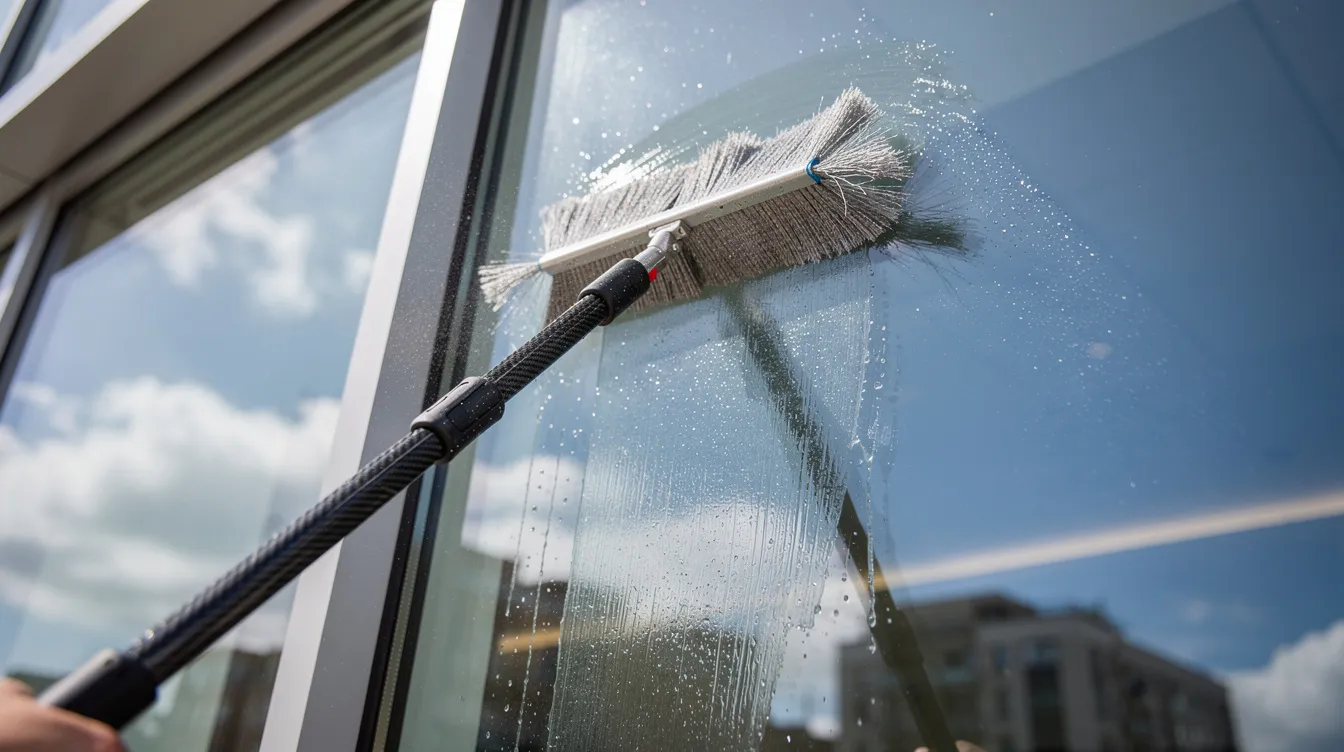
What separates top-tier window cleaning services from average providers? Modern equipment like Tucker pole systems, eco-friendly cleaning solutions, and comprehensive coverage for buildings up to three stories.
This guide breaks down Vancouver’s best options for property managers seeking exceptional results without harsh chemicals or wasteful practices.
Top 5 Window Washing Services Near Vancouver for Commercial Properties
1. Metropolitan Building Maintenance
With over 40 years of experience, Metropolitan Building Maintenance is a Vancouver-based specialist in commercial window washing for buildings up to three stories. They’ve built their reputation by explicitly avoiding soap-and-water approaches that leave streaks and dump unnecessary chemicals into water systems.
Why It Stands Out: Metropolitan uses green cleaning methods with Tucker pole water-fed technology for exterior windows, and squeegee techniques with eco-friendly window cleaners for interior glass.
Their approach keeps windows crystal clear without the chemical residue that attracts dirt faster.
Best For: Property managers seeking eco-friendly solutions for commercial properties up to 3 stories who prioritize indoor air quality and sustainability.
Key Strengths:
Streak-free results without harsh chemicals
Comprehensive glass services, including partition glass, block glass, awnings, interior windows, exterior windows, Aluca Bond, aluminum overhangs, and glass overhangs
Flexible scheduling options all year round
Servicing the whole Lower Mainland
40+ years of experience
Quality Guarantee
Possible Limitations:
Specializes in commercial properties only—not residential house washing services
Height limitation of 3 stories
Metropolitan’s green approach means working with professionals who protect both your building and the environment. Their team understands that chemicals in the air create harsh odours for clients, while staff working in environments with poor air quality experience more absenteeism and less focus.
2. AiRWash Powered by Draganfly
AiRWash, powered by Draganfly, brings innovative drone-powered exterior cleaning solutions to commercial real estate and industrial properties in Vancouver. Leveraging decades of drone engineering expertise, AiRWash offers a safer, faster, and more cost-effective alternative to traditional window and facade cleaning methods.
Why It Stands Out: AiRWash uses purpose-built drones to clean vertical surfaces up to 12+ stories without the need for lifts, scaffolds, or multi-day crews, significantly reducing maintenance risks and operational disruptions.
Best For: Facility managers and property owners seeking cutting-edge commercial exterior cleaning that minimizes safety hazards and lowers costs.
Key Strengths:
Drone-powered cleaning enables same-day or next-day job completion
Up to 50% lower total cost compared to traditional methods
Zero workers at height, eliminating fall risk
Minimal disruption with no heavy equipment or rerouting required
Full vertical coverage for buildings up to 12+ stories
Compact operational footprint with active safety zones
Possible Limitations:
Primarily focused on commercial and industrial properties
May not be suitable for smaller residential buildings or low-rise properties
3. Clearview Commercial Cleaners
Clearview holds a strong market position through 15 years of serving downtown Vancouver offices, specializing in advanced deionized pure water cleaning that extends glass lifespan.
Why It Stands Out: Their pure water delivery systems can extend glass lifespan by 20-30% by preventing etching from mineral deposits and debris.
Best For: Eco-prioritizing facility managers in Yaletown or Coal Harbour business parks who want long-term glass protection.
Key Strengths:
Comprehensive scope covering glass railings, canopies, and overhangs
100% recyclable packaging for supplies
Data-driven reporting on optimal clean frequency (biannual cleans can cut buildup by 40%)
Possible Limitations:
Minimum project sizes may exclude smaller properties
Premium pricing for custom green formulas
4. Elite Window Cleaning
Expert Window Cleaning in North Vancouver, Elite Window Cleaning serves West Vancouver and the surrounding areas with advanced technology and extensive experience.
Why It Stands Out: Elite Window Cleaning uses water-fed composite poles and a three-step water purification system, allowing technicians to clean exterior windows safely from the ground, protecting flowerbeds, landscaping, and siding while delivering crystal-clear, streak-free results.
Best For: Homeowners and property managers in West Vancouver and North Shore seeking expert, safe, and environmentally friendly window cleaning with exceptional customer satisfaction.
Key Strengths:
Water-fed composite poles reach high windows safely without ladders
Advanced three-step water purification removes minerals and sediment for spotless windows
Deep screen cleaning and window track cleaning services
Soft washing for gentle exterior surface cleaning using biodegradable cleansers
Easy online booking with instant quotes and 100% satisfaction guarantee
Possible Limitations:
Primarily focused on residential and smaller commercial properties rather than large commercial complexes
5. Vancouver Window Cleaners
Vancouver Area Window Pros differentiates through tech integration, offering app-based scheduling and before/after photo proofs for property audits.
Why It Stands Out: Digital documentation and transparency tools help property managers track regular maintenance and demonstrate value to building owners.
Best For: Budget-conscious managers in East Vancouver industrial parks wanting modern scheduling and verification.
Key Strengths:**
Three-story tucker pole mastery for safely cleaning exterior work
Zero-phosphate window cleaners matching green standards
Verified 15% energy savings documented by client utilities
Flexible contracts without long-term commitments
Possible Limitations:
Newer entrant (8 years) with less historical performance data
20% premium for awning cleaning services
Quick Comparison of the Best Window Washing Services
For companies with ESG commitments, green options support net-zero pledges by:
Cutting Scope 3 emissions through water savings (Tucker poles use 0.5L per pane versus 5L traditional)
Eliminating chemical runoff that requires expensive disposal
Improving indoor air quality, which Harvard studies link to 10-15% productivity gains
If your organization values environmental responsibility, prioritize experienced window cleaners who’ve invested in green certification and low-impact equipment.
Choose Based on Building Type and Height
Building characteristics directly influence which provider delivers exceptional results:
For 1-3 story commercial buildings: Tucker pole systems reach 40-50 feet safely from the ground, eliminating scaffolding costs ($5,000+ per job) and reducing safety risks. Vancouver’s seismic codes favour ground-based methods for glass facades.
For interior-heavy offices: Look for providers skilled in indoor glass with squeegees and green cleaners—partition glass can represent 40% of total glass area in modern offices.
For buildings with complex architecture: Ensure your provider handles aluminum overhangs, glass awnings, and Aluca Bond without extra contractors.
Choose Based on Service Scope
The best value comes from providers offering comprehensive glass services beyond basic exterior windows:
Partition glass cleaning maintains interior aesthetics and light flow
Awning cleaning prevents organic growth that blocks 20% of light when dirty
Glass overhangs prone to moss in Vancouver’s humid climate need regular cleaning
Window tracks and screens require meticulous attention for complete results
Bundled services typically save 15-20% versus hiring separate contractors, plus reduce scheduling complexity for your team.
Which Window Washing Service Is Best for You?
Choose Metropolitan Building Maintenance if:
You prioritize green cleaning and want to avoid dumping chemicals into water systems
Your building requires comprehensive commercial glass services, including partition glass, awnings, and overhangs
Indoor air quality matters for tenant health and productivity
You want to protect your windows while improving curb appeal and energy efficiency
Choose AiRWash Powered by Draganfly if:
You want innovative, drone-powered cleaning for high-rise commercial and industrial buildings
Safety and operational efficiency are top priorities for your property maintenance
You seek same-day or next-day cleaning with minimal disruption
Choose Clearview if:
You want cutting-edge pure water technology that extends glass lifespan
Data-driven maintenance reporting helps justify your exterior maintenance budget
Choose Elite Window Cleaning if:
You want expert, safe, and convenient window cleaning for residential or smaller commercial properties in the Vancouver North Shore area
You value advanced technology that protects your home’s exterior and landscaping
You prefer easy online booking and a satisfaction guarantee
Choose Vancouver Area Window Pros if:
Digital documentation and app-based scheduling streamline your workflow
You need flexible contracts without long-term commitments
For any provider, always verify $2 million minimum insurance, request references from similar commercial properties, and ask for a trial clean before committing to regular maintenance contracts.
Final Thoughts
Vancouver’s commercial window washing market continues evolving toward green adoption, with approximately 60% of providers now offering eco-certified options. Post-pandemic emphasis on natural light and indoor air quality makes professional window cleaning more valuable than ever—clean buildings lease 12% faster according to CBRE data, and well-maintained glass directly impacts tenant retention.
Professional window washing delivers measurable returns: improved energy efficiency, better tenant satisfaction, and enhanced property values. For buildings up to three stories, Tucker pole technology eliminates costly repairs from ladder accidents while delivering streak-free results.
Ready to let more natural light into your offices? Contact Metropolitan Building Maintenance for a free estimate and discover why green window washing means better results for your property, your tenants, and Vancouver’s environment. Their team is ready to complete a thorough assessment and show you the difference professional, eco-friendly service makes.
Metropolitan has been serving the Lower Mainland for over 40 years and has kept our clients for a minimum of 15 years.
If you searched for “steam cleaning carpet cleaner,” you’re likely looking to buy a home unit.
But if you manage commercial properties in Metro Vancouver, what works for a 1,200 ft² home won’t cut it for a 20,000 ft² office floor in Burnaby.
Key Takeaways
Most machines marketed as “steam carpet cleaners” at Canadian retailers are actually hot-water extractors, not true steam units—and this distinction directly impacts cleaning performance in commercial settings.
Consumer-grade carpet cleaners lack the tank capacity, pump pressure, and vacuum power needed for strata common areas, office corridors, or healthcare facilities across the Lower Mainland.
For commercial properties from Surrey to North Vancouver, truckmount or high-capacity portable extractors deliver 85-95% soil removal versus 60-75% with steam-only methods, plus faster drying times critical in BC’s humid climate.
Small home steamers have a legitimate role as spot-cleaning tools for emergency spills, but scheduled professional carpet maintenance remains essential for deep cleaning.
Regional factors—including 1,200+ mm annual rainfall, high humidity along the Fraser River corridor, and local IAQ expectations—make proper equipment selection especially important here.
What People Mean By “Steam Cleaning Carpet Cleaner” (And Why It Matters For Facilities)
When building owners search for a carpet steam cleaner, they’re usually picturing machines from brands like Bissell, Hoover, or Rug Doctor sold at Home Depot, Canadian Tire, or London Drugs. Here’s the problem: these carpet cleaners aren’t true steam units at all.
The terminology confusion runs deep in online listings and retail specs. Understanding what you’re actually buying—or hiring—matters for facilities managing thousands of square feet.
Three terms you need to distinguish:
True steam cleaner: Heats water to 212°F+ to produce low-moisture vapour, often 250-300°F at the boiler. Excellent for sanitizing surfaces, but lacks rinsing capability for deep soil removal.
Consumer carpet cleaner: Home upright machines operating on 120V household power, typically reaching 150-180°F water temperature. Despite marketing phrases like “powerful steam clean,” these are hot-water extractors with limited capacity.
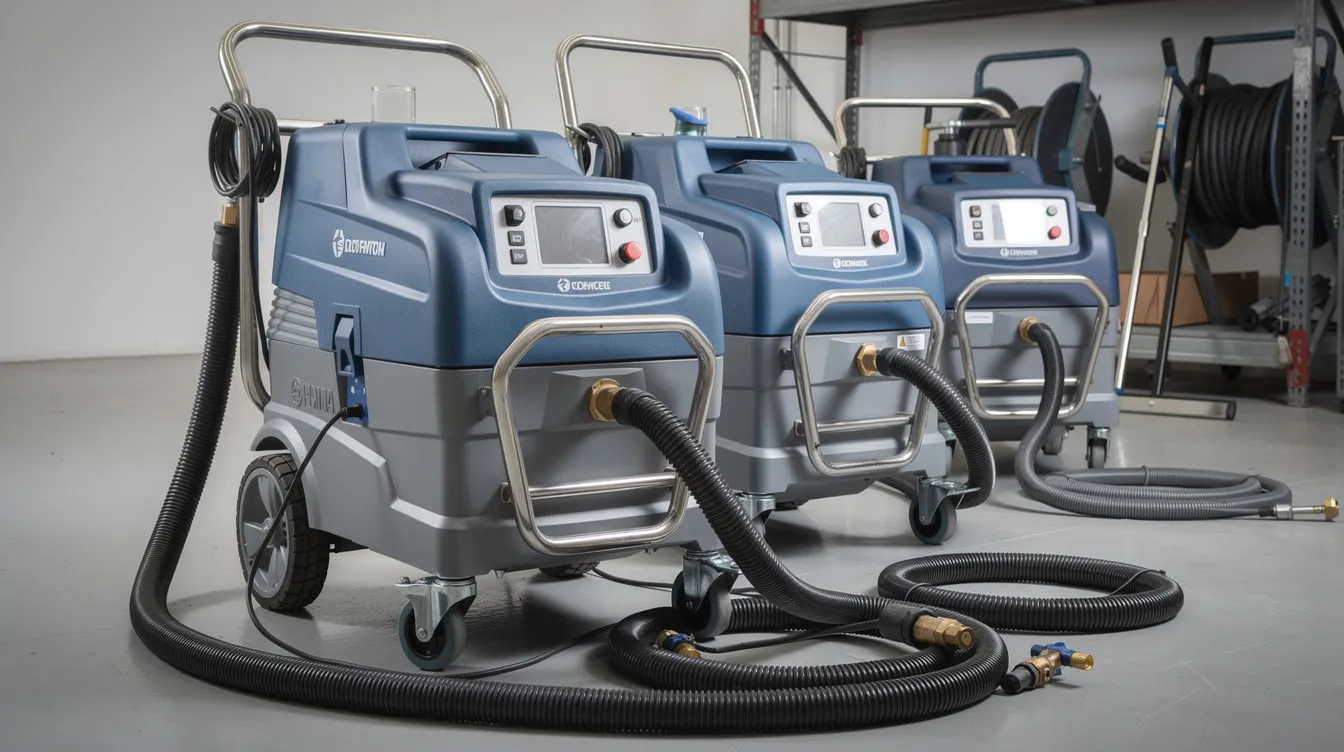
Commercial carpet extractor: Professional truckmount or portable systems delivering 200°F+ cleaning solution at 300-1,200 PSI, with powerful suction for moisture recovery.
You should know that spec sheets reveal more than marketing claims. Look for water lift (measured in inches), pump PSI, and heater wattage rather than vague phrases about steam power.
For commercial carpets in multi-tenant offices, residential towers, and healthcare facilities around Vancouver, this confusion creates real problems:
False expectations about germ kill and stain removal
Underestimated drying times in high-traffic lobbies
Overestimated coverage capacity for large square footage
Potential warranty violations with major carpet brands installed post-2015
Home Steam Cleaners vs Commercial-Grade Extractors: Capability Gap You Should Not Ignore
If you’re considering purchasing a home machine for your building or strata common areas, the capability gap between consumer and commercial equipment deserves careful consideration.
Tank capacity differences: Consumer portable cleaners hold 1-2 gallons of cleaning solution and recovery water. Commercial portables feature 10-20+ gallon tanks, while truckmounts offer virtually unlimited capacity via direct water supply.
Pump pressure matters: Home units typically deliver under 150 PSI—often as low as 50 PSI. Professional setups generate 300-500 PSI for portables and 1,000-1,200 PSI for truckmounts, driving cleaning solution deep into carpet fibres.
Vacuum performance: Consumer machines use single 2-stage vacuums, achieving around 80-100 inches water lift. Commercial extractors employ dual or triple vacuum systems at 150+ inches, extracting 30-50% more moisture than home units.
Practical implications for Lower Mainland facilities:
Consider a typical scenario: a 20,000 ft² office floor in Burnaby. A 2-gallon home unit designed for 800-1,200 ft² homes might require an entire day of constant refilling, waiting, and moving between sections. A professional truckmount completes the same area in 4-6 hours with superior results.
Weak extraction in consumer units leaves more moisture in dense commercial broadloom. In Metro Vancouver’s 75%+ average humidity, this prolongs dry times from 4-6 hours to 12-24 hours—creating slip-and-fall risks and potential odours.
The real cost calculation: A $600 home steamer plus 8-10 hours of janitorial overtime at Vancouver’s $30-40/hour rates equals $400-600 per use. Professional service runs $0.10-0.20/ft², often proving more affordable in the long run.
Realistic roles for consumer machines in commercial settings:
Emergency spot clean on a 1-2 m² spill
Tenant DIY in-suite use
Quick touch-ups between scheduled professional visits
Not suitable for corridors, lobbies, meeting rooms, or amenity spaces
How True Steam & Hot-Water Extraction Actually Clean Commercial Carpets
Understanding the mechanics helps facility managers make informed decisions about equipment and contractor selection.
Hot-water extraction process (often called “steam cleaning” on invoices):
Pre-vacuum with commercial uprights featuring rotating brushes to remove 70-80% of loose soil
Pre-spray alkaline or enzyme cleaner with a 10-15 minute dwell time for breaking down proteins and oils
Agitation via counter-rotating brushes (CRB) or rotary machines at 200-300 RPM
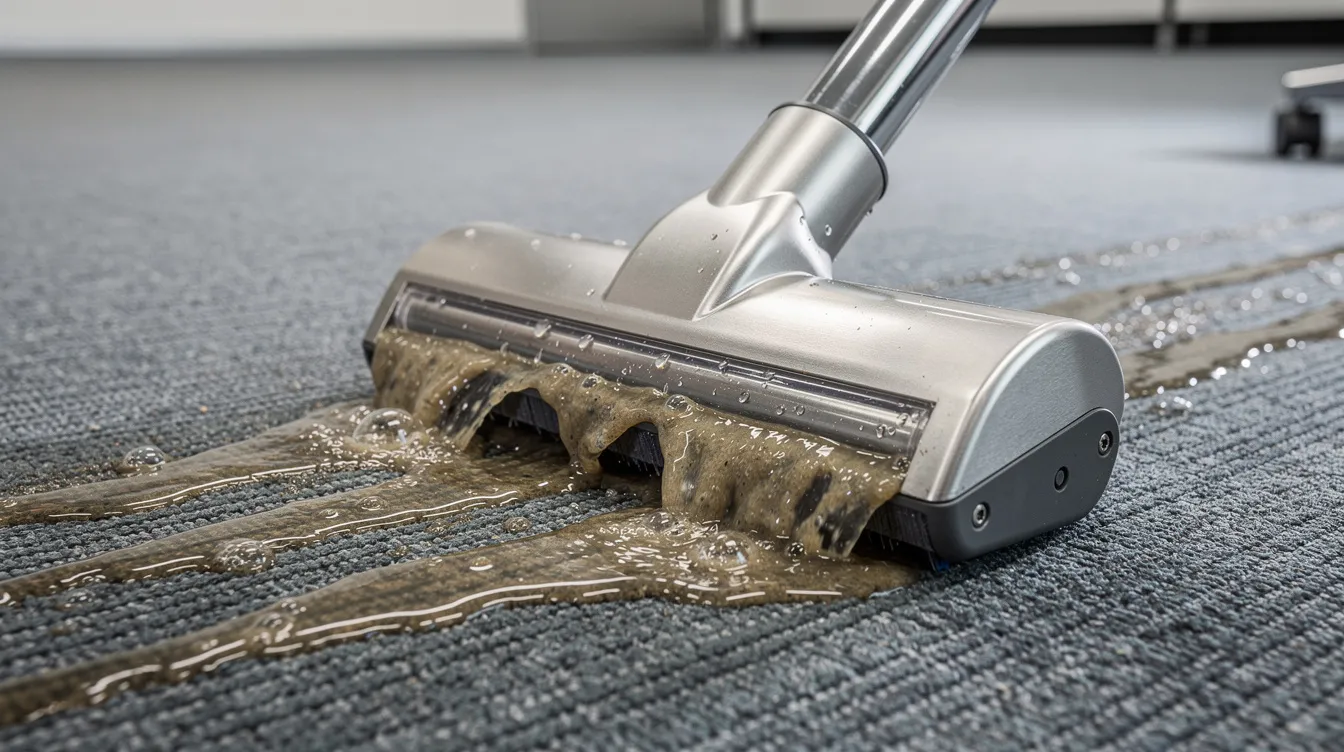
Hot-water rinse at 200°F+ with extraction via truckmount or high-performance portable
Post-grooming for uniform appearance
Forced air drying with air movers (2,000-5,000 CFM) for 4-6 hours of drying
What genuine steam units do well:
Sanitizing small areas via 212-300°F contact (kills 99% of surface germs)
Cleaning tile, grout, and edges
Dealing with greasy elevator thresholds and entrance transition strips
True steam lacks the soil suspension and extraction capability needed for full-floor carpet cleaning. Without detergent rinsing, it can actually set stains rather than remove them.
You should know that many carpet warranties from major manufacturers installed in BC offices and condos since 2015 explicitly reference IICRC S100 methods. These standards assume professional-grade equipment, not household machines. Shaw Industries, the world’s largest carpet manufacturer, specifically recommends truckmount hot-water extraction for warranty compliance.
Why Facility Managers In The Lower Mainland Rely On Professional Carpet Cleaning Programs
For facility managers, strata councils, and asset managers overseeing properties from Surrey to North Vancouver, professional programs offer advantages that DIY approaches simply cannot match.
Business reasons to choose professional service:
Factor
DIY Approach
Professional Program
Budget predictability
Reactive purchases, surprise repairs
Scheduled annual costs
Tenant complaints
Inconsistent results
Documented, reliable outcomes
Capital protection
Risk of damage
Warranty compliance
Staff efficiency
Diverted from core tasks
Focused on higher-value work
Regional factors demanding professional attention:
Metro Vancouver’s climate creates unique challenges. With 1,200+ mm annual rainfall—peaking October through March—entries and parkades see constant tracked-in moisture, dirt, and de-icing agents like calcium magnesium acetate. These substances corrode carpet fibres if not properly extracted.
Higher humidity levels in older buildings along the Fraser corridor make fast drying essential. Professional cleaners servicing the Lower Mainland typically:
Use truckmounts where vehicle access allows
Bring high-lift portables to upper floors
Employ air movers and dehumidifiers (50-70 pints/day) to ensure 4-6 hour drying
Meet BC’s ASHRAE 62.1 IAQ standards for indoor air quality
Recommended cleaning frequencies by usage class:
Quarterly: Main lobbies, elevator banks (20,000+ daily steps)
When A Small Steam Cleaning Carpet Cleaner Still Makes Sense (And When It Really Doesn’t)
If you already own a consumer machine, it can still support your maintenance program—within appropriate limits.
Appropriate uses in commercial settings:
Same-day response to coffee spills in meeting rooms
Quick touch-ups in amenity lounges between scheduled cleans
Addressing everyday messes without deploying full cleaning crews
Supporting tenants with pet messes or pet hair issues in residential buildings
Treating small upholstery spots on furniture
Common misuses to avoid:
Assigning janitorial staff to deep-clean entire tower corridors with a small upright (a 10,000 ft² project could take 2-3 days)
Using home steam cleaners on wool or specialty carpets in higher-end downtown Vancouver lobbies without manufacturer guidance
Attempting post-flood recovery with residential equipment lacking adequate extraction
Relying on consumer units for areas requiring warranty-compliant cleaning
Internal policies worth implementing:
Set maximum area limits (50-100 m² per incident) for in-house machines
Require staff to log where and when units are used for tracking recurring issues
Train staff on pre-testing chemicals on hidden carpet sections
Document that rental machines like Rug Doctor models are supplemental, not primary
For any moisture incident that soaks underlay, stairwells, or multiple suites, managers in Richmond, Langley, or New Westminster should treat it as a water-damage event requiring IICRC-certified restoration firms.
How To Choose A Carpet Steam Cleaner If You Still Want To Buy One
Some readers will proceed with purchasing a machine regardless. The goal here is to help you choose wisely and integrate it effectively into a broader maintenance plan.
Key specs to scrutinize:
Specification
Consumer Grade
Light Commercial
Tank capacity
1-2 gallons
5+ gallons
Water lift
80-100 inches
120+ inches
Pump PSI
50-150
200+
Heater type
Tap-hot dependent
Inline heater to 200°F
Build quality considerations:
Robust wheels suitable for moving across long corridors
Separate, clearly labelled clean/dirty tanks to minimize operator error
Accessible recovery tank lids for easier sanitation
Durable hose connections for repeated use
Attachments for versatility on different surfaces
A 100-unit strata in Port Coquitlam wanting independence between professional visits might consider light-commercial portable units like the Mytee Lite 8070, which offers 120 PSI and 100” water lift—modest but meaningful improvements over consumer models.
Even a well-chosen machine should slot into a documented carpet care strategy: daily vacuuming with CRI-approved machines, interim encapsulation cleaning (which is easy on water usage), and scheduled hot-water extraction by professional cleaners.
Scenario comparison: A 150-suite strata in Surrey weighing a $600 home steamer plus caretaker time against two professional deep cleans annually finds that the professional option delivers 95% soil removal, 50% fewer complaints, and warranty protection—while the DIY approach risks moisture damage in BC’s humid climate.
Risk mitigation through professional service:
Correct chemical selection preserves stain-resistance treatments
Proper extraction prevents residue that accelerates resoiling
Documentation supports lease compliance and capital planning
For most Lower Mainland commercial environments, a modest annual professional budget plus a basic spotter machine for money-saving emergency responses yields better lifecycle ROI than trying to own the entire process with an underpowered home unit. The choice becomes affordable when viewed over the carpet’s full 10-15 year lifespan versus 5-7 years with DIY methods.
Frequently Asked Questions About Steam Cleaning Carpet Cleaners For Commercial Properties
Can I use a home steam carpet cleaner to maintain the common areas in my strata building?
A home unit can handle isolated spots in hallways or amenity rooms effectively, but it’s not suitable for full-corridor or lobby deep cleaning in most Metro Vancouver stratas. The capacity limitations—typically 1-2 gallon tanks—mean constant refilling, while weak extraction leaves moisture that dries slowly in BC’s humid conditions.
For regular maintenance of common-area carpets, strata councils should schedule professional hot-water extraction at least annually, supplemented by daily vacuuming and occasional in-house spot cleaning. This approach proves more effective and cost-efficient in the long run and can extend the life of your carpet.
How long should carpets take to dry after proper cleaning in a commercial space?
With professional hot-water extraction and adequate ventilation or air movers, most commercial carpets in the Vancouver area are dry to the touch within 4-6 hours. This timeline is ideal for minimizing disruption in high-traffic lobbies.
Consumer-grade machines with weaker vacuum often leave 20-30% more moisture, extending dry times to 8-12 hours or longer. In humid conditions, this creates slip-and-fall risks and potential microbial growth—neither of which building operators should find acceptable.
Does our rainy Lower Mainland climate change how often we should clean carpets?
Yes. Higher rainfall and tracked-in moisture mean high-traffic areas often require professional cleaning 2-4 times per year rather than the annual schedule sufficient in drier climates.
Entryways, elevator lobbies, and parkade access points need the most frequent attention. Upper-floor corridors and low-traffic meeting rooms can follow a less intensive schedule, but consistent maintenance remains essential.
What should I ask a carpet cleaning contractor before hiring them for my building?
Before committing, ask these key questions:
What equipment do you use (truckmount vs portable) and why for my specific building?
Do you follow IICRC S100 standards?
What drying times can I expect given our building’s ventilation?
What experience do you have with similar facilities in the Lower Mainland?
How do you handle spots that wick back or recurring traffic-lane soil?
Request a written maintenance plan and post-cleaning report to support internal audits, warranty compliance, and capital planning. A professional who can’t provide documentation isn’t the right deal for commercial properties.
Find a Trusted Provider
Metropolitan has been serving the Lower Mainland for over 40 years and has kept our clients for a minimum of 15 years. We use hot water extraction as our primary method in order to restore carpets and decrease the soil deposited at the deepest levels. We can also provide additional methods wherever they’re needed and pair these with our other cleaning services to provide you a consolidated cleaning program.
Tech offices and light industrial spaces (labs, assembly floors, data rooms) require specialized office cleaning janitorial services that go beyond standard commercial office cleaning protocols
Protecting sensitive equipment demands trained cleaners who understand ESD risks, proper disinfection methods, and safe use of floor maintenance machines near cables and hardware
Green commercial cleaning with low-VOC products and sustainable supplies has become a baseline expectation for socially responsible tech companies, not just a nice-to-have feature
Proactive commercial cleaning and janitorial services can significantly lower long-term commercial office cleaning cost by preventing damage to carpets, floors, and electronics
Smart scheduling and zoning strategies minimize disruption to 24/7 operations while maintaining the highest standards of workplace cleanliness
Why High-Tech Workspaces Need Specialized Office Cleaning Janitorial Services
Tech hubs from Vancouver to Toronto to Silicon Valley present cleaning challenges that standard services simply weren’t designed to handle.
Between open floor plans with hot-desking, server rooms humming around the clock, and electronics-heavy labs where a single static discharge can destroy thousands of dollars in prototypes, these environments demand a fundamentally different approach.
Standard commercial cleaning and janitorial services evolved for traditional offices—cubicles, carpet, and standard desks. Modern tech firms operate differently.
A single building might contain collaboration spaces, demo theatres, micro-warehouses for hardware inventory, R&D labs with clean room requirements, and podcast studios with delicate audio gear. Each zone has distinct cleaning needs, risk factors, and schedules that must be coordinated without causing Cleaning Business Disruption.
The most effective cleaning services for tech environments must consider workplace cleanliness alongside data security, equipment safety, and the flexible hours that tech teams require. This means coordinating commercial office cleaning services, carpet cleaning, floor services, parking lot upkeep, and window cleaning into a unified program that protects both hardware and productivity.
What follows are five best practices that separate adequate cleaning from the kind of commercial cleaning services that actually support a tech company’s operations, culture, and bottom line.
Best Practice 1: Protect Sensitive Tech Equipment While Cleaning
High-tech workspaces are filled with hardware that demands careful handling: server racks, industrial carpet cleaner robots, 3D printers, test benches, prototype stations, VR setups, and charging docks spread across every floor.
A single misstep—spraying cleaner directly onto a monitor, vacuuming too aggressively near network cables, or creating static discharge near sensitive components—can result in costly damage and downtime.
Experienced cleaners working in tech environments should follow clear protocols for janitor work around equipment. This includes never spraying cleaning fluid directly onto keyboards or monitors (always mist onto microfiber cloths first), avoiding strain on cables when moving furniture or equipment, and using HEPA-filtered vacuums near server room thresholds to prevent dust circulation into critical infrastructure.
Understanding how to disinfect an office chair in shared workstations matters more than ever in 2024-era tech offices. Gaming chairs, ergonomic setups, and hot-desk stations require attention to armrests, headrests, and seat surfaces using disinfectants compatible with leather, mesh, and plastic materials. UV-C or mild alcohol-based disinfectants work well where material compatibility permits.
The partner you choose should train their team on ESD (electrostatic discharge) risks. Even imperceptible static discharge can damage PCBs, memory modules, and sensors. ESD control requires dissipative or anti-static tools, grounded personnel, appropriate humidity levels, and careful selection of floor maintenance machines that won’t generate static near rack bases and cables.
Using low-moisture carpet cleaning solutions in areas with raised floors and underfloor cabling
Scheduling cleaning around power bars and docking stations without disconnecting equipment
Coordinating with IT to access server rooms during maintenance windows
Safe Commercial Carpet Cleaning Services for Tech Offices and Labs
Carpets in open-plan tech offices accumulate dust from equipment fans, cardboard from daily deliveries, and debris from high foot traffic in ways that traditional offices don’t experience. This makes commercial carpet cleaning services a recurring priority, but the methods must account for what’s underneath and around the carpet.
Office carpet cleaning methods like encapsulation and low-moisture techniques reduce risk to underfloor wiring and network cabling. Unlike traditional hot water extraction, these approaches leave carpets dry within hours rather than days, minimizing moisture exposure to sensitive infrastructure below raised floor tiles.
Professional carpet cleaning tailored to tech environments should address the unique needs of demo rooms, client theatres, and podcast studios. These spaces often feature acoustic carpet tiles that require gentler treatment and specialized stain removal for coffee, marker ink, and adhesive residues from event setups.
For companies prioritizing green commercial cleaning services, green carpet cleaning formulas avoid harsh chemical residues that can off-gas near electronics or irritate employees working long hours in enclosed spaces. Modern plant-based and enzyme-based cleaning solutions handle most office soils effectively without the downsides of traditional petroleum-based products.
Industrial carpet cleaner machines selected for tech environments should prioritize low noise levels and quick drying times. In 24/7 tech operations, the goal is to complete carpet cleaning during off-peak hours without creating wet conditions that persist into the next shift or generate noise that disrupts ongoing support desk operations.
Best Practice 2: Build a Clean-Green Strategy that Matches Tech Culture
Sustainable cleaning has shifted from a differentiator to a baseline expectation. By 2026, roughly 52.7% of the professional cleaning market is projected to consist of sustainable and green products, with the green cleaning market value reaching approximately US$109.7 billion.
Tech companies—especially those with ESG commitments, B Corp certification goals, or socially responsible companies’ reporting requirements—now expect their cleaning partners to lead with sustainability.
What does green commercial cleaning actually mean in practice?
Green cleaning services in tech environments should include specific elements:
Microfibre cloths and mops that reduce chemical and water usage
Refillable dispensers for hand soap and surface cleaners
Chemical-free or low-toxicity antibacterial soap in washrooms and kitchenettes
Enzyme-based cleaners for organic soils
Biodegradable agents for general surface cleaning
These choices protect developers and hardware teams who spend long hours in enclosed meeting rooms and collaboration pods. Lower VOC levels mean reduced respiratory irritation and fewer allergens, which matters when your team spends 8-12 hours daily in the same indoor environment.
Modern initiatives like "Thank Your Cleaner Day" align cleaning teams with company culture in metropolitan tech centers. Programs through Vancouver building maintenance providers or consolidated building maintenance contracts increasingly include sustainability metrics and recognition programs that help cleaning staff feel like valued partners rather than invisible afterthoughts.
Choosing a Cleaning Supplies Supplier for Sustainable Onsite Cleaning Supplies
Tech companies often prefer on-site cleaning supplies so staff can handle quick spills without waiting for the evening service teams. A knocked-over coffee or dropped smoothie near a prototype station shouldn’t require a help desk ticket—but the cleaning products available for staff use should be consistent with professional standards.
When selecting a Cleaner Cleaning Supplies and Janitorial Supplies partner, evaluate transparency on ingredients, recycling programs for containers, and bulk delivery schedules that avoid peak office hours.
The best suppliers provide documentation on environmental certifications (Green Seal, UL ECOLOGO, EPA Safer Choice) and can demonstrate their own supply chain sustainability practices.
Screen-safe wipes, small carpet cleaning solutions, disposable cloths
Reception/Demo areas
Quick-access surface wipes, glass cleaner
On-site cleaning supplies for specific surfaces should include anti-static wipes for equipment, carpet cleaning solutions for coffee spills and spot treatment, and neutral pH products for linoleum flooring and sealed concrete.
Flammable materials like isopropyl alcohol should be stored in approved cabinets with clear labelling.
Sustainable cleaning is part of broader commercial maintenance, not an optional extra.
The cleaning supplies you stock, the training you provide staff for handling minor spills, and the products your janitorial partner uses all contribute to a unified environmental footprint.
Best Practice 3: Minimize Disruption with Smart Scheduling and Zoning
Tech companies rarely operate on a 9-to-5 schedule. Support desks run around the clock across time zones. Development teams pull late-night sessions during sprint finishes. Data operations never sleep. Hybrid work models mean occupancy fluctuates unpredictably.
A professional cleaning service provider must design office cleaning around these realities rather than forcing tech operations to accommodate cleaning schedules.
Effective scheduling starts with understanding the rhythms of your business.
When are the coding zones empty? When do demo rooms have back-to-back client presentations?
What days see heavy delivery traffic?
A cleaning program that ignores sprint calendars, release nights, and hardware testing windows will inevitably cause Cleaning Business Disruption.
Examples of disruption-aware scheduling include:
After-hours janitorial services in coding zones and quiet focus areas
Weekend deep cleans in labs, demo rooms, and sound studios
Staggered window washing services timed to avoid glare during key demo days
Floor stripping is scheduled for holiday weekends when buildings are largely empty
Biweekly or monthly deep disinfection timed around low-occupancy periods
Zoning provides the framework for intelligent scheduling. Group areas by cleaning intensity and frequency requirements: collaboration hubs need daily attention, quiet focus rooms can be cleaned less frequently, but more thoroughly, and fabrication corners require specialized protocols. Each zone gets a cleaning cadence matched to its use patterns and risk profile.
This flexible approach mirrors what tech companies expect from any service provider—responsiveness to their operational reality rather than rigid adherence to standard schedules.
Coordinating Specialized Services: Windows, Floors, and Parking Areas
High-rise tech offices and campus-like tech parks depend on exterior window cleaning service and professional window washing service to maintain the polished brand image that impresses investors, recruits, and clients. Grimy windows in a company selling cutting-edge technology send the wrong message.
Metropolitan cleaners should schedule window washing services around business milestones. Product launches, board meetings, major client visits, and recruiting events all benefit from pristine windows and facades. Coordinate with your cleaning partner to build these dates into the annual maintenance calendar.
Parking lot cleaning and exterior entrance care matter significantly to hardware and logistics teams. Tech companies receiving frequent deliveries, demo equipment, and returned hardware need clean, well-maintained entry points. Debris, oil stains, and accumulated dirt in parking areas create safety hazards and poor first impressions for visitors.
Floor stripping and waxing require careful timing. These processes create temporary slip hazards and can generate fumes that require ventilation. In mixed-use tech office and warehouse spaces, schedule these services during periods of minimal staff movement and use clear signage and cordoning to prevent accidents.
Communication between facility managers and the commercial cleaning company near them is essential.
Build a shared calendar that captures business milestones, maintenance windows, and cleaning schedules. When everyone operates from the same information, conflicts become rare rather than recurring frustrations.
Best Practice 4: Protect Floors and Carpets in Mixed Office–Industrial Tech Spaces
Many tech firms run light industrial operations—assembly lines, repair benches, robotics testing tracks, packaging areas—right next to traditional office spaces. This creates floor care challenges that single-use buildings never face. The same facility might include linoleum in labs, polished concrete in maker spaces, epoxy coatings in fabrication areas, vinyl tile in corridors, and acoustic carpet tiles in offices.
Commercial floor cleaning services for tech environments must handle this diversity without missing a beat. The cleaning team moving through your building should transition seamlessly from aggressive scrubbing on industrial floors to gentle approaches on delicate carpet tiles, using appropriate products and equipment for each surface type.
Floor maintenance machine choices matter enormously. Low-noise units work in open offices where staff may be working late. High-productivity ride-on machines tackle large light industrial bays efficiently. All equipment should be ESD-compatible where relevant, and operators must know to avoid dragging hoses or carts over exposed cabling and sensors.
Scheduled floor stripping and waxing with high-quality floor wax keeps demo labs, hallways to boardrooms, and product-showcase spaces looking cutting-edge. Tech companies invest heavily in their physical environments to project innovation—deteriorating floors undermine that investment. Regular maintenance prevents finish breakdown and maintains the aesthetic that supports your brand.
Carpet Care Strategies and Carpet Wash Price Considerations
Tech offices frequently choose plush carpets or acoustic carpet tiles for sound control in open floor plans. This makes Commercial Carpet Cleaning Services a recurring need—but understanding what drives carpet wash price helps budget effectively and avoid surprises.
Factors influencing commercial office cleaning cost for carpet care include:
Factor
Impact on Price
Square footage
Base pricing typically $0.20-$0.35/sq ft
Degree of soiling
Heavy soils from food, bikes, pets push above standard rates
Furniture moving
Additional labour if desks and equipment must be relocated
Stain treatment
Specialized spot removal adds cost
Frequency
Recurring contracts often receive discounted rates
Carpet type
Acoustic tiles vs. plush wool vs. low-pile nylon affect approach
Regular commercial carpet cleaning with green products extends carpet life, improves indoor air quality, and keeps brainstorming zones and huddle rooms fresh. The investment in proactive maintenance pays dividends through deferred replacement costs and better employee experience.
Knowing when to deploy an industrial carpet cleaner versus targeted carpet cleaning services depends on the area. Server-adjacent corridors and media labs may need gentler low-moisture approaches, while high-traffic lobbies and cafeterias can handle more aggressive extraction methods.
Proactive carpet restoration programs, like those offered by professional cleaning industry leaders, can be integrated into broader building maintenance or consolidated building maintenance contracts. This bundled approach often provides better economics and ensures consistent quality across all floor surfaces.
Best Practice 5: Standardize Health, Hygiene, and Disinfection Protocols
Post-2020 expectations for workplace hygiene have permanently elevated standards, especially in high-density tech offices with hot desks, shared meeting rooms, and mixed on-site/remote teams. Employees and visitors expect visible evidence that health and safety are priorities, not afterthoughts.
Janitorial and industrial cleaning agency partners should establish clear workplace cleanliness standards that address multiple levels of cleaning intensity:
Daily disinfection of high-touch surfaces (door handles, elevator buttons, shared equipment)
Regular cleaning of general office areas (3-5 days per week, depending on occupancy)
Weekly deep disinfection of conference rooms, phone booths, and collaboration spaces
Event-specific protocols for post-hackathon cleanup, holiday party clean-up, or after major client visits
Quarterly or biannual deep cleans covering storage rooms, equipment cages, and under-desk cable areas
The best way to disinfect office shared surfaces involves appropriate dwell times—the period a surface must remain wet for the disinfectant to be effective.
Quick wipes don’t kill pathogens; proper technique does. For shared equipment like keyboards, mice, and conference room remotes, follow OEM guidance to avoid degrading finishes while still achieving sanitization.
Antibacterial soap in washrooms, hand sanitizing stations at key entry points, and clear signage encouraging staff to maintain cleanliness all supplement professional cleaning services without replacing them. Touchless dispensers reduce contact points and reinforce a hygiene-conscious culture.
Balancing Deep Cleaning with Data Security and Hardware Safety
Tech companies face a unique tension: thorough commercial cleaning and sanitizing must happen without compromising confidential information or damaging hardware prototypes. Server rooms, R&D labs, and executive areas contain sensitive materials that require careful access controls.
Best practices for secure cleaning include:
NDAs or confidentiality agreements for all cleaning staff accessing sensitive areas
No photography policies are enforced and communicated clearly
Clear zone designations where cleaners must not open cabinets, drawers, or equipment enclosures
Coordination with IT to schedule cleaning around live equipment maintenance
Background checks for staff working in data center or R&D environments
Commercial office cleaning services that work in data-center environments typically include procedures for working safely around live equipment. These “mission-critical environment” protocols require trained staff, documented methods, and clear accountability.
Janitorial service in Vancouver, Toronto, and other major tech cities increasingly includes training on secure R&D and data room cleaning. The cleaning partner understands that their work happens within a broader security framework—not in isolation from it.
The key is collaboration between cleaning services and security/IT teams. Rather than treating cleaning as a potential security risk to be minimized, integrate the cleaning partner into your security protocols.
Share schedules, establish clear communication channels, and build trust through consistent, reliable service.
How to Choose the Best Commercial Cleaning Company for High-Tech Workspaces
Not every commercial cleaning company is prepared for the specific needs of tech offices, maker spaces, or light industrial tech environments. The company that does an excellent job in conventional office buildings may struggle with ESD requirements, security protocols, and the scheduling flexibility that tech operations demand.
Key questions to ask any Cleaning Service Provider or Commercial Cleaners before contracting:
Category
Questions to Ask
Experience
Have you worked with other tech firms? Can you provide references from similar environments?
Training
How do you train staff on electronics safety and ESD protocols?
Sustainability
What green commercial cleaning products do you use? What certifications do they hold?
Security
What’s your policy on background checks, NDAs, and photography in secure areas?
Insurance
What coverage do you carry for equipment damage or data-related incidents?
Flexibility
Can you accommodate after-hours cleaning and schedule around our business calendar?
The best commercial cleaning company for a high-tech tenant may already be working in nearby buildings. Search for a commercial cleaning company near me with strong reviews from other tech businesses, and ask specifically about their experience with environments similar to yours.
Evaluate commercial office cleaning cost over time rather than just comparing initial quotes. Consider asset life extension, reduced downtime from cleaning-related equipment failures, and the productivity value of a clean, healthy work environment. The lowest price per square foot often doesn’t represent the best value.
A single accountable contact—a dedicated account manager or site supervisor—makes an enormous difference in service consistency. This parallels the approach used by leading cleaning providers who assign dedicated representatives to each client, ensuring issues get resolved quickly, and the relationship deepens over time.
Leveraging Building Maintenance Partnerships in Tech Hubs
Many tech firms lease space in multi-tenant buildings where Vancouver building maintenance or other metropolitan building maintenance providers already operate. These existing relationships can provide a foundation for comprehensive cleaning services.
Benefits of consolidated building maintenance include:
Integrated window cleaning services, janitorial supplies management, floor maintenance, and exterior care under a single contract
Simplified vendor management and invoicing
Consistent quality standards across all maintenance activities
Economies of scale that can reduce overall costs
Commercial maintenance partners should understand how needs evolve as companies scale. A startup occupying half a floor has different requirements than the same company three years later with three floors, a maker space, and an on-site cafeteria. The cleaning partner who can grow with you provides continuity and institutional knowledge.
Consider a scenario: a tech firm starts with 5,000 square feet, basic office cleaning, and minimal specialized requirements. Five years later, they occupy 25,000 square feet across three floors, with a hardware lab, demo theatre, and 24/7 support center. Their janitor work requirements have transformed completely.
A long-term partnership with a trusted janitorial company smooths this transition, with the cleaning partner anticipating needs rather than reacting to complaints.
Building this kind of relationship takes investment on both sides, but the operational efficiency and reliable service quality justify the effort.
FAQ
How often should a high-tech office schedule professional cleaning and sanitizing?
Typical frequencies depend on space type and use intensity. Washrooms and kitchens require daily cleaning. General office areas work well with 3-5 days per week service, depending on occupancy levels. High-touch surfaces benefit from weekly or biweekly deep disinfection beyond daily wipe-downs. Quarterly spring cleaning checklist style deep cleans should cover storage rooms, equipment cages, under-desk cable areas, and spaces that don’t receive regular attention.
Hardware labs, repair benches, and maker spaces often need more frequent commercial cleaning and sanitizing due to dust from equipment, solder residue, and packaging debris. Adjust schedules during flu season, product launches, or high-traffic periods when visitors and contractors increase building occupancy.
Can green commercial cleaning products really handle industrial and lab messes?
Modern green commercial cleaning solutions and chemical-free or low-tox formulas meet rigorous performance standards and handle most office and light industrial soils effectively. Plant-based, enzyme-based, and biodegradable cleaners have improved dramatically in recent years.
In rare cases where specialized solvents are needed—certain adhesives, specific oils, or unusual residues—those products can be used in a controlled manner while the rest of the program remains clean with a green focus. Many tech firms choose professional green cleaning services to align with sustainability commitments without sacrificing performance on the tasks that matter.
How can we prevent cleaning work from interrupting our developers and support teams?
Flexible scheduling forms the foundation. After-hours work, weekend deep cleans, and intelligent zoning keep noise and movement away from busy teams and live support areas. Share your sprint calendars and major release dates with the janitorial company so deep cleaning and noisy floor maintenance machines are scheduled outside critical windows.
Experienced cleaners can work quietly in certain zones—wiping down kitchen areas, restocking supplies, cleaning private offices—while leaving heads-down coding areas for later passes. Clear communication about which zones are occupied and which are available makes this coordination seamless.
What should be included in an on-site cleaning supplies station for a tech office?
Practical items include screen-safe wipes, keyboard cleaner (compressed air or safe sprays), neutral pH surface cleaner, spill kits for coffee and soft drinks, small carpet cleaning solutions for spot treatment, and disposable cloths. Anti-static wipes near IT equipment and glass cleaner for meeting room whiteboards round out the basics.
Organize supplies to be accessible without cluttering open-plan spaces: labelled cupboards in kitchen areas, locked caddies in IT storage rooms, and small kits in meeting-room cabinets. A Cleaning Supplies Supplier or janitorial partner can restock and track Onsite Cleaning Supplies as part of the ongoing service contract.
Do we need different cleaning protocols for hybrid or hot-desk work models?
Hot-desking increases the importance of wiping down desks, chairs, and peripherals between users, making consistent disinfection a higher daily priority. Unlike assigned seating, where one person’s germs stay at one desk, hot-desking creates shared contact surfaces that multiple people touch daily.
Office cleaning service providers should focus on desk surfaces, keyboards, mice, and shared equipment at the end of each day in hot-desk areas. Clear signage with simple instructions helps staff support janitorial services—wiping down their workspace before leaving—without taking on full cleaning responsibilities that belong to trained professionals.
Find a Trusted Provider
Metropolitan has been serving the Lower Mainland for over 40 years and has kept our clients for a minimum of 15 years.
Professional window cleaners provide comprehensive window cleaning and power washing services designed to maintain the pristine condition of commercial properties. Their expertise, combined with the necessary equipment and safety protocols, ensures a high-quality job that meets client expectations.
Additionally, professional window cleaners understand the importance of using the right cleaning solution and techniques to protect delicate glass and surrounding materials, ensuring that every job is completed with precision and care.
Understanding Window Cleaning and Power Washing Services
What Are Window Cleaning and Power Washing Services?
Window cleaning and power washing services encompass a range of cleaning solutions aimed at maintaining both the windows and exterior surfaces of commercial buildings. These services include cleaning exterior window glass, interior windows, outdoor window surfaces, gutters, siding, decks, and other outdoor spaces.
The combination of window cleaning and pressure washing provides a holistic approach to property maintenance, addressing both the visual and structural aspects of a building’s exterior.
Differences Between Window Cleaning and Power Washing
Window cleaning primarily focuses on glass surfaces, ensuring clean glass and clear views, while power washing targets exterior surfaces like siding, concrete, and decks to remove dirt, grime, and buildup.
Power washing utilizes high-pressure water, sometimes heated, to break down and remove stubborn dirt and stains that accumulate on outdoor spaces. Window cleaning, on the other hand, involves a detailed window cleaning process that includes scrubbing, rinsing, and wiping to achieve a streak-free finish on all the windows, including hard-to-reach windows.
Importance of Regular Maintenance
Regular window cleaning and power washing prevent the accumulation of dirt and biological growth that can degrade building materials, leading to costly repairs if left untreated.
Consistent cleaning helps maintain clean water runoff, prevents damage to gutters and siding, and keeps outdoor window surfaces free from grime and buildup. For businesses, maintaining a clean exterior can also enhance brand image and customer confidence and increased light in offices actually leads to increased productivity.
The Role of Professional Window Cleaners
Training and Expertise
Professional window cleaners are trained to handle a variety of surfaces and use the appropriate cleaning solutions and equipment safely and effectively.
Their knowledge includes understanding how to remove loose dirt, stubborn dirt, bird droppings, and other contaminants without damaging the glass or surrounding materials. They are also skilled in working at heights and using safety equipment to access all windows safely.
Use of Necessary Equipment
The necessary equipment includes ladders, water-fed poles, squeegees, brushes, hoses, buckets, and safety harnesses to reach all windows, including hard-to-reach windows.
Water-fed pole systems are particularly effective for outdoor window cleaning, using deionized water to prevent water spots and deliver a streak-free finish. Pressure washers with adjustable PSI settings are used for power washing exterior surfaces without causing damage.
Commitment to Safety
Safety is paramount, with professionals following strict protocols to protect themselves, clients, and property during the window cleaning process. This includes the use of fall protection gear, ladder safety measures, and careful handling of cleaning solutions to avoid spills or damage to furniture and outdoor spaces.
The Professional Window Cleaning Service Process
Site Assessment and Planning
A thorough site assessment helps determine the scope of work, including all the windows to be cleaned, access challenges, and the best cleaning solutions to use. This stage also involves identifying any special requirements for the building, such as delicate glass types or sensitive exterior materials.
Selection of Cleaning Solution
Choosing the right cleaning solution is critical; eco-friendly and biodegradable solutions that effectively remove loose dirt, stubborn dirt, bird droppings, and grime are preferred.
Many professional window cleaning services avoid harsh chemicals to protect the environment and building materials, opting instead for gentle yet effective cleaning solutions that include dish soap or specialized glass cleaners.
Preparation of the Work Area
Preparation involves protecting furniture, outdoor spaces, and landscaping from dirty water and cleaning solution runoff.
Coverings and barriers may be used to shield decks, plants, and other surfaces from overspray or dripping water during the cleaning process.
Cleaning Exterior Window Surfaces
Exterior window cleaning involves scrubbing with brushes, spraying with cleaning solution, rinsing with clean or deionized water, and wiping with squeegees to achieve a streak-free finish.
Professionals pay close attention to edges and frames where debris and buildup tend to accumulate, ensuring a thorough clean.
Cleaning Interior Windows
Interior windows are cleaned using similar techniques but with more care to avoid damage to interior furnishings and to ensure a spotless, streak-free finish.
The use of microfiber cloths instead of paper towels helps prevent lint and streaks on interior glass.
Handling Hard-to-Reach Windows
Specialized equipment like water-fed poles and rope access systems is used to clean hard-to-reach windows safely and effectively.
These tools allow window cleaners to reach upper stories without the need for unsafe ladder use, and ensure all windows receive the same high standard of cleaning.
Benefits of Clean Windows and Outdoor Spaces
Enhancing Natural Light and Energy Efficiency
Clean glass allows more direct sunlight into the building, improving energy efficiency and occupant comfort. Increased natural light reduces the need for artificial lighting and can positively impact the mood and productivity of employees and customers.
Improving Property Appearance and Value
Well-maintained windows and exterior surfaces enhance curb appeal, potentially increasing property value and attracting tenants or customers. The clear view through spotless windows creates a positive impression and reflects the professionalism of the business.
Outdoor windows are exposed to dust, pollen, rain spots, and pollution, requiring specialized cleaning approaches. Seasonal changes can increase debris buildup, making regular outdoor window cleaning essential.
Managing Debris and Buildup
Professional window cleaners remove dust, dirt, bird droppings, and other debris that accumulate on outside windows. This prevents staining and damage to glass surfaces and maintains a clear view.
Avoiding Water Spots and Streaks
Using deionized water and proper rinsing techniques helps prevent water spots and streaks on glass surfaces. The use of squeegees and microfiber cloths during the drying phase ensures a streak-free finish.
Pressure Washing: A Complementary Service
What Is Pressure Washing?
Pressure washing uses high-pressure water to clean exterior surfaces such as siding, decks, patios, and sidewalks. It effectively removes stubborn dirt, grease, and mildew that cannot be removed through standard washing.
Hot Water vs. Cold Water Pressure Washing
Hot water pressure washing is more effective at removing oils and grease, while cold water is suitable for general dirt and grime. The choice depends on the surface being cleaned and the type of buildup present.
Soft Washing for Delicate Surfaces
Soft washing uses low-pressure water with biodegradable detergents to clean delicate surfaces like stucco and EIFS without damage. This method extends the life of exterior finishes while providing thorough cleaning.
Equipment Used in Window Cleaning and Power Washing
Squeegees and Brushes
Squeegees provide a streak-free finish, while brushes help scrub away stubborn dirt and debris. The combination ensures thorough cleaning of glass and frames.
Water-Fed Poles and Ladders
Water-fed poles equipped with deionized water allow cleaning of hard-to-reach windows without ladders, enhancing safety. Ladders are used when necessary, following strict safety protocols.
Safety Harnesses and Fall Protection
For high-rise buildings, harnesses and fall protection systems are essential safety equipment. These tools protect window cleaners while working at heights.
Buckets, Hoses, and Cleaning Solutions
Buckets and hoses facilitate the mixing and application of cleaning solutions during the job. Proper equipment ensures efficient workflow and quality results.
The Cleaning Solutions
Eco-Friendly and Biodegradable Options
Many professional cleaners use environmentally safe cleaning solutions that effectively remove grime without harming plants or pets. These solutions are designed to break down dirt and bird droppings while being gentle on glass and frames.
Use of Dish Soap and Avoidance of Paper Towels
Dish soap can be part of cleaning solutions, but paper towels are avoided due to lint and streaking issues. Microfiber cloths and squeegees are preferred for achieving a streak-free finish.
Importance of Proper Dilution and Application
Correct dilution of cleaning solutions ensures effective cleaning without residue or damage. Professionals carefully measure and mix solutions to optimize performance.
The Cleaning Process Step-by-Step
Pre-Rinse to Remove Loose Dirt and Dust
Rinsing with a hose removes loose dirt and dust, preventing scratches during scrubbing. This step prepares the surface for the cleaning solution.
Application of Cleaning Solution
Cleaning solution is sprayed or applied with brushes to break down grime and bird droppings. The solution is allowed to sit briefly for maximum effectiveness.
Scrubbing and Agitation
Scrubbing with brushes targets stubborn dirt and buildup on glass and frames. This mechanical action helps lift contaminants for easier removal.
Rinsing with Clean or Deionized Water
Rinsing removes all cleaning solution and contaminants, preventing water spots. Deionized water is preferred for its purity and spot-free drying.
Drying and Wiping for a Streak-Free Finish
Using squeegees and microfiber cloths, windows are dried to avoid streaks and ensure clarity. Special attention is given to edges and corners.
Additional Services Offered
Mirror and Glass Partition Cleaning
Cleaning services often include mirrors and interior glass partitions for a complete glass care solution. These surfaces require delicate handling to avoid damage.
Cleaning of Screens, Window Sills, and Tracks
Detailing includes cleaning screens, sills, and tracks to remove dust and debris that can interfere with window operation.
Cleaning of Gutters and Downspouts
Gutter cleaning prevents water damage and supports proper drainage. Regular removal of leaves and debris is essential.
Power Washing of Sidewalks, Decks, and Outdoor Spaces
Power washing removes dirt, mildew, and stains from exterior surfaces, complementing window cleaning. This service enhances the overall appearance of the property.
Scheduling and Frequency Recommendations
Typical Service Frequencies
Most commercial properties benefit from window cleaning 2–4 times per year and power washing annually or quarterly, depending on traffic and environment.
Scheduling can be adjusted to minimize disruption to business operations. Many services offer after-hours or weekend appointments.
Safety Considerations in Window Cleaning and Power Washing
Ladder Safety and Fall Protection
Proper ladder use and fall protection equipment reduce accident risks. Training ensures window cleaners use equipment safely.
Handling Hard-to-Reach Windows Safely
Use of water-fed poles and rope access systems enhances safety for high or difficult windows. These methods reduce the need for risky ladder work.
Protecting Property and Personnel
Precautions include covering furniture and outdoor spaces to prevent damage from dirty water or cleaning solutions. Communication with clients ensures awareness of the cleaning process.
Environmental and Health Benefits
Use of Biodegradable Cleaning Solutions
Eco-friendly products reduce environmental impact and promote sustainability. They also minimize chemical exposure for workers and occupants.
Reducing Chemical Exposure
Safe cleaning methods protect workers and building occupants from harmful substances.
Preventing Mould and Mildew Growth
Regular cleaning reduces mould risks on windows and exterior surfaces, contributing to healthier indoor and outdoor environments.
Common Myths and Misconceptions
Myth: Pressure Washing Always Damages Surfaces
Properly calibrated pressure washing is safe for most surfaces when performed by professionals.
Myth: Rain Cleans Windows Naturally
Rain can leave mineral deposits and dirt, making professional cleaning necessary to maintain clean glass.
Myth: DIY Cleaning Is Just as Effective
Professional services use specialized equipment and solutions for superior results and a guaranteed streak-free finish.
How to Choose a Professional Window Cleaning Service
Checking Credentials and Insurance
Ensure the company is licensed and insured to protect your business.
Asking for References and Reviews
Client feedback helps assess reliability and service quality.
Evaluating Equipment and Techniques
Modern equipment and eco-friendly solutions are indicators of a professional window cleaning service.
Understanding Pricing and Guarantees
Clear pricing and satisfaction guarantees provide peace of mind.
Frequently Asked Questions
How often should I schedule window cleaning and power washing?
Frequency depends on location, building type, and environmental factors but generally ranges from 2–4 times per year for window cleaning.
Can pressure washing damage siding or windows?
When performed by professionals using correct pressure settings, damage is unlikely.
Are cleaning solutions safe for the environment?
Many services use biodegradable and eco-friendly solutions.
What safety measures do window cleaners take?
Use of harnesses, fall protection, and proper equipment ensures safety.
The Value of Professional Window Cleaning and Power Washing Services
Regular window cleaning and power washing services are essential for maintaining clean windows, clear glass, and attractive outdoor spaces.
By finding a company that uses the right cleaning solutions, techniques, and equipment, professional window cleaners deliver a hassle-free service that enhances the appearance and longevity of commercial buildings, providing a streak-free finish and clear view for all clients.
Find a Trusted Provider
Metropolitan has been serving the Lower Mainland for over 40 years and has kept our clients for a minimum of 15 years.
Planned commercial carpet cleaning programs reduce long-term flooring costs by extending carpet life from 5-7 years to 10-15 years, while spot cleaning handles daily spills and emergencies before they become permanent damage.
Different Vancouver industries require different methods and frequencies—office towers, retail spaces, healthcare facilities, and strata buildings each have unique needs based on traffic, soil load, and operational constraints.
Carpet type and fibre composition directly affect which cleaning methods are safe and effective, making professional assessment essential before selecting hot water extraction, encapsulation, or low-moisture approaches.
Professional carpet cleaning services deliver superior results with truck-mounted equipment operating at 400 PSI versus rental machines at 100 PSI, recovering up to 97% of soils compared to 60-70% with DIY methods.
Vancouver’s wet coastal climate accelerates carpet deterioration, making proactive maintenance essential for protecting a building's reputation and tenant satisfaction in competitive commercial markets.
Commercial Carpet Cleaning in Vancouver, BC: Why It’s Different from Home Cleaning
Vancouver’s wet West Coast climate creates unique challenges for commercial carpet maintenance. With rain tracked through lobbies eight months of the year and urban pollutants embedded in every footstep, commercial spaces face accelerated wear that residential settings rarely experience.
Commercial carpet in Vancouver office towers, strata corridors, and retail spaces faces constant exposure to moisture, sand, salt, and organic debris from the street. Research indicates that commercial carpets accumulate 1-2 pounds of dirt per 100 square feet annually—a figure likely higher in rainy Vancouver due to increased moisture-trapped debris entering buildings throughout the day.
Building managers, business owners, and decision makers are responsible for both asset value (carpet lifespan, replacement cycles) and reputation (first impressions for tenants, clients, and customers). A worn traffic lane in a downtown lobby sends a message about building management quality that no amount of marketing can overcome.
Scheduled system-wide cleaning at defined intervals
Daily or weekly spot treatment protocols
Method selection based on carpet fibres and construction
After-hours coordination to minimize business disruption
Local considerations also shape commercial carpet cleaning approaches in Vancouver. LEED and green building expectations require low-VOC products, while downtown office buildings often demand after-hours scheduling to accommodate tenant operations in Burnaby, Richmond, and the core.
Commercial Carpet Cleaning vs. Spot Cleaning: What’s the Real Difference?
Full-area commercial carpet cleaning and targeted spot cleaning aren’t competing options—they’re complementary tools in a comprehensive floor care strategy. Understanding when and how to use each determines whether your carpet investment lasts five years or fifteen.
Commercial carpet cleaning refers to scheduled, system-wide cleaning of entire floors, corridors, and lobbies using methods like hot water extraction or low-moisture encapsulation. This cleaning process addresses deep-seated dirt, allergens, and residues that daily maintenance cannot reach.
Spot cleaning is a rapid response for coffee spills, food drops, ink stains, salt marks, and traffic lane spots between major cleans. It involves immediate blotting and specialized cleaning solution application to prevent minor issues from becoming permanent damage.
Here’s where building managers often go wrong:
Approach
Problem Created
Spot cleaning only
Deep soil and residues build up, leading to permanent traffic lanes and early replacement
Infrequent deep cleans only
Day-to-day stains set permanently, making scheduled visits less effective and more expensive
No coordination
Emergency restoration costs spike when small problems become major issues
A balanced plan in Vancouver might include:
Daily in-house spot checks and immediate spill response
Monthly or quarterly interim cleans using encapsulation methods
Annual or semi-annual restorative cleaning for high-traffic areas and lobbies
Post-winter deep clean to address tracked-in salt, sand, and moisture damage
How Commercial Carpet Cleaning Saves Money for Building Owners and Managers
Commercial carpet replacement in Vancouver high-rises and retail plazas runs approximately $5-10 per square foot, not including downtime, furniture moving, and tenant disruption. For a 10,000 square foot office floor, that’s $50,000-$100,000 in replacement costs alone.
Regular commercial carpet cleaning can extend carpet life from 5-7 years to 10-15 years. The math is straightforward:
Scenario
Timeline
Estimated Cost
Annual maintenance plan (10,000 sq ft office)
15 years before replacement
$2,000-$4,000/year + deferred replacement
No maintenance program
5-7 years before replacement
$50,000-$100,000 replacement cost earlier
Beyond direct replacement costs, cleaner carpets reduce complaints, tenant churn, and vacancy risk by preserving a modern, well-maintained appearance in lobbies and common areas. In Vancouver’s competitive office market, these factors directly impact occupancy rates and lease negotiations.
Additional savings come from:
Reduced emergency restoration costs after winter storms or plumbing leaks when carpets are kept free of embedded soil
Protected warranty value—most carpet manufacturers require periodic professional hot water extraction or approved methods
Lower IAQ complaints from dust, allergens, and odours that can spike tenant dissatisfaction
Different Industries, Different Methods: Matching Carpet Cleaning to Your Building Type
Buildings across Metro Vancouver vary widely—Class A offices, medical clinics, hotels, schools, strata halls—and each requires tailored carpet cleaning methods based on traffic patterns, soil types, and operational constraints.
Office Environments
Downtown Vancouver tech offices and corporate towers typically benefit from:
Low-moisture interim cleaning for fast drying (1-2 hours)
Periodic hot water extraction for main traffic lanes and lobbies
After-hours scheduling to avoid disrupting business operations
Focus on heavily soiled areas near elevators and entrances
Retail and Shopping Centres
High-traffic retail environments on Robson Street, at Metrotown, and in outlet malls require:
Frequent interim cleaning due to food spills and constant foot traffic
More aggressive stain removal products for tough stains
Quick-drying methods that minimize store closure time
Attention to entrance mats and transition zones
Hospitality
Vancouver hotels and convention centres prioritize:
Fast-drying methods to avoid guest disruption
Odour control products that neutralize odours without harsh chemicals
Night-time scheduling for common areas
Rapid spot treatment protocols for room turnover
Healthcare and Clinics
Medical facilities near Vancouver General, in Richmond, and throughout Surrey need:
Sanitizing focus over cosmetic appearance
Low-VOC chemicals that protect air quality
Strict process control and documentation
Methods that address mould and mildew growth prevention
Educational Institutions
Schools and post-secondary campuses like UBC and SFU benefit from:
Encapsulation cleaning for carpeted lecture halls and libraries
Scheduled hot water extraction during semester breaks
Durable maintenance programs for high-traffic areas
Budget-conscious frequency planning
Mixed-Use and Strata Buildings
Properties combining residential corridors, amenity rooms, and commercial ground-floor retail require multi-method approaches, often with different frequencies and products for each zone.
Types of Commercial Carpet and What They Mean for Cleaning
Not all commercial carpets in Vancouver are the same. Fibre type, construction, and backing influence which methods are safe, effective, and recommended by carpet manufacturers.
Common Constructions
Construction
Typical Use
Cleaning Considerations
Loop pile
Office corridors, retail
Durable, hides soil, requires thorough extraction
Cut pile
Executive suites, hotels
Shows traffic patterns more easily
Carpet tiles
Modern offices, data centers
Easy replacement, varied moisture tolerance
Fibre Comparison
Nylon dominates commercial carpet at 50-60% market share:
Excellent durability and stain resistance
Lifespan up to 15 years with proper care
Higher upfront cost but better long-term value
Polyester offers budget-friendly options:
Quick-drying properties
Lower resilience to abrasion
10-year typical lifespan
Suitable for lower-traffic areas
Wool provides natural benefits:
Hypoallergenic properties for health-focused offices
Requires gentle encapsulation methods
Prone to shrinking in humid conditions
Demands WoolSafe-approved cleaners
Polypropylene/Olefin excels in specific applications:
Outstanding water resistance for entries
May fade under UV exposure
Good for moisture-heavy Vancouver lobbies
Backing and Construction Factors
Some backing systems and raised access floors limit moisture tolerance, making low-moisture or encapsulation cleaning preferred. Patterned and multicoloured carpets can hide soil visually, which risks under-cleaning unless managers follow a set schedule instead of cleaning “by eye.”
Choosing the Right Cleaning Method: Hot Water Extraction, Encapsulation & More
This section helps building managers and decision makers discuss carpet cleaning methods intelligently with vendors—not as a DIY manual, but as a framework for informed decisions.
Hot Water Extraction
Often called steam cleaning (though no actual steam is involved), hot water extraction injects heated cleaning solution at 100-400 PSI to dissolve oily soils, then vacuums them out. Best suited for:
Heavily soiled corridors and entryways
Annual or semi-annual deep clean cycles
Restorative cleaning of neglected carpets
Consideration: Drying time of 8-24 hours, which Vancouver’s humidity can extend.
Low-Moisture Encapsulation
Applies polymer detergents via counter-rotating brushes, crystallizing dirt for vacuum removal:
Fast drying in 1-2 hours
Ideal for interim cleaning in offices
Minimal disruption to operations
Excellent for buildings with tight scheduling constraints
Bonnet/Pad Cleaning
Uses a damp pad on a rotary machine for surface-level refreshing:
Quick appearance improvement
Drying time of 30-60 minutes
Should complement, not replace, periodic extraction
Best for light maintenance between deep cleans
Dry Compound Methods
Spreads absorbent granules agitated by machines:
Near-zero moisture with immediate use
Perfect for data centers and areas with sensitive equipment
Suitable for 24/7 operations where downtime is impossible
Protects electronics and furniture from water exposure
Vancouver Climate Considerations
Vancouver’s humid climate makes drying time, ventilation, and mould prevention critical factors in method selection. Methods that work well in drier climates may leave carpets damp too long, creating conditions for mildew growth and musty odours.
How Often Should Commercial Carpets Be Cleaned in Different Vancouver Industries?
The following guidelines help decision makers plan appropriate maintenance schedules.
Building Type
Deep Cleaning
Interim Cleaning
Daily Maintenance
Downtown office towers
Every 6-12 months
Monthly or quarterly
Vacuum high traffic areas
Retail/food service
Quarterly
Weekly or bi-weekly
Spot cleaning as needed
Healthcare facilities
Quarterly to semi-annually
Monthly
Daily spot cleaning, sanitizing
Strata residential
Annually minimum
As needed
Regular vacuum schedule
Hotels
Bi-monthly
Weekly
Daily room-by-room
Vancouver’s rainy season—typically October through March—increases tracked-in moisture and soil significantly. Many buildings schedule an additional post-winter cleaning to address accumulated salt, sand, and grime that regular cleaning cannot fully remove.
Why Professional Commercial Carpet Cleaning Beats DIY for Vancouver Buildings
The temptation to rent small machines or rely on janitorial staff alone is understandable from a budget perspective. However, this approach often backfires in large commercial spaces, costing more in the long run.
Equipment Differences
Professional Vancouver commercial carpet cleaners use truck-mounted or high-capacity portable equipment:
Factor
Professional Equipment
Rental/DIY
Pressure
400 PSI
100 PSI
Soil recovery
Up to 97%
60-70%
Water extraction
High-powered vacuum
Basic suction
Heat generation
120-200°F
Variable
Technical Expertise
Trained technicians understand:
Fibre identification and appropriate treatment
pH balance for different carpet types
Spotting chemistry to prevent colour loss or shrinkage
Techniques to prevent wick-back stains
Operational Advantages
Professional carpet cleaners can:
Schedule after-hours or overnight work in downtown towers
Coordinate elevator bookings and protect common areas
Complete large projects efficiently with specialized equipment
Provide documentation for warranty compliance
Risk Mitigation
Professional firms carry appropriate insurance, complete safety training, and meet WorkSafeBC requirements—protecting building owners and management companies from liability.
Critical warning: Improper DIY cleaning can void carpet manufacturer warranties and lead to rapid re-soiling from leftover detergent residues. The cost savings from DIY approaches often disappear when carpets need early replacement.
What Building Managers Should Do Before a Commercial Carpet Cleaning Visit
Proper preparation ensures efficient cleaning with minimal disruption. Use this checklist when coordinating with commercial carpet cleaning services:
Coordination Tasks
Communicate with tenants about scheduled work and any access requirements
Clear floor space where possible—move loose items, file boxes, small furniture
Arrange building access, including keys, fobs, elevator bookings, and loading dock permissions
Technical Preparation
Protect sensitive electronics by elevating computer towers, UPS units, and cables off the floor
Identify problem areas, including persistent pet odours, known leak zones, or recurring stains
Confirm ventilation availability to support faster drying time
Logistics
Verify quiet hours and any noise restrictions in older downtown properties
Arrange parking for truck-mounted equipment if applicable
Confirm water access points and any constraints on water use
Communicating special concerns in advance—whether about specific stains, odours, or areas requiring extra attention—allows technicians to pre-plan solutions and bring appropriate specialized equipment.
How Clean Carpets Support Your Building’s Reputation and Tenant Experience
In Vancouver’s competitive office and retail markets, lobbies and corridors act as a building’s calling card. First impressions form within seconds, and carpet condition plays a significant role in how visitors perceive overall building quality.
Clean carpets and odour-free carpets in entrances, elevators, and boardrooms signal professionalism and competent management. Conversely, stained or worn traffic lanes drag down perceived building class—even when other elements like views, HVAC, and location are strong selling points.
For building management companies, consistent carpet care provides visible proof of service quality to strata councils, corporate asset owners, and prospective tenants. It’s tangible evidence that management pays attention to details.
Recommendation: Incorporate carpet condition into regular building walk-throughs and treat cleaning as part of reputation management, not just a janitorial expense line item.
Frequently Asked Questions about Commercial Carpet Cleaning in Vancouver
How long does commercial carpet take to dry after professional cleaning?
Typical drying times in Vancouver range from 2-6 hours for low-moisture methods and 6-12 hours for full hot water extraction, depending on ventilation and humidity levels. Building managers can speed drying with HVAC adjustments, open airflow where possible, and use temporary fans in enclosed corridors.
Can commercial carpet be cleaned during business hours?
Low-moisture and encapsulation methods can sometimes be performed during business hours in low-traffic zones, thanks to fast drying—often under two hours. However, most Vancouver office towers prefer evening or weekend work for lobbies, main corridors, and boardrooms to minimize disruption.
For 24/7 operations or medical facilities that cannot close areas entirely, consider phased projects that clean sections sequentially while maintaining access to other areas.
Will professional carpet cleaning disrupt other building services?
Experienced commercial cleaning services coordinate with building operations to manage elevator use, water access, and noise around sensitive tenants. Truck-mounted systems may require short-term exterior parking and hose runs, which should be planned with security and loading dock staff in advance.
Scheduling work outside peak times for deliveries, waste collection, and other building services minimizes conflicts and keeps the process running smoothly.
How do I know which carpet cleaning method is right for my building?
Arrange a site visit where a professional assesses carpet type, age, traffic patterns, and existing issues before suggesting methods. Different areas within the same Vancouver building—lobby versus upper corridors versus tenant suites—may benefit from different approaches.
Ask for a written maintenance plan outlining methods, frequencies, and warranty considerations. This document becomes your roadmap for protecting carpet investment over time.
Is eco-friendly commercial carpet cleaning effective enough for heavy traffic areas?
Modern low-VOC and eco-labelled products can be highly effective when combined with proper equipment and technique. Many Vancouver properties pursuing green building standards find that responsible cleaning products deliver excellent results without sacrificing performance.
Request product information and safety data sheets from your provider to ensure compliance with internal sustainability policies and tenant health requirements. Upholstery cleaning services often use similar eco-friendly approaches that building managers can apply consistently across furniture and floor care.
Find a Trusted Provider
Metropolitan has been serving the Lower Mainland for over 40 years and has kept our clients for a minimum of 15 years. We use hot water extraction as our primary method in order to restore carpets and decrease the soil deposited at the deepest levels. We can also provide additional methods wherever they're needed.
A full strip and wax is essential when floors show deep yellowing, embedded grime, or uneven shine that routine cleaning cannot restore—but lighter scrub-and-recoat cycles often suffice for floors in better condition.
Different industries demand different schedules: healthcare and retail may need strip and wax cycles every 6-12 months, while offices and low-traffic spaces can often wait 12-24 months or longer.
Not all flooring types should be stripped—some luxury vinyl tile, sealed wood, and factory-finished surfaces can be damaged by aggressive strippers.
Professional floor cleaning services reduce slip and fall risk, ensure chemicals and equipment are used correctly, and deliver a consistent floor appearance that in-house teams often cannot match.
What Is Stripping and Waxing Floors?
Stripping and waxing of floors is a multi-step process used primarily on resilient hard surface flooring in commercial spaces like offices, schools, clinics, and retail environments. The goal is to remove old layers of finish that have accumulated dirt, yellowed, or lost their protective qualities—then apply fresh coat layers to restore both appearance and protection.
Floor stripping involves using a floor maintenance machine equipped with aggressive pads and a chemical stripper to dissolve and remove old wax, embedded soil, and buildup down to the bare or sealed surface. Technicians apply the stripping solution in sections, allow it to dwell for approximately 10 minutes to penetrate the old finish, then agitate with a rotary machine to grind up the liquefied wax and grime. The resulting slurry is recovered with a wet vacuum before it dries.
Floor waxing (sometimes called refinishing) follows stripping and consists of applying multiple coats of commercial floor finish—typically 3-6 thin layers—to protect the surface and restore gloss. A sealer may be applied first to fill pores in the flooring material, ensuring even finish adhesion. Once cured, the finish is often burnished with a high-speed buffer to harden and maximize shine.
Typical floor types that benefit from this process include:
Vinyl composition tile (VCT)
Linoleum flooring
Sheet vinyl
Some sealed concrete
Older resilient tiles
It is important to distinguish between a full strip and wax job and lighter procedures. A scrub-and-recoat removes only the top soiled layer of finish and applies fresh coats without stripping to the bare floor. Spray buffing restores shine temporarily without removing any finish. These alternatives are faster and less expensive but cannot address deep buildup or compromised finish layers.
When Stripping and Waxing Floors Is Truly Necessary
Building managers and business owners often wonder how to tell the difference between a floor that needs routine cleaning and one that requires a full strip and wax. The distinction matters because a full strip and wax involves more time, cost, and disruption—but delaying when it is genuinely needed creates bigger problems.
Visual and performance cues that signal a full strip and wax:
Deep yellowing that does not respond to scrubbing or burnishing
Embedded dirt visible in the finish layers that auto scrubber passes cannot remove
Dull or uneven shine, especially noticeable traffic lanes between high-use areas and edges
Tacky or sticky feel underfoot
Visible scratches and wear patterns that expose underlying floor material
Common triggers for scheduling a strip and wax project:
Annual shutdown periods when the building is unoccupied
Post-construction or renovation cleanup
After heavy winter salt and sand buildup that has been ground into the finish
Before major events, inspections, or tenant turnover
Compromised finish layers can increase slip risk. Worn, patchy coatings or surfaces that have been over-burnished may lose their intended traction. A fresh coat of properly applied finish restores a consistent surface with predictable friction, reducing the likelihood of slips and falls.
Flooring manufacturers’ maintenance guidelines often specify periodic stripping and waxing for resilient floors to preserve warranties and maximize longevity. Ignoring these recommendations can void coverage and accelerate wear.
When Stripping and Waxing Floors Is NOT Necessary
A full strip and wax is not always the most cost-effective or safest choice. Decision makers should be careful to avoid over-stripping, which wastes budget and can actually shorten floor life.
Situations where a scrub-and-recoat is the better option:
Finish is dull but still intact without deep buildup
Scuffs and marks are superficial and respond to machine scrubbing
Traffic lanes are visible but the underlying floor shows no damage
The last strip and wax was recent and finish layers remain well-bonded
Floor types where stripping and waxing may be discouraged or unnecessary:
Flooring Type
Typical Guidance
No-wax luxury vinyl tile (LVT)
Often designed to never receive traditional wax; stripping can damage the factory finish
Some engineered wood
Should be screened and recoated, not chemically stripped
Factory-coated laminates
Strippers can dissolve protective coatings and cause irreversible damage
Sealed epoxy or urethane concrete
May require specialty coatings rather than traditional wax
Over-stripping resilient floors like linoleum can weaken adhesive bonds, cause delamination, and introduce unnecessary mess and downtime. The materials and labour cost of a full strip when it is not needed diverts budget from other maintenance priorities.
A simple rule of thumb: if daily cleaning and periodic machine scrubbing still restore acceptable floor appearance and traction, a full strip may be deferred in favour of a scrub-and-recoat cycle.
How Stripping and Waxing Floors Saves Money
Floor care decisions connect directly to lifecycle costs and capital budgets. Building managers who understand the economics of floor maintenance can protect both their facilities and their profit margins.
Extending floor life:
Regular, well-timed strip and wax services can extend the usable life of VCT, linoleum, and other resilient floors by several years. Properly maintained VCT can last 20+ years, while neglected floors may require replacement in half that time.
Cost comparison:
Expense
Typical Range
Professional strip and wax
$0.50–$1.50 per square foot
Full floor replacement (VCT, linoleum)
$5–$10+ per square foot
Business disruption during replacement
Often 2-4x the material cost
For a 4,000 square foot retail floor, a professional strip and wax might cost $3,000–$5,000, while full replacement could exceed $10,000 before accounting for downtime and lost revenue.
Indirect savings:
Fewer safety incidents from slips and falls reduce workers’ comp exposure and liability risk
Clean, glossy floors improve brand image for customers and clients
Preventive maintenance avoids emergency stain removal and costly repairs from deferred care
Consistent appearance supports higher tenant satisfaction and property value
The best balance of cost, appearance, and longevity often comes from alternating lighter scrub-and-recoat cycles with occasional full strip and wax jobs. This approach maintains protection without the expense of stripping every cycle.
Different Flooring Types: When to Strip, When to Wax, and When to Avoid It
Not every floor should be treated the same. Using the wrong process or chemicals can void warranties, damage materials, and create more work than it saves.
Linoleum Flooring
Linoleum is made from natural materials—linseed oil, cork, resins, and a burlap backing. It differs fundamentally from vinyl and requires different care. Harsh strippers can dry out and degrade linoleum, causing cracking, discoloration, or delamination.
Apply specialized polymer emulsion finishes rather than traditional wax
Test any stripper in an inconspicuous area first
Vinyl Composition Tile (VCT)
VCT is designed for strip and wax cycles. Its porous composition accepts and releases finish well, making it the most common candidate for traditional stripping and waxing. It is widely used in schools, retail, healthcare corridors, and offices.
Water-based strippers and acrylic sealers work best
Handles 4-6 coats of floor finish without excessive buildup
Older tiles (pre-1980s) may contain asbestos; test before aggressive stripping
Sheet Vinyl and Luxury Vinyl Tile (LVT)
Some products accept finish, while others are manufactured as “no-wax” surfaces. Applying traditional wax to a no-wax floor can create adhesion problems, cloudiness, or damage.
Always check the manufacturer's instructions before scheduling a strip and wax job.
Wood Floors
How to strip and wax wood floors differs significantly from resilient flooring. Many hardwood and engineered wood floors should be screened and recoated (lightly sanded and refinished) rather than chemically stripped.
Solvent-based products may be required
Water-based strippers can raise grain or cause warping
Oil-based polyurethane often provides better durability than traditional wax
Building managers should verify product data sheets or consult a professional floor care provider before approving any aggressive floor stripping on hard floors.
How Different Industries Set Floor Maintenance Requirements
Floor care is industry-specific, shaped by foot traffic levels, regulatory requirements, and appearance standards. What works for an office lobby may not meet the demands of a hospital corridor.
Healthcare (Hospitals, Clinics, Senior Living)
High sanitation standards and continuous traffic require frequent floor maintenance. Strip and wax cycles may be scheduled annually or semi-annually in corridors and lobbies. Hospital-grade disinfectants and finishes with antimicrobial properties are often specified to meet infection control standards.
Retail and Grocery
Glossy, clean floors support brand perception and customer experience. Many stores schedule full floor stripping annually with interim recoats quarterly. High traffic areas like entrances and checkout lanes may need 6+ coats of finish to maintain appearance.
Offices and Corporate Campuses
Moderate traffic allows for longer intervals—strip and wax every 12-24 months in lobbies and cafeterias, and less often in low-traffic executive suites or private offices. Daily dust mopping and periodic auto-scrubber passes extend the life of the finish between major projects.
Education (K-12 Schools, Universities)
Summer breaks provide the main window for large-scale floor stripping projects. During the school year, daily machine scrubbing and periodic spray buffing maintain appearance. Heavy desk and chair traffic requires durable finish layers.
Industrial and Warehouse
Some sealed concrete areas need specialty coatings rather than traditional wax. Safety markings, anti-slip performance, and resistance to forklift traffic take priority over high gloss. Many industrial floors use epoxy or urethane coatings that do not follow traditional strip and wax cycles.
How Often Should You Strip and Wax Floors in Your Facility?
There is no universal schedule. Proper frequency depends on square footage, foot traffic, floor type, and your organization’s appearance standards.
General guidelines:
Environment
Typical Strip and Wax Frequency
High-traffic retail, healthcare corridors
Every 6-12 months
Typical offices, corporate lobbies
Every 12-24 months
Low-traffic executive suites, storage areas
Every 2-3 years or as needed
Schools
Annually during summer break
Extend the time between full strip and wax cycles by:
Daily sweeping and dust mopping to remove debris before it scratches the finish
Prompt spot mopping of spills
Weekly or monthly machine scrubbing with neutral cleaner
Periodic burnishing to restore shine without removing protective layers
Building managers should track floor condition over time using simple inspection checklists and photos. This data supports scheduling decisions and helps identify when areas need attention before they deteriorate.
Professional hard floor cleaning services can perform a walkthrough and propose a tailored maintenance frequency per area rather than a one-size-fits-all approach.
Why Hiring a Professional for Floor Stripping and Waxing Matters
Stripping and waxing is a technical process involving strong chemicals, heavy equipment, and detailed technique. The consequences of doing it wrong are expensive and often visible for months.
Risks of DIY or untrained work:
Damage to linoleum or wood from incompatible strippers
Uneven finish application with swirl marks or bubbles
Trapped residue that yellows quickly or attracts dirt
Improper dilution (over-concentrated stripper can etch floors)
Safety incidents—slippery slurry causes approximately 15% of workplace slips per OSHA data
Matching strippers, sealers, and finishes to each flooring type
Safety management
Wet floor signage, proper ventilation, controlled chemical dilution
Efficient workflow
Working in sections, recovering slurry before it dries, neutralizing to correct pH
Professional floor care services can also integrate stripping and waxing into a broader commercial floor care program that includes periodic inspections, scrub-and-recoat cycles, and adjustments based on changing traffic patterns.
The supplies and equipment needed for a proper job—commercial floor cleaning supplies, floor maintenance machine, pads, wet vac, neutralizers, and finish—represent a significant investment if purchased for occasional in-house use.
Preparing Your Office or Building for a Strip and Wax Job
Understanding what to expect before technicians arrive helps facility managers minimize disruption and ensure the job runs efficiently.
Furniture and Equipment
Desks, chairs, file cabinets on wheels, and movable fixtures in the work area should be cleared or coordinated for moving. Coordinate with IT for cable management if equipment is blocked by furniture. Smaller items can often be placed on desks; larger furniture may require secure storage.
Scheduling
Plan the project during evenings, weekends, or shutdown periods to allow several hours of uninterrupted work and drying time. Stripping and waxing a 1,000 square foot area can take 4-6 hours of labour plus additional time for curing.
Access and Logistics
Confirm elevator access, secure storage for chemicals, water access for dilution and rinsing, and power availability for machines drawing 15-20 amps. Protect HVAC vents from stripper fumes and slurry dust.
Communication
Notify staff about temporary closures, alternate routes, and “wet floor” conditions. Post signage prominently. Waiting for floors to cure before reoccupation (typically 24-48 hours for full cure) prevents wax footprinting and maintains floor appearance.
How Floor Cleaning Services Help Prevent Slips and Falls
Floor maintenance connects directly to risk management and safety compliance. For businesses, slips and falls represent one of the most common—and most preventable—sources of injury claims.
Properly maintained finish creates a consistent surface with predictable traction. Worn, yellowed floor wax harbours grime and can turn floors into hazardous surfaces during mopping or when moisture is present.
How professional floor care reduces slip risk:
Choosing finishes with appropriate slip resistance (many modern finishes exceed OSHA’s 0.5 wet static coefficient of friction standard)
Removing embedded dirt, grease, and chemical residue through periodic stripping
Neutralizing alkaline strippers that otherwise leave slick films
Burnishing to a micro-textured shine that grips shoes without trapping debris
What Does Commercial Floor Maintenance Look Like Between Strip and Wax Cycles?
What is floor maintenance beyond occasional major projects? A complete commercial floor care program includes daily, periodic, and seasonal tasks that protect your investment between strip and wax cycles.
Daily Tasks
Dust mopping or sweeping to remove dust, dirt, and debris before it scratches finish
Spot mopping spills promptly to prevent staining and slip hazards
Maintaining entrance mats to capture grit before it reaches floors
Periodic Machine Cleaning
Weekly or monthly auto scrubber passes with neutral cleaner to remove soil without stripping finish
Focus on high traffic areas where wear accumulates fastest
Appearance Boosts
Spray buffing or high-speed burnishing to restore gloss on traffic lanes without removing protective layers
Addresses scuffs and light scratches between full refinishing cycles
Inspections
Quick monthly reviews of edges, corners, baseboards, and traffic lanes
Look for dulling, deep scratches, or wear patterns that signal the need for recoat or strip
Document conditions with photos to support data-based scheduling decisions
One company may handle your carpet cleaning, security service, and floor care under one contract, or you may work with specialized providers for each. What matters is consistent execution and clear communication about floor condition.
FAQ: Stripping and Waxing Floors for Commercial Buildings
How much does it cost to strip and wax floors in a commercial space?
Pricing typically ranges by square foot, with most commercial jobs falling between $0.50 and $1.50 per square foot. Smaller jobs often carry a higher price per square foot due to setup time and minimum service fees. A 4,000 square foot office might cost $2,000-$5,000, depending on floor condition, furniture moving requirements, and the number of coats applied. Building managers should request an on-site assessment to get an accurate quote and avoid surprise add-ons.
How long do I need to keep areas closed after a strip and wax job?
Most commercial finishes allow light foot traffic after several hours, but full cure time is typically 24-48 hours before heavy traffic or rolling loads like carts and chairs. Managers can plan projects in stages to maintain access to critical areas while floors cure. Air movement and temperature affect drying, and professionals will provide specific re-open times based on the products used.
Can we use our own janitorial staff instead of hiring professional floor care services?
In-house teams can handle daily and weekly tasks like dust mopping, spot cleaning, and auto scrubber passes. However, floor stripping and waxing require specialized equipment, proper chemical dilution, and techniques that most janitorial staff are not trained for. The cost of training, chemical storage, and machine maintenance often exceeds the expense of outsourcing periodic strip and wax projects. Decision makers should compare long-term outcomes, floor appearance, and incident rates when choosing between internal and professional services.
How do I know if my linoleum or vinyl floor is compatible with stripping chemicals?
Confirm the exact flooring product brand and model, then check the manufacturer’s maintenance instructions. Many manufacturers publish data sheets specifying which chemicals and processes are approved. Test any new stripper in an inconspicuous area first and avoid strong strippers on older or sensitive linoleum. Working with an experienced floor care provider ensures the correct stripper dilution and pad combination for each material.
What should I ask a vendor before approving a strip and wax proposal?
Key questions to ask:
What products will be used (stripper, sealer, finish)?
How many coats of finish will be applied?
How will you protect baseboards, walls, and furniture?
What are the estimated drying and cure times?
Do you carry insurance and provide staff training documentation?
Can you provide references from similar facilities?
How do you handle slip resistance testing?
Request a written maintenance plan that outlines follow-up cleaning and recommended recoat or strip frequencies by area. This helps you budget for ongoing floor care and maintain consistent results.
Working with Your Local Expert
Choosing the right time to strip and wax a floor isn’t about perfection — it’s about protecting the surface before damage becomes permanent. In most cases, acting sooner rather than later leads to better results, lower long-term costs, and safer, better-looking spaces.