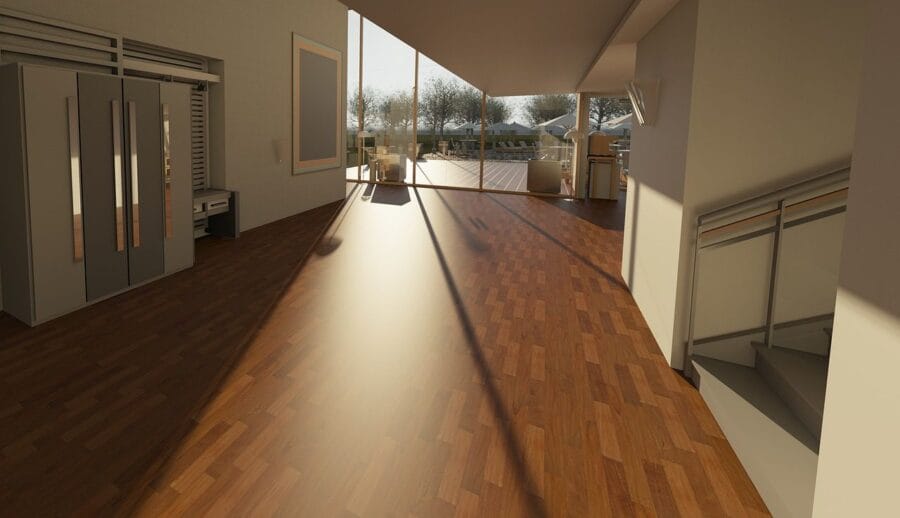
A full strip and wax is essential when floors show deep yellowing, embedded grime, or uneven shine that routine cleaning cannot restore—but lighter scrub-and-recoat cycles often suffice for floors in better condition.
Different industries demand different schedules: healthcare and retail may need strip and wax cycles every 6-12 months, while offices and low-traffic spaces can often wait 12-24 months or longer.
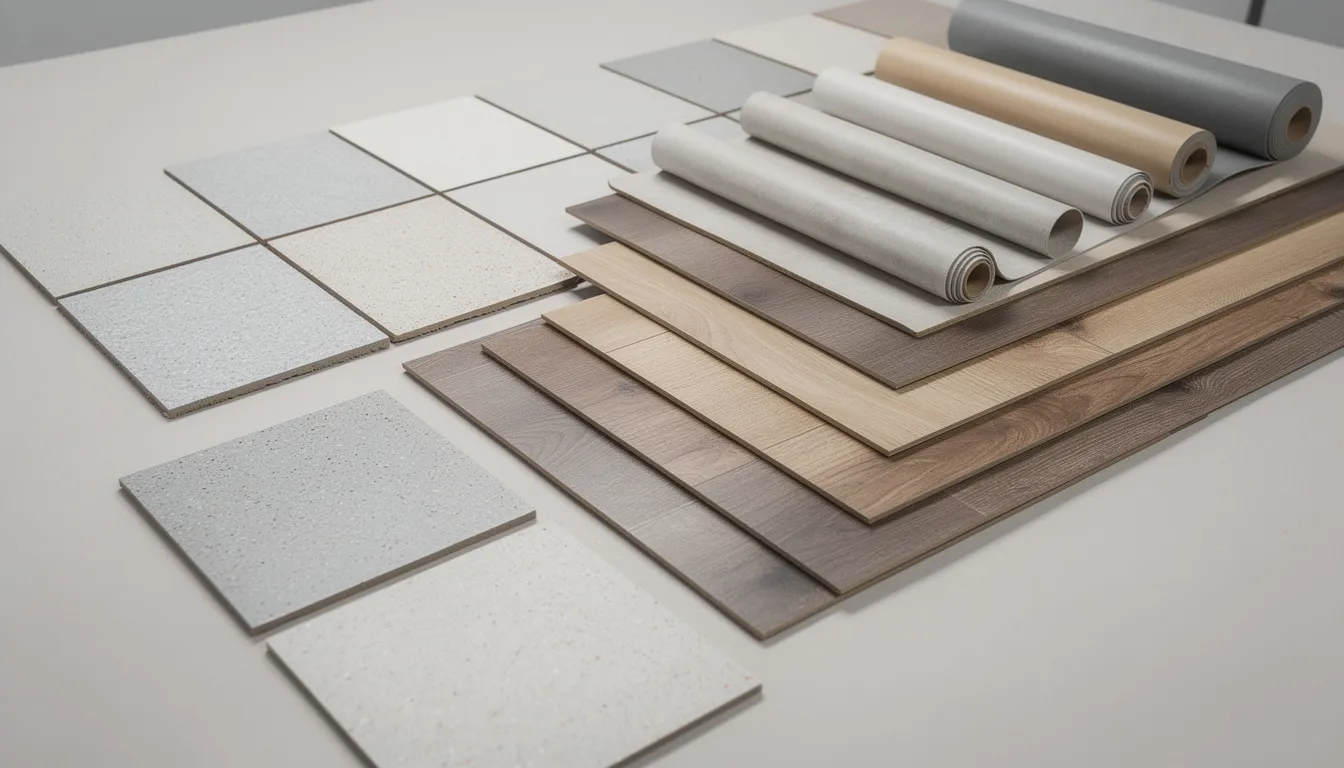
Not all flooring types should be stripped—some luxury vinyl tile, sealed wood, and factory-finished surfaces can be damaged by aggressive strippers.
Professional floor cleaning services reduce slip and fall risk, ensure chemicals and equipment are used correctly, and deliver a consistent floor appearance that in-house teams often cannot match.
What Is Stripping and Waxing Floors?
Stripping and waxing of floors is a multi-step process used primarily on resilient hard surface flooring in commercial spaces like offices, schools, clinics, and retail environments. The goal is to remove old layers of finish that have accumulated dirt, yellowed, or lost their protective qualities—then apply fresh coat layers to restore both appearance and protection.
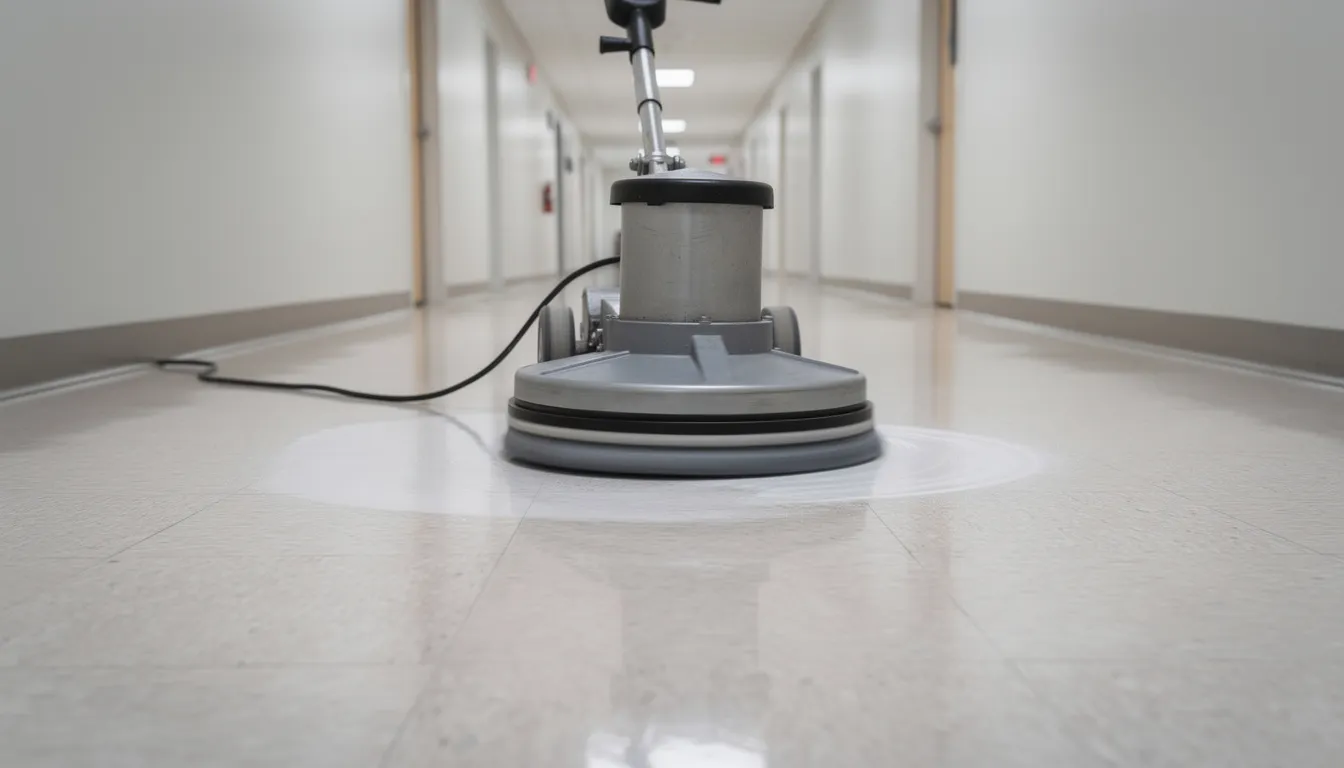
Floor stripping involves using a floor maintenance machine equipped with aggressive pads and a chemical stripper to dissolve and remove old wax, embedded soil, and buildup down to the bare or sealed surface. Technicians apply the stripping solution in sections, allow it to dwell for approximately 10 minutes to penetrate the old finish, then agitate with a rotary machine to grind up the liquefied wax and grime. The resulting slurry is recovered with a wet vacuum before it dries.
Floor waxing (sometimes called refinishing) follows stripping and consists of applying multiple coats of commercial floor finish—typically 3-6 thin layers—to protect the surface and restore gloss. A sealer may be applied first to fill pores in the flooring material, ensuring even finish adhesion. Once cured, the finish is often burnished with a high-speed buffer to harden and maximize shine.
Typical floor types that benefit from this process include:
Vinyl composition tile (VCT)
Linoleum flooring
Sheet vinyl
Some sealed concrete
Older resilient tiles
It is important to distinguish between a full strip and wax job and lighter procedures. A scrub-and-recoat removes only the top soiled layer of finish and applies fresh coats without stripping to the bare floor. Spray buffing restores shine temporarily without removing any finish. These alternatives are faster and less expensive but cannot address deep buildup or compromised finish layers.
When Stripping and Waxing Floors Is Truly Necessary
Building managers and business owners often wonder how to tell the difference between a floor that needs routine cleaning and one that requires a full strip and wax. The distinction matters because a full strip and wax involves more time, cost, and disruption—but delaying when it is genuinely needed creates bigger problems.
Visual and performance cues that signal a full strip and wax:
Deep yellowing that does not respond to scrubbing or burnishing
Embedded dirt visible in the finish layers that auto scrubber passes cannot remove
Dull or uneven shine, especially noticeable traffic lanes between high-use areas and edges
Tacky or sticky feel underfoot
Visible scratches and wear patterns that expose underlying floor material
Common triggers for scheduling a strip and wax project:
Annual shutdown periods when the building is unoccupied
Post-construction or renovation cleanup
After heavy winter salt and sand buildup that has been ground into the finish
Before major events, inspections, or tenant turnover
Compromised finish layers can increase slip risk. Worn, patchy coatings or surfaces that have been over-burnished may lose their intended traction. A fresh coat of properly applied finish restores a consistent surface with predictable friction, reducing the likelihood of slips and falls.
Flooring manufacturers’ maintenance guidelines often specify periodic stripping and waxing for resilient floors to preserve warranties and maximize longevity. Ignoring these recommendations can void coverage and accelerate wear.
When Stripping and Waxing Floors Is NOT Necessary
A full strip and wax is not always the most cost-effective or safest choice. Decision makers should be careful to avoid over-stripping, which wastes budget and can actually shorten floor life.
Situations where a scrub-and-recoat is the better option:
Finish is dull but still intact without deep buildup
Scuffs and marks are superficial and respond to machine scrubbing
Traffic lanes are visible but the underlying floor shows no damage
The last strip and wax was recent and finish layers remain well-bonded
Floor types where stripping and waxing may be discouraged or unnecessary:
Flooring Type
Typical Guidance
No-wax luxury vinyl tile (LVT)
Often designed to never receive traditional wax; stripping can damage the factory finish
Some engineered wood
Should be screened and recoated, not chemically stripped
Factory-coated laminates
Strippers can dissolve protective coatings and cause irreversible damage
Sealed epoxy or urethane concrete
May require specialty coatings rather than traditional wax
Over-stripping resilient floors like linoleum can weaken adhesive bonds, cause delamination, and introduce unnecessary mess and downtime. The materials and labour cost of a full strip when it is not needed diverts budget from other maintenance priorities.
A simple rule of thumb: if daily cleaning and periodic machine scrubbing still restore acceptable floor appearance and traction, a full strip may be deferred in favour of a scrub-and-recoat cycle.
How Stripping and Waxing Floors Saves Money
Floor care decisions connect directly to lifecycle costs and capital budgets. Building managers who understand the economics of floor maintenance can protect both their facilities and their profit margins.
Extending floor life:
Regular, well-timed strip and wax services can extend the usable life of VCT, linoleum, and other resilient floors by several years. Properly maintained VCT can last 20+ years, while neglected floors may require replacement in half that time.
Cost comparison:
Expense
Typical Range
Professional strip and wax
$0.50–$1.50 per square foot
Full floor replacement (VCT, linoleum)
$5–$10+ per square foot
Business disruption during replacement
Often 2-4x the material cost
For a 4,000 square foot retail floor, a professional strip and wax might cost $3,000–$5,000, while full replacement could exceed $10,000 before accounting for downtime and lost revenue.
Indirect savings:
Fewer safety incidents from slips and falls reduce workers’ comp exposure and liability risk
Clean, glossy floors improve brand image for customers and clients
Preventive maintenance avoids emergency stain removal and costly repairs from deferred care
Consistent appearance supports higher tenant satisfaction and property value
The best balance of cost, appearance, and longevity often comes from alternating lighter scrub-and-recoat cycles with occasional full strip and wax jobs. This approach maintains protection without the expense of stripping every cycle.
Different Flooring Types: When to Strip, When to Wax, and When to Avoid It
Not every floor should be treated the same. Using the wrong process or chemicals can void warranties, damage materials, and create more work than it saves.
Linoleum Flooring
Linoleum is made from natural materials—linseed oil, cork, resins, and a burlap backing. It differs fundamentally from vinyl and requires different care. Harsh strippers can dry out and degrade linoleum, causing cracking, discoloration, or delamination.
Apply specialized polymer emulsion finishes rather than traditional wax
Test any stripper in an inconspicuous area first
Vinyl Composition Tile (VCT)
VCT is designed for strip and wax cycles. Its porous composition accepts and releases finish well, making it the most common candidate for traditional stripping and waxing. It is widely used in schools, retail, healthcare corridors, and offices.
Water-based strippers and acrylic sealers work best
Handles 4-6 coats of floor finish without excessive buildup
Older tiles (pre-1980s) may contain asbestos; test before aggressive stripping
Sheet Vinyl and Luxury Vinyl Tile (LVT)
Some products accept finish, while others are manufactured as “no-wax” surfaces. Applying traditional wax to a no-wax floor can create adhesion problems, cloudiness, or damage.
Always check the manufacturer's instructions before scheduling a strip and wax job.
Wood Floors
How to strip and wax wood floors differs significantly from resilient flooring. Many hardwood and engineered wood floors should be screened and recoated (lightly sanded and refinished) rather than chemically stripped.
Solvent-based products may be required
Water-based strippers can raise grain or cause warping
Oil-based polyurethane often provides better durability than traditional wax
Building managers should verify product data sheets or consult a professional floor care provider before approving any aggressive floor stripping on hard floors.
How Different Industries Set Floor Maintenance Requirements
Floor care is industry-specific, shaped by foot traffic levels, regulatory requirements, and appearance standards. What works for an office lobby may not meet the demands of a hospital corridor.
Healthcare (Hospitals, Clinics, Senior Living)
High sanitation standards and continuous traffic require frequent floor maintenance. Strip and wax cycles may be scheduled annually or semi-annually in corridors and lobbies. Hospital-grade disinfectants and finishes with antimicrobial properties are often specified to meet infection control standards.
Retail and Grocery
Glossy, clean floors support brand perception and customer experience. Many stores schedule full floor stripping annually with interim recoats quarterly. High traffic areas like entrances and checkout lanes may need 6+ coats of finish to maintain appearance.
Offices and Corporate Campuses
Moderate traffic allows for longer intervals—strip and wax every 12-24 months in lobbies and cafeterias, and less often in low-traffic executive suites or private offices. Daily dust mopping and periodic auto-scrubber passes extend the life of the finish between major projects.
Education (K-12 Schools, Universities)
Summer breaks provide the main window for large-scale floor stripping projects. During the school year, daily machine scrubbing and periodic spray buffing maintain appearance. Heavy desk and chair traffic requires durable finish layers.
Industrial and Warehouse
Some sealed concrete areas need specialty coatings rather than traditional wax. Safety markings, anti-slip performance, and resistance to forklift traffic take priority over high gloss. Many industrial floors use epoxy or urethane coatings that do not follow traditional strip and wax cycles.
How Often Should You Strip and Wax Floors in Your Facility?
There is no universal schedule. Proper frequency depends on square footage, foot traffic, floor type, and your organization’s appearance standards.
General guidelines:
Environment
Typical Strip and Wax Frequency
High-traffic retail, healthcare corridors
Every 6-12 months
Typical offices, corporate lobbies
Every 12-24 months
Low-traffic executive suites, storage areas
Every 2-3 years or as needed
Schools
Annually during summer break
Extend the time between full strip and wax cycles by:
Daily sweeping and dust mopping to remove debris before it scratches the finish
Prompt spot mopping of spills
Weekly or monthly machine scrubbing with neutral cleaner
Periodic burnishing to restore shine without removing protective layers
Building managers should track floor condition over time using simple inspection checklists and photos. This data supports scheduling decisions and helps identify when areas need attention before they deteriorate.
Professional hard floor cleaning services can perform a walkthrough and propose a tailored maintenance frequency per area rather than a one-size-fits-all approach.
Why Hiring a Professional for Floor Stripping and Waxing Matters
Stripping and waxing is a technical process involving strong chemicals, heavy equipment, and detailed technique. The consequences of doing it wrong are expensive and often visible for months.
Risks of DIY or untrained work:
Damage to linoleum or wood from incompatible strippers
Uneven finish application with swirl marks or bubbles
Trapped residue that yellows quickly or attracts dirt
Improper dilution (over-concentrated stripper can etch floors)
Safety incidents—slippery slurry causes approximately 15% of workplace slips per OSHA data
Matching strippers, sealers, and finishes to each flooring type
Safety management
Wet floor signage, proper ventilation, controlled chemical dilution
Efficient workflow
Working in sections, recovering slurry before it dries, neutralizing to correct pH
Professional floor care services can also integrate stripping and waxing into a broader commercial floor care program that includes periodic inspections, scrub-and-recoat cycles, and adjustments based on changing traffic patterns.
The supplies and equipment needed for a proper job—commercial floor cleaning supplies, floor maintenance machine, pads, wet vac, neutralizers, and finish—represent a significant investment if purchased for occasional in-house use.
Preparing Your Office or Building for a Strip and Wax Job
Understanding what to expect before technicians arrive helps facility managers minimize disruption and ensure the job runs efficiently.
Furniture and Equipment
Desks, chairs, file cabinets on wheels, and movable fixtures in the work area should be cleared or coordinated for moving. Coordinate with IT for cable management if equipment is blocked by furniture. Smaller items can often be placed on desks; larger furniture may require secure storage.
Scheduling
Plan the project during evenings, weekends, or shutdown periods to allow several hours of uninterrupted work and drying time. Stripping and waxing a 1,000 square foot area can take 4-6 hours of labour plus additional time for curing.
Access and Logistics
Confirm elevator access, secure storage for chemicals, water access for dilution and rinsing, and power availability for machines drawing 15-20 amps. Protect HVAC vents from stripper fumes and slurry dust.
Communication
Notify staff about temporary closures, alternate routes, and “wet floor” conditions. Post signage prominently. Waiting for floors to cure before reoccupation (typically 24-48 hours for full cure) prevents wax footprinting and maintains floor appearance.
How Floor Cleaning Services Help Prevent Slips and Falls
Floor maintenance connects directly to risk management and safety compliance. For businesses, slips and falls represent one of the most common—and most preventable—sources of injury claims.
Properly maintained finish creates a consistent surface with predictable traction. Worn, yellowed floor wax harbours grime and can turn floors into hazardous surfaces during mopping or when moisture is present.
How professional floor care reduces slip risk:
Choosing finishes with appropriate slip resistance (many modern finishes exceed OSHA’s 0.5 wet static coefficient of friction standard)
Removing embedded dirt, grease, and chemical residue through periodic stripping
Neutralizing alkaline strippers that otherwise leave slick films
Burnishing to a micro-textured shine that grips shoes without trapping debris
What Does Commercial Floor Maintenance Look Like Between Strip and Wax Cycles?
What is floor maintenance beyond occasional major projects? A complete commercial floor care program includes daily, periodic, and seasonal tasks that protect your investment between strip and wax cycles.
Daily Tasks
Dust mopping or sweeping to remove dust, dirt, and debris before it scratches finish
Spot mopping spills promptly to prevent staining and slip hazards
Maintaining entrance mats to capture grit before it reaches floors
Periodic Machine Cleaning
Weekly or monthly auto scrubber passes with neutral cleaner to remove soil without stripping finish
Focus on high traffic areas where wear accumulates fastest
Appearance Boosts
Spray buffing or high-speed burnishing to restore gloss on traffic lanes without removing protective layers
Addresses scuffs and light scratches between full refinishing cycles
Inspections
Quick monthly reviews of edges, corners, baseboards, and traffic lanes
Look for dulling, deep scratches, or wear patterns that signal the need for recoat or strip
Document conditions with photos to support data-based scheduling decisions
One company may handle your carpet cleaning, security service, and floor care under one contract, or you may work with specialized providers for each. What matters is consistent execution and clear communication about floor condition.
FAQ: Stripping and Waxing Floors for Commercial Buildings
How much does it cost to strip and wax floors in a commercial space?
Pricing typically ranges by square foot, with most commercial jobs falling between $0.50 and $1.50 per square foot. Smaller jobs often carry a higher price per square foot due to setup time and minimum service fees. A 4,000 square foot office might cost $2,000-$5,000, depending on floor condition, furniture moving requirements, and the number of coats applied. Building managers should request an on-site assessment to get an accurate quote and avoid surprise add-ons.
How long do I need to keep areas closed after a strip and wax job?
Most commercial finishes allow light foot traffic after several hours, but full cure time is typically 24-48 hours before heavy traffic or rolling loads like carts and chairs. Managers can plan projects in stages to maintain access to critical areas while floors cure. Air movement and temperature affect drying, and professionals will provide specific re-open times based on the products used.
Can we use our own janitorial staff instead of hiring professional floor care services?
In-house teams can handle daily and weekly tasks like dust mopping, spot cleaning, and auto scrubber passes. However, floor stripping and waxing require specialized equipment, proper chemical dilution, and techniques that most janitorial staff are not trained for. The cost of training, chemical storage, and machine maintenance often exceeds the expense of outsourcing periodic strip and wax projects. Decision makers should compare long-term outcomes, floor appearance, and incident rates when choosing between internal and professional services.
How do I know if my linoleum or vinyl floor is compatible with stripping chemicals?
Confirm the exact flooring product brand and model, then check the manufacturer’s maintenance instructions. Many manufacturers publish data sheets specifying which chemicals and processes are approved. Test any new stripper in an inconspicuous area first and avoid strong strippers on older or sensitive linoleum. Working with an experienced floor care provider ensures the correct stripper dilution and pad combination for each material.
What should I ask a vendor before approving a strip and wax proposal?
Key questions to ask:
What products will be used (stripper, sealer, finish)?
How many coats of finish will be applied?
How will you protect baseboards, walls, and furniture?
What are the estimated drying and cure times?
Do you carry insurance and provide staff training documentation?
Can you provide references from similar facilities?
How do you handle slip resistance testing?
Request a written maintenance plan that outlines follow-up cleaning and recommended recoat or strip frequencies by area. This helps you budget for ongoing floor care and maintain consistent results.
Working with Your Local Expert
Choosing the right time to strip and wax a floor isn’t about perfection — it’s about protecting the surface before damage becomes permanent. In most cases, acting sooner rather than later leads to better results, lower long-term costs, and safer, better-looking spaces.
At some point, most property managers and business owners have the same moment: you look down at the floor and think, “This doesn’t look great… but does it really need to be stripped and waxed yet?”
Maybe you’ve never had it done before and aren’t sure what “bad enough” actually looks like. Or maybe you know the answer already, but the cost has you delaying the decision and hoping regular cleaning will keep things acceptable a little longer.
The reality is that once certain signs appear, delaying a strip and wax job often costs more in the long run. Knowing what to look for makes it easier to decide when it’s time to act — before the floor itself starts to suffer permanent damage.
Floors may still be swept and mopped regularly, yet they look dull, uneven, or tired almost immediately afterward.
This usually means the protective finish has broken down. Dirt becomes trapped in old layers of wax, and no amount of routine cleaning can restore the appearance.
At this stage, floor stripping and floor waxing aren’t about making the floor shinier — they’re about resetting the surface so it can actually be protected again.
Visual Signs You’re Past the “Let’s Wait” Stage
Some warning signs are easy to spot once you know what you’re looking for. Dull or discoloured traffic lanes are often the first giveaway.
Hallways, entrances, and common walkways start to look noticeably different from the surrounding areas. The shine disappears unevenly, or the floor takes on a cloudy or yellowed look.
Scratches and scuffs that won’t stay gone are another clue. When fresh marks show up almost immediately after cleaning, it usually means there’s no longer a protective finish doing its job.
Floors that always look dirty, even when they aren’t, are often suffering from wax buildup and embedded soil. This is one of the most common reasons property managers eventually decide to strip and wax floors after trying to delay the process.
Slippery or Just Worn Out? Safety Is a Big Clue
As finishes wear down unevenly, floors can lose traction. This often happens gradually, so it’s easy to overlook until someone mentions the floor feels slick — or worse, someone slips.
Insurance and risk-management organizations consistently point to floor condition as a contributing factor in slip-and-fall incidents.
Flooring Type Matters More Than Most People Realize
Not all commercial flooring wears the same way, which is why two buildings with similar foot traffic can age very differently. The surface you’re standing on plays a major role in determining when it’s time to strip and wax a floor.
Linoleum flooring, common in offices and medical environments, benefits greatly from proper stripping and waxing. Once the finish wears through, linoleum can discolour quickly and become difficult to restore if service is delayed too long.
Vinyl Composition Tile (VCT) is designed to be protected by wax. When the finish breaks down, the tile underneath absorbs dirt rapidly, accelerating wear. VCT is one of the most common surfaces that requires routine stripping and waxing floors to remain presentable.
Luxury Vinyl Tile (LVT) and sheet vinyl may not require full stripping as frequently, but they still rely on proper surface protection. Incorrect products or skipped maintenance can shorten their lifespan significantly.
Rubber flooring generally isn’t waxed, but in buildings with mixed flooring types, adjacent surfaces often are. Inconsistent maintenance can make wear patterns stand out even more.
Sealed concrete floors don’t use traditional wax finishes, but coatings still wear over time. When these surfaces degrade unevenly, floors can become slippery or visually patchy.
Wood and engineered wood floors require a specialized approach. While not every wood floor is a candidate for traditional waxing, there are situations where understanding how to strip and wax wood floors becomes part of a broader professional restoration plan.
Different Buildings Wear Floors at Different Speeds
How often stripping and waxing floors is required depends less on time and more on use. An office with steady weekday foot traffic will wear differently from a healthcare clinic, retail space, or light industrial facility.
This is why commercial floor maintenance schedules vary by industry, and why delaying service in high-traffic environments often leads to faster deterioration.
“I Know It Needs It… But Isn’t This Expensive?”
Cost hesitation is one of the most common reasons property managers delay stripping and waxing of floors. While it can feel like a large upfront expense, postponing the work often leads to higher costs later.
When finishes are left to fail completely, the underlying flooring takes the damage.
For offices and commercial spaces, preparation is usually straightforward. Furniture and movable items are cleared, access is coordinated, and the work is completed using professional floor maintenance machines and commercial-grade floor cleaning supplies.
Drying and curing times vary by flooring type and finish, but experienced crews plan the work to minimize disruption. Knowing what to expect often makes the decision easier for managers who have been putting it off.
Why This Is a Job for Professionals
Stripping and waxing isn’t just about equipment — it’s about knowing how different floors react to chemicals, pressure, and finish buildup. Improper techniques or products can permanently damage surfaces or create safety issues.
Working with professional floor cleaning services and experienced floor care services ensures the job is done correctly, safely, and with the long-term condition of the floor in mind. This is especially important in commercial environments where appearance, durability, and safety all matter.
If floors look worn no matter how often they’re cleaned, feel slick underfoot, or show heavy traffic patterns that won’t improve, it’s often a sign that the window for delaying has closed.
Choosing the right time to strip and wax a floor isn’t about perfection — it’s about protecting the surface before damage becomes permanent. In most cases, acting sooner rather than later leads to better results, lower long-term costs, and safer, better-looking spaces.
A building’s reputation is formed long before anyone speaks to property management.
It’s shaped in the lobby when a client walks in for a meeting. It’s reinforced in the washroom an employee uses every day. It’s judged by a prospective tenant touring the property. And it’s evaluated by owners looking at long-term asset value.
When cleaning is done well, it goes unnoticed. When it’s done poorly, it becomes the building’s defining feature.
The Foundation of a Professional Building
General cleaning is the most visible and most frequently experienced part of a building’s maintenance program. It shapes how tenants feel about their workplace every single day and how clients and visitors perceive the businesses operating inside the building.
When washrooms are consistently clean and well-stocked, employees feel that management cares about their comfort and well-being. When offices, lobbies, hallways, and common areas are tidy, dust-free, and freshly vacuumed, tenants experience a sense of professionalism and order.
Visiting clients associate that cleanliness with the quality of the business they are visiting, while prospective tenants touring the building form an immediate impression of how well the property is managed.
For building owners, consistent commercial office cleaning protects the long-term condition of interior finishes and helps preserve asset value.
Windows are one of the first things people notice before they ever step inside a building. Exterior glass shapes curb appeal and sets expectations, while interior windows influence how bright, open, and professional a space feels.
When clients arrive for meetings and see clear, streak-free windows, the building immediately feels modern and well cared for. When tenants work in naturally lit offices with clean glass, their environment feels more comfortable and more productive.
Prospective tenants touring the property associate clean windows with strong ownership and attention to detail.
Professional window cleaning services quietly elevate the entire image of a property.
They improve street presence, enhance interior brightness, and communicate pride of ownership. For building managers, they support leasing efforts. For owners, they strengthen the building’s long-term positioning in a competitive market.
Comfort, Health, and Workplace Perception
Carpets play a major role in how a building feels underfoot and how it smells when people walk through the door. Stained, worn, or odour-holding carpets can make even a well-designed space feel tired and neglected. Clean carpets, on the other hand, create a sense of comfort, freshness, and professionalism.
For employees, regularly scheduled office carpet cleaning improves indoor air quality and creates a healthier work environment. For visiting clients, clean carpets reinforce the impression that they are dealing with an organized, high-quality business. For building owners, professional commercial carpet cleaning services protect a major capital investment and extend the lifespan of flooring.
Over time, proper carpet maintenance reduces replacement costs, improves tenant satisfaction, and contributes to a cleaner, more inviting building atmosphere — all of which support a stronger reputation for the property as a whole.
A Direct Reflection of Building Standards
Floors are one of the most heavily used surfaces in any commercial building, and they are one of the clearest visual indicators of how well a property is maintained. Dull, scuffed, or worn floors suggest neglect.
Clean, polished floors communicate quality and professionalism.
When tenants walk into a lobby each morning and see polished, well-maintained surfaces, it reinforces confidence in building management. When visitors arrive and walk across clean, shining floors, they perceive the property as premium and well cared for. For owners, a proper strip and wax program protects linoleum flooring and other hard surfaces, preserving both appearance and long-term value.
The reliability of a building’s janitorial supplies often goes unnoticed — until something runs out.
When employees walk into a washroom and find empty soap dispensers or missing paper products, frustration builds quickly. When clients encounter poorly stocked or untidy washrooms, it reflects poorly on both the tenant and the building. When property managers receive repeated service calls about supplies, it becomes an operational distraction.
Reliable on-site cleaning supplies that are professionally managed ensure that washrooms, kitchens, and common areas function smoothly every day. For tenants, it creates a sense of dependability. For visitors, it reinforces professionalism. For building managers, it reduces service interruptions and strengthens operational efficiency.
These small details quietly shape how people feel about the building — and whether they trust the management behind it.
Modern Expectations for Modern Buildings
Today’s tenants and building owners increasingly expect their workplaces to support health, wellness, and environmental responsibility. Green commercial cleaning services reflect a modern standard of care that goes beyond appearance alone.
Employees notice when there are no harsh chemical odours in the air. Health-conscious tenants appreciate chemical-free programs and the use of green cleaners that protect indoor air quality. Owners and investors see sustainable cleaning practices as part of a broader ESG strategy that strengthens long-term asset positioning.
It supports tenant well-being, strengthens leasing appeal, and reinforces the building’s reputation as a healthy, future-ready workplace.
Supporting the Full Building Lifecycle
A building’s reputation is shaped not only by daily operations, but also by how smoothly it handles transitions and special projects.
Construction cleanup services ensure that new tenants move into spotless, ready-to-use spaces. Parking lot cleaning maintains safety, accessibility, and curb appeal. Seasonal and post-renovation cleaning ensures the building presents well during inspections, tours, and ownership reviews.
For tenants, these services create seamless move-ins and minimal disruption. For contractors and project teams, they support efficient handovers. For owners, they protect capital investments and maintain a polished image at every stage of the building’s lifecycle.
Clean Buildings Build Strong Reputations
Every day, your building is being evaluated by the people who work there, visit it, invest in it, and manage it.
They form opinions based on the washrooms they use, the floors they walk on, the carpets they work on, and the windows they look through. Each of those experiences shapes how they feel about the building — and by extension, how they feel about the companies and management behind it.
Professional commercial janitorial services ensure that every one of those touchpoints reflects the standards you want your building to represent. Because in commercial real estate, reputation isn’t built in boardrooms.
It’s built in lobbies, hallways, offices, and washrooms — every single day.
When buildings are clean, well-maintained, and professionally managed, tenants notice — and when standards slip, complaints quickly follow. One of the most influential factors in day-to-day tenant experience is the quality and reliability of the janitorial service supporting the building.
Cleanliness affects how tenants feel about their workplace, how they perceive building management, and whether they choose to renew their lease.
Below are ten reasons why dependable janitorial services matter, with practical, property-manager-focused insights built into each section.
1. Fewer Tenant Complaints and Service Requests
Most tenant complaints begin with basic cleanliness issues: dirty floors, dusty surfaces, lingering odours, or washrooms that feel neglected.
These concerns typically reflect inconsistent cleaning rather than major maintenance problems.
A reliable janitorial service focuses on preventative cleaning, addressing issues before tenants feel the need to submit service requests.
Consistency across common areas plays a key role in reducing friction between tenants and management.
Property Manager tip: Look for a janitorial provider that follows documented cleaning checklists and conducts regular inspections. Consistency matters more than occasional deep cleaning when it comes to complaint reduction.
Improper cleaning methods, worn finishes, or residue left on floors can create hazards in high-traffic areas such as lobbies, corridors, elevators, and washrooms.
Professional floor cleaning services, including scheduled floor stripping and waxing, help maintain proper traction while protecting flooring surfaces. This is especially important in buildings with linoleum flooring, which requires specific care to avoid premature wear.
Property Manager Tip: Confirm that your janitorial service understands proper floor care techniques and uses the correct floor wax and equipment for each surface.
3. Predictable Maintenance Instead of Emergency Cleanups
Emergency cleaning requests disrupt schedules and budgets. Stained carpets, odour issues, and deteriorating floors are often the result of deferred maintenance rather than unexpected incidents.
A dependable janitorial service provides scheduled office carpet cleaning and ongoing care that reduces the need for reactive cleanups. Professional commercial carpet cleaning services also help address the common question of how often office carpets should be cleaned.
Reliable janitorial cleaning ensures that lobbies, hallways, meeting rooms, and shared amenities maintain a polished, professional appearance at all times. This supports tenant confidence and improves first impressions for visitors and prospective tenants.
Property manager tip: Schedule periodic walk-throughs with your janitorial service to align expectations and address visual issues proactively.
5. Improved Tenant Comfort and Productivity
Cleanliness affects more than appearance. Dirty carpets and floors can trap dust, allergens, and debris that impact indoor air quality and overall comfort.
Professional carpet cleaning solutions, combined with the proper use of a floor maintenance machine, help create healthier office environments. When tenants are comfortable, productivity improves and satisfaction increases.
Property manager tip: Ensure your janitorial service uses commercial-grade equipment and methods designed specifically for office and multi-tenant buildings.
6. Better Natural Light and Curb Appeal with Clean Windows
Dirty windows reduce natural light and detract from both interior comfort and exterior curb appeal. Over time, neglected windows can develop buildup that becomes difficult to remove.
Routine window washing services, handled by a trained window washer, improve tenant morale and maintain a professional exterior appearance. Working with local window cleaning services also simplifies scheduling and communication.
7. Alignment with Sustainability and ESG Expectations
Many office tenants now expect environmentally responsible practices as part of their workplace. Cleaning programs play a visible role in meeting those expectations.
A janitorial service offering green commercial cleaning services uses chemical-free or low-impact products and green cleaners that reduce harsh odours and improve indoor air quality. Clean-with-green practices also support sustainability and ESG initiatives.
Property manager tip: Ask your janitorial provider which green products are used and where they are applied, particularly in enclosed or high-occupancy areas.
8. Less Disruption to Tenants and Daily Operations
Poorly planned cleaning can interfere with the workday. Loud equipment, inconsistent schedules, or missed tasks create unnecessary frustration for tenants.
A reliable office cleaning service coordinates schedules carefully, uses efficient equipment, and trains staff to work discreetly. This allows floors, carpets, and windows to be maintained without disrupting daily operations.
Property manager tip: Align cleaning schedules with tenant usage patterns rather than default timeframes.
9. Clear Accountability and Easier Vendor Management
Managing multiple cleaning vendors can quickly become time-consuming and inefficient. Missed responsibilities and unclear communication increase follow-ups for property managers.
Working with one dependable, consolidated janitorial service provides clear accountability, consistent staffing, and streamlined communication. This simplifies oversight and reduces administrative workload.
Property manager tip: Choose a provider that assigns a dedicated point of contact and offers regular reporting rather than rotating crews with limited accountability.
10. Long-Term Cost Control and Asset Protection
Quality janitorial services help protect building assets over time. Floors, carpets, and windows that receive regular care last longer and maintain their appearance.
Scheduled floor stripping and waxing, professional carpet maintenance, and routine window cleaning reduce the likelihood of premature replacement and unexpected capital expenses. Reliable building maintenance services deliver measurable long-term value.
Property manager tip: Evaluate janitorial services based on lifecycle cost savings and asset protection, not just monthly pricing.
Reliable Janitorial Service Makes Property Management Easier
For property managers, a dependable janitorial service is more than a vendor — it is an operational partner. Consistent cleaning reduces complaints, protects assets, supports sustainability goals, and improves tenant satisfaction.
Clean, well-maintained buildings operate more smoothly, reflect positively on management, and encourage long-term tenant retention.
Modern commercial cleaning and janitorial services are no longer defined solely by labour and routine.
Today, the industry is increasingly shaped by science, data, and purpose-built technology designed to improve hygiene, extend surface life, reduce environmental impact, and deliver more consistent results across commercial spaces.
From floor maintenance and carpet care to window cleaning and green cleaning systems, technological innovation is transforming how professional cleaning is performed in offices, business parks, and commercial buildings.
Understanding these tools helps property managers and decision-makers see what truly separates modern, high-quality janitorial services from outdated approaches.
Technology Advancing Floor Maintenance and Protection
Commercial floors endure constant foot traffic, rolling equipment, and daily wear. Maintaining appearance and safety—while protecting the underlying surface—requires more than traditional mops and buffers.
Modern Floor Maintenance Challenges
In professional environments, improper care can quickly damage flooring, especially when it comes to linoleum flooring and other resilient surfaces.
Tasks like floor stripping and waxing must be carefully controlled to avoid overuse of chemicals, uneven finishes, or premature surface wear. For this reason, professional floor cleaning services increasingly rely on specialized equipment rather than manual processes.
Floor Maintenance Technologies
Today’s floor maintenance machines are engineered for precision and consistency. Battery-powered and orbital scrubbers allow technicians to safely strip and wax floors with minimal water usage and controlled chemical application.
Variable-speed machines ensure even floor wax distribution, reducing slip hazards and extending finish life.
Technology Leaders
Manufacturers such as Tennant Company, Kärcher, and Nilfisk have introduced intelligent scrubbers, eco-mode systems, and low-moisture solutions that support sustainable floor stripping and waxing while improving productivity and long-term floor protection.
As floors form the foundation of a clean facility, carpets require an equally scientific approach to maintain indoor air quality and professional appearance.
Deep Cleaning Meets Efficiency
Carpeted office spaces act as filters, trapping dust, allergens, and debris deep within the fibres. Without proper care, carpets can negatively impact air quality and wear prematurely.
The Science Behind Carpet Soiling
Routine vacuuming alone cannot remove embedded contaminants. This is why professional office carpet cleaning schedules are critical.
A common question from facility managers is how often should office carpets be cleaned—and the answer depends on traffic levels, building use, and environmental conditions.
Advanced Carpet Cleaning Technologies
Modern commercial carpet cleaners utilize low-moisture encapsulation, heat-controlled extraction, and high-efficiency agitation.
These systems allow commercial carpet cleaning services to clean deeper while reducing drying time, minimising disruption to daily operations.
Industrial-grade equipment used in carpet commercial cleaning also helps extend carpet life by preventing fibre damage caused by over-wetting or improper chemical use.
Technology Leaders
Manufacturers recognized by the Carpet and Rug Institute (CRI), along with companies such as Kärcher and Hydramaster, continue to refine industrial carpet cleaner designs that balance performance, fibre protection, and sustainability.
While floors and carpets influence comfort and air quality, windows play a major role in natural light, aesthetics, and first impressions.
Interior glass partitions, large exterior façades, and coated windows require specialized techniques.
A professional window washer must deliver streak-free results while minimising risk and disruption—especially for multi-storey commercial buildings.
Modern Window Cleaning Technologies
Pure water systems using reverse osmosis and deionization allow window cleaning services to clean glass without detergents, leaving no residue behind.
Water-fed pole systems enable exterior window cleaning from the ground, improving safety and efficiency. In some environments, robotic and magnetic tools support interior glass cleaning where access is limited.
Technology Leaders
Companies like Unger Global and IPC Eagle continue to innovate tools used by professional window washing services, improving safety, access, and consistency for both interior and exterior office glass.
As performance improves across cleaning categories, sustainability has become a defining factor in modern janitorial services.
Green Cleaning Technology
The demand for green commercial cleaning services continues to grow as organisations prioritize occupant health and environmental responsibility.
The Shift Toward Green Commercial Cleaning
Green cleaning is no longer limited to marketing claims. Many facilities now require documented processes that reduce chemical exposure, improve indoor air quality, and support sustainability initiatives.
Green Cleaning Technologies and Practices
Innovations such as chemical-free cleaning systems use ionized or ozone-treated water to disinfect surfaces without traditional chemicals.
Certified green cleaners, closed-loop dilution systems, and advanced microfibre materials reduce waste while maintaining high cleaning standards.
These approaches support a true clean with green philosophy—delivering effective results without unnecessary environmental impact.
Technology Leaders
Organisations such as Tersano, Ecolab, and Diversey have developed systems and products that support green commercial cleaning while meeting the performance demands of professional office and commercial environments.
Beyond equipment and chemicals, technology also plays a role in how cleaning operations are managed day to day.
Smarter Janitorial Supply Management and On-Site Systems
Efficient janitorial cleaning depends on having the right tools available, properly stored, and consistently replenished.
Technology in Janitorial Operations
Modern janitorial programs use digital inventory tracking, smart dispensers, and centralized on-site cleaning supplies to improve accountability and reduce waste.
Manufacturers such as Rubbermaid Commercial Products and Kimberly-Clark Professional provide intelligent dispensing systems and workplace organization solutions that streamline commercial janitorial services across large office and multi-tenant facilities.
When these systems work together, they redefine what quality and reliability look like in professional cleaning.
What This Means for Commercial Cleaning and Janitorial Services
For property managers and facility teams across the Lower Mainland, these technologies are no longer optional—they are becoming the standard for effective, compliant, and sustainable building care.
Technology-driven cleaning delivers measurable benefits: longer surface life, improved hygiene, reduced environmental impact, and more consistent results.
For property managers and business owners, partnering with a commercial cleaning company that invests in modern tools and ongoing training is essential to maintaining high standards.
Professional commercial cleaning and janitorial services now combine equipment, data, and skilled technicians to deliver outcomes that traditional methods simply cannot match.
The Future of Clean Is Intelligent and Sustainable
Modern cleaning is no longer about doing more work—it is about doing the right work with the right tools.
The evolution of commercial cleaning reflects a broader shift toward science-based decision-making and responsible practices.
From advanced floor maintenance machines to green clean cleaning services, modern technology is reshaping how facilities are maintained.
As expectations continue to rise, the most successful commercial cleaning and janitorial services will be those that embrace innovation—delivering cleaner, safer, and more sustainable environments for the workplaces of today and tomorrow.
The Right Commercial Cleaning Partner
Technology delivers results only when it is paired with experienced oversight, trained staff, and consistent quality control.
A professional commercial cleaning and janitorial services provider should understand not just how to use modern equipment, but when and where it delivers the greatest value.
Across the Lower Mainland, more offices are rethinking what it means to be “clean.” Companies are discovering that a spotless workspace doesn’t require harsh chemicals or strong odours. With modern green commercial cleaning services, it’s now possible to keep every surface gleaming while supporting employee health and environmental sustainability. In other words, it’s time to clean green.
Green cleaning services rely on eco-friendly cleaning agents, natural green cleaners, and earth-friendly cleaning products that are biodegradable, low-toxicity, and safe for indoor environments.
Unlike older formulations, these solutions avoid volatile organic compounds (VOCs), chlorine, and petroleum-derived solvents—chemicals known to irritate lungs and harm air quality. Instead, they use plant-based surfactants, bio-enzymes, and natural acids that cut through grease, soap scum, and dirt with equal or greater efficiency.
Green commercial cleaning companies take it a step further by designing complete sustainability programs that include:
Refillable containers and concentrate systems to reduce waste
Reusable microfiber technology that cleans more effectively with less water
Certified products from organizations like Green Seal, EcoLogo, or EPA Safer Choice
In essence, to clean green is to clean smarter—delivering lasting cleanliness while minimizing environmental impact.
Why Green Cleaning Works as Well as—or Better Than—Traditional Cleaning
Modern green cleaners have come a long way from their early, vinegar-and-baking-soda days.
Today’s eco-friendly cleaning products are laboratory-tested to meet or exceed the performance of conventional cleaners, and they’re specifically designed for commercial use.
They work through mechanical efficiency rather than chemical aggression—using safer, naturally derived agents to lift, trap, and remove soil instead of dissolving it with harsh ingredients.
When paired with green clean cleaning services that follow professional cleaning protocols, results are consistently top-tier.
Here’s why green cleaning is equally (or more) effective:
Advanced chemistry: Biodegradable surfactants and chelating agents break down oils and residue effectively.
Improved air quality: No harsh odours, VOCs, or lingering residues.
Better for surfaces: Gentle, pH-balanced formulas extend the lifespan of floors, carpets, and furniture.
Consistent performance: Microfiber tools and HEPA vacuums physically capture 99% of fine particles and bacteria.
By choosing to clean green, businesses gain a higher level of cleanliness with fewer long-term maintenance issues.
Surfaces stay cleaner longer, indoor air remains fresher, and the entire office feels more comfortable and inviting.
Supporting Sustainability Through Everyday Cleaning
Sustainability isn’t just a marketing buzzword—it’s a measurable commitment that businesses can act on every day.
Cleaning operations, especially in commercial spaces, consume large amounts of chemicals, plastic, water, and energy. That’s why green commercial cleaning is such a powerful shift: it reimagines every step of the cleaning cycle for efficiency and environmental care.
Earth-friendly cleaning products come in concentrated, refillable containers to minimize packaging. Eco-friendly janitorial services use energy-efficient vacuums and low-flow floor machines to reduce power and water use.
Even the choice of mop or cloth matters: microfiber pads capture more debris and require less detergent, reducing waste by up to 95%.
Key sustainability wins from green cleaning:
Less chemical runoff: No toxins entering drains or local waterways.
Reduced packaging waste: Reusable containers and bulk systems.
Lower carbon footprint: Concentrated cleaners mean fewer shipments and less plastic.
Longer equipment life: pH-balanced products protect surfaces and finishes.
By integrating these small but meaningful steps, green commercial cleaning companies help clients align cleaning practices with corporate ESG or sustainability goals.
Over time, this reduces environmental impact while saving money through efficiency and reduced consumption.
Healthier Air and Happier Employees
Clean doesn’t just mean “shiny”—it means healthy. Many offices unknowingly battle Sick Building Syndrome, where chemical residues, synthetic scents, and inadequate ventilation cause discomfort, fatigue, or respiratory irritation.
Traditional cleaning products are a major contributor, releasing VOCs that linger long after cleaning is finished.
Switching to chemical-free cleaning practices is one of the simplest ways to improve indoor air quality. Eco-friendly cleaning agents eliminate harsh solvents, and natural green cleaners replace artificial fragrances with mild, plant-based alternatives.
The result is a space that feels—and smells—clean without that overpowering “chemical” scent.
Health benefits of cleaning green:
Reduced allergic reactions and respiratory irritation
Fewer headaches and fatigue symptoms from VOC exposure
Safer, non-toxic workspaces for cleaning staff and employees
Improved focus and morale thanks to cleaner, fresher air
Green cleaning is effective across every part of a commercial space. From carpets and floors to windows and high-touch office surfaces, there’s a sustainable method for each area that matches or exceeds traditional results.
Carpets: Deep Cleaning Without Harsh Residue
Office carpets collect dirt, allergens, and bacteria every day, making regular deep cleaning essential. Traditional shampoos often leave sticky residues that attract dust and soil quickly, forcing more frequent cleanings.
Modern eco-friendly cleaning agents avoid this issue through encapsulation cleaning—a process that traps soil in microscopic crystals that vacuum out easily once dry. These systems use less water, dry faster, and eliminate the risk of mould or mildew.
Benefits of green carpet care include:
Cleaner fibres and improved texture retention
Reduced drying time, minimizing downtime for offices
No sticky residue or synthetic scents
Longer carpet life due to gentler cleaning methods
Floor care is one of the biggest opportunities to clean green effectively. Traditional strippers and finishers can contain zinc or ammonia compounds that release odours and damage coatings over time. Earth-friendly cleaning products, on the other hand, use low-impact detergents and neutral pH formulations to remove dirt without degrading protective layers.
Modern chemical-free cleaning systems combine precision auto scrubbers and low-moisture cleaning pads to maintain floors while using minimal water and detergent. This approach supports long-term durability and a healthier environment.
Eco advantages of green floor maintenance:
Uses up to 80% less water and detergent
Maintains slip resistance and surface integrity
Eliminates harmful airborne chemicals
Extends finish life, reducing the need for recoating
For materials like vinyl, linoleum, and VCT, this sustainable approach delivers both beauty and performance while reducing cost and risk.
Windows: Clarity Without Chemicals
Windows play a key role in office ambience—more natural light means more energy and productivity. Yet traditional window cleaners often rely on ammonia or glycol-based solvents that emit strong fumes and harm nearby plants when rinsed outdoors.
Green-friendly cleaning alternatives use biodegradable, plant-derived surfactants or purified water systems that require no chemicals at all. Eco-friendly janitorial services using water-fed poles can reach multiple stories safely without detergents, leaving windows spotless and streak-free.
Why green window cleaning works better:
No chemical runoff or residue
Improved clarity and natural light
Safer for landscaping and stormwater systems
Fresher indoor air—no ammonia odours
With a professional green commercial cleaning company, even high-visibility glass can sparkle sustainably.
General Office Cleaning: Everyday Eco-Friendly Habits
Sustainability shines brightest in daily habits. Office cleaning covers dozens of small tasks—dusting, disinfecting, waste removal, and surface wiping—all of which can be improved with eco-friendly cleaning principles.
Environmentally friendly cleaning services now use hospital-grade, low-toxicity disinfectants that eliminate germs without harsh chemical blends. Refillable spray bottles, microfiber cloths, and colour-coded cleaning systems minimize cross-contamination while reducing landfill waste.
Simple ways offices can clean with green every day:
Use microfiber cloths instead of disposable wipes or paper towels
Replace single-use plastic liners with compostable alternatives
Choose eco-friendly cleaning agents for keyboards, phones, and desks
Opt for low-fragrance, chemical-free air fresheners or natural diffusers
These small changes make a big difference over time. By integrating clean with green principles into regular routines, offices create healthier spaces and set an example of corporate environmental leadership.
The Workplace Advantage: How Clean Green Benefits Everyone
When offices embrace clean green practices, the benefits ripple far beyond the cleaning team. A cleaner, healthier workspace improves morale, reduces absenteeism, and enhances a company’s reputation.
Employees notice—and appreciate—spaces that feel fresh rather than perfumed. Cleaners experience safer working conditions with fewer chemical exposures. Clients are greeted by an environment that reflects care, professionalism, and forward-thinking values.
The long-term business benefits include:
Healthier, more productive employees
Fewer maintenance issues and longer surface life
Enhanced company image as a sustainable organization
Positive first impressions for clients and partners
Ultimately, green commercial cleaning supports the two things every business values most: people and longevity.