The Role of Cleaning Carpet Service in Beneficial Indoor Air Quality

The Role of Cleaning Carpet Service in Beneficial Indoor Air Quality

Commercial carpets do more than cushion footsteps. In Metro Vancouver offices, strata lobbies, clinics, and retail spaces, they silently collect dust, allergens, bacteria, and volatile organic compounds-then release them back into the air your staff and tenants breathe. This article explains how a well-planned cleaning carpet service can turn your facility's carpets from an indoor air quality liability into an asset.

Key Takeaways

  • Commercial carpet cleaning in Vancouver can significantly reduce airborne particles, allergens, and VOCs in offices and facilities.
  • Carpets act as both filters and sources of indoor pollutants, so a planned carpet cleaning process is essential for cleaner air and occupant health.
  • Evidence-based cleaning methods like hot water extraction can remove 50% or more of debris, dirt, bacteria, and allergens when done correctly.
  • Facility and property managers should align carpet cleaning appointments with HVAC and ventilation strategies to maximize indoor air quality benefits.
  • This article focuses on commercial environments in Metro Vancouver-offices, strata common areas, retail, medical, and educational facilities-not residential homes.

Why Indoor Air Quality Should Matter to Vancouver Businesses in 2026

Vancouver's damp coastal climate, long heating seasons, and dense office environments create elevated air quality risks indoors. Moisture promotes mould, and fine particulate matter from busy corridors like Georgia Street and Broadway enters buildings constantly. Since 2020, post-COVID expectations from staff and tenants have raised the bar: people want visibly clean, healthy workplaces in downtown Vancouver, Burnaby, Richmond, and Surrey.

Poor indoor air quality is directly tied to increased absenteeism, reduced cognitive performance, and lower tenant retention, concerns that hit office managers and property managers where it counts. Carpets trap dust and airborne irritants over time, and without intervention, those pollutants cycle back into the breathing zone. This is not just true of carpets but of elements like the type of cleaning products used throughout a given space, all of which can contribute to sick building syndrome. A proactive approach to cleaning carpets supports productivity, risk management, and brand image.

How Commercial Carpets Interact with Indoor Air

Carpets cover roughly 50% of flooring in many North American buildings, according to Harvard research, and similar patterns hold across Canadian offices. They function as three-dimensional filters: the pile, backing, adhesive layers, and underlay capture soil, skin flakes, pollen, soot, and debris tracked in on shoes.

Without regular carpet cleaning services, these layers become long-term pollutant reservoirs. Grime and dirt build up not just on the surface but deep into the carpet fibres and backing. Most carpets in commercial settings-whether low-pile modular tiles or older broadloom-accumulate contaminants that degrade air quality over months.

The age and type of carpet matters. Worn or damaged carpet releases more dust and harbours mould after moisture events, making it less responsive to routine cleaning.

Carpets, VOCs, and Chemical Emissions

Volatile organic compounds enter commercial spaces from cleaning products, printers, furniture off-gassing, and vehicle exhaust along major Vancouver routes. Carpets act as powerful absorption sites, temporarily reducing peak indoor VOC concentrations but re-emitting them over prolonged periods. Pile fibres, backing, and adhesives all contribute to this cycle, and fluctuations in temperature and humidity during Vancouver's shoulder seasons intensify the effect.

Reactions with ozone can cause carpets to generate new VOCs such as aldehydes, meaning poorly maintained carpet becomes a continuing source of indoor pollutants. Carpet cleaning professionals using low-residue, eco-friendly products and proper rinsing can reduce VOC loads. Conversely, harsh or heavily fragranced chemicals make air quality worse-cleaning should effectively remove residues that attract additional soil, not add new chemical burdens.
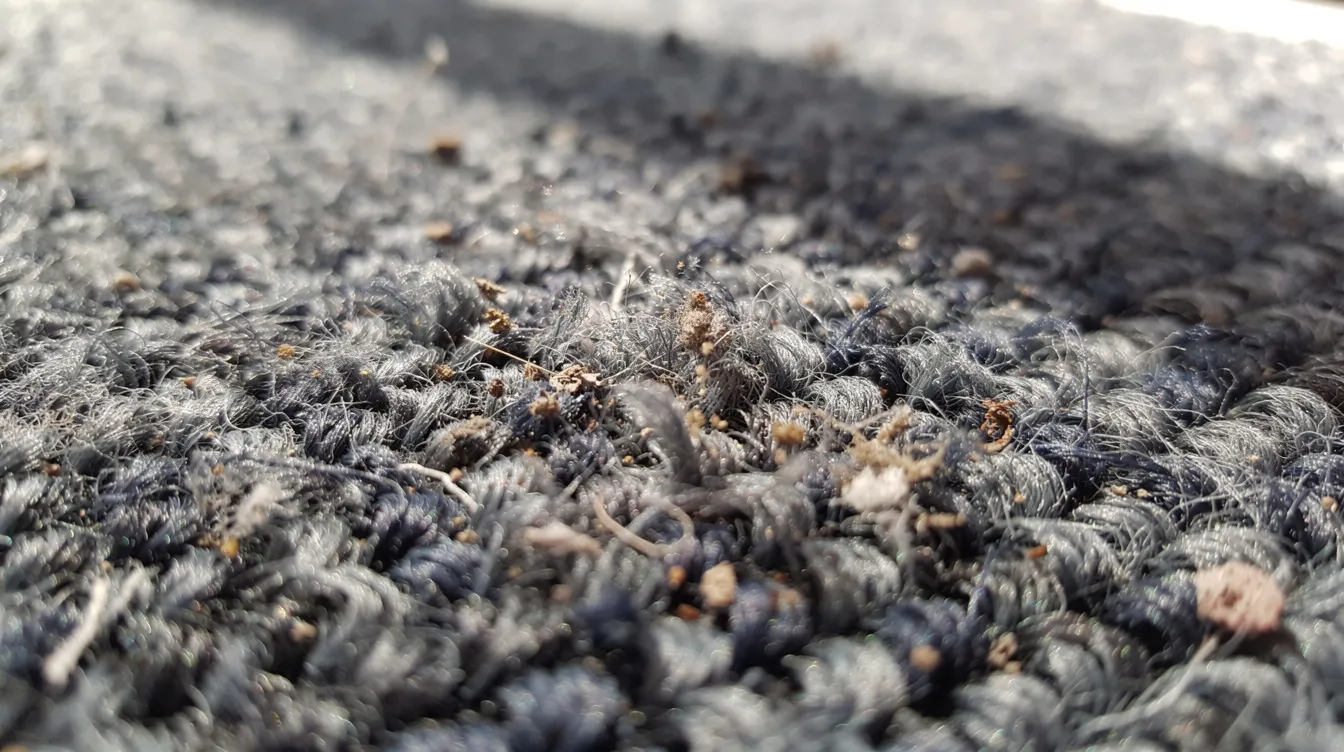
The image shows a close-up view of commercial office carpet fibers illuminated by natural light, revealing embedded dust particles and allergens. This highlights the importance of professional carpet cleaning services to improve indoor air quality and maintain clean carpets.

Dust, Allergens, and Microbes in Commercial Carpets

Office and facility carpets collect fine outdoor dust, toner particles, food crumbs, pollen, mould spores, and bacteria. Common workplace allergens include dust mites, pet dander carried on clothing from household environments with pets, and mould fragments, all of which contribute to respiratory symptoms. Steam cleaning effectively removes dust mites, allergens, and bacteria from carpets, and professional cleaning can remove allergens trapped in carpet fibres.

Deeper carpet layers, especially in high-traffic areas like commercial corridors and lobby zones, can harbour microbial growth if spills or moisture events are not properly addressed. Carpet cleaning can eliminate pet odours and urine stains effectively, even in workplaces where service animals or visiting pets are present. In medical clinics, schools, and daycare centres across Vancouver, carpet hygiene is directly tied to infection control policies and cleaning frequency.

The Science of Particle Resuspension When People Walk

When people walk, roll office chairs, or push carts, energy at the carpet surface sends settled particles back into the air. Research shows that an adult walking across carpet can resuspend 10–100 million particles per minute-a staggering number in a busy downtown Vancouver office tower during the morning rush, a shift change at a Delta industrial facility, or student traffic at UBC.

Clean carpets release fewer particles because there is simply less loose dust and dirt available to be stirred up. Well-planned carpet cleaning services combined with entry mat systems and regular HEPA vacuuming can significantly reduce resuspension peaks throughout the day, delivering noticeably cleaner air for occupants.

Evidence That Professional Carpet Cleaning Improves Indoor Air Quality

A study published in the Journal of Allergy and Clinical Immunology evaluated hot water extraction and found it reduced surface allergens (dust mite, pet dander) by 83–97%, airborne mould by 55%, and surface bacteria by 90%. Professional cleaning removes allergens from carpets, and deep cleaning improves indoor air quality, not just in homes but across commercial spaces with similar or higher contaminant loads.

Key results from the research:

  • Surface allergen removal: 83–97%
  • Airborne particle reduction (test chambers): 37–78%
  • Surface bacteria reduction: ~90%
  • Greater removal from upper carpet layers (74–100%) than from the carpet base (15–91%)

Consistent, scheduled commercial carpet cleaning is more effective than occasional reactive cleaning triggered only by visible carpet stains or complaints. Professional carpet cleaning can rid spaces of embedded allergens that routine vacuuming alone cannot reach.

Key Steps in a Commercial Carpet Cleaning Process that Support Cleaner Air

Not every method delivers the same IAQ benefits. The cleaning process and equipment matter. A Vancouver office or facility should expect these phases from a quality service:

  1. Inspection – Assess carpet type, soil level, stains, and moisture history by zone.
  2. Dry soil removal – Industrial turbo vacuuming with HEPA-filtered machines removes loosened soil and moisture before wet work begins (this should be performed regularly by your daily or weekly janitorial service).
  3. Pre-treatment and pre-spray – Targeted spot and stain treatment for tough stains and high-traffic lanes.
  4. Deep clean – Truck-mounted hot-water extraction or portable hot-water extraction units are common cleaning method that uses high-temperature hot water and steam extraction to extract dirt, allergens, and bacteria from deep within the pile.
  5. Drying and grooming – Air movers and ventilation ensure carpets are completely dry within 12–24 hours, preventing mould.

Eco-friendly products and thorough rinsing are essential. Stain removal and stain protector or carpet protector applications can be added to extend the time between cleans.

Choosing the Right Carpet Cleaning Methods for IAQ in Commercial Buildings

The best carpet cleaning service for your facility depends on your goals:

MethodBest ForDrying TimeIAQ Benefit
Hot water extraction / steam cleaningDeep embedded soil, allergens, bacteria4–12 hoursHighest
Low-moisture encapsulationInterim maintenance, routine upkeep1–2 hoursModerate
Dry foam cleaningFast-turnaround zonesUnder 1 hourModerate
Off-site area rug cleaningEntry rugs, executive spaces1–3 daysHigh

Low-moisture cleaning methods are excellent for routine maintenance but are not replacements for deep cleaning. Advanced methods can lead to quicker drying times compared to DIY methods. The dry foam cleaning method uses low moisture for fast drying in spaces that cannot tolerate extended downtime. Facility managers should consult with experienced carpet cleaners to match the method to carpet construction, traffic level, and IAQ goals-whether that means boardrooms, stairwells, or retail floors. Aggressive scrubbing can damage delicate carpet fibres, so the right approach matters. Furniture should be moved prior to any deep clean for best results.

Aligning Carpet Cleaning Schedules with Vancouver's Climate and Building Use

Vancouver's rainy winters, slushy shoulder seasons, and dry, smoky summers each deposit different contaminants. Entry and corridor carpets may need quarterly deep cleaning in high-traffic downtown buildings, while interior offices can follow a 6–12 month cycle. High-traffic areas may need cleaning every 6 months, and carpets should be professionally cleaned every 12 to 18 months at a minimum to prevent damage. Carpets should be cleaned at least once a year regardless of visible soiling.

Strategic timing matters: schedule deep cleaning after the heaviest soiling seasons, late winter and post-summer wildfire periods. Document your carpet cleaning plan as part of the facility's overall IAQ and preventive maintenance program.

Integrating Carpet Cleaning with HVAC and Ventilation Strategies

Carpets, HVAC filtration, and ventilation work as a system. Schedule deep carpet cleaning just before HVAC filter changes so new filters capture any temporarily elevated airborne particles. Increase outdoor air ventilation and run systems at higher fan speeds for several hours after major cleaning appointments to flush residual moisture and vapours.

Coordinate with both carpet cleaners and mechanical contractors to avoid shutting down ventilation during drying time phases. When carpets are professionally cleaned and combined with high-MERV filters and regular duct cleaning, you get a robust IAQ program, not isolated efforts.

Risk Management: Moisture, Mould, and "Sick Carpet" Scenarios

Poor carpet cleaning practices-over-wetting, inadequate extraction, slow drying-can worsen IAQ by encouraging mould and bacterial growth. Improper cleaning can lead to damage, such as fibre degradation or sticky residues that attract more soil.

Warning signs of "sick carpet":

  • Persistent musty odours
  • Recurring dark patches near walls or furniture
  • Staff complaints about headaches or congestion
  • Visible wicking stains after cleaning

Vancouver's high ambient humidity makes professional moisture management especially important. Use controlled-moisture methods, powerful extraction equipment, and air movers. Investigate any water intrusion incidents and use restorative cleaning or replacement when IAQ could be compromised.

Developing a Carpet Maintenance Plan Focused on Clean Air

A written plan should include:

  • Zone mapping: Identify carpeted areas, traffic levels, and risk zones
  • Daily standards: HEPA vacuuming to remove surface dust
  • Interim and deep cleaning frequencies: Match to soil level and occupancy
  • Roles: In-house janitorial vs. external cleaning services

Routine extraction preserves carpet texture and colour by removing embedded grit. Use measurable indicators-appearance, dust on horizontal surfaces, staff feedback-to adjust over time. Regular cleaning extends the life of carpets significantly, and aligning the plan with WELL or LEED certification goals adds value.

What Vancouver Facility Managers Should Ask Prospective Carpet Cleaners

When sourcing a company for commercial work in Vancouver, Burnaby, Richmond, or the North Shore, ask about:

  • Training and certifications (IICRC-certified technicians use non-toxic cleaning methods)
  • Commercial project references from similar buildings and customers
  • Use of low-VOC eco-friendly products and HEPA-filtered vacuums
  • Their carpet cleaning process: pre-inspection, spot treatment, wash method, and drying time protocols
  • How they handle heavily soiled traffic lanes and persistent stains
  • Scheduling flexibility: after-hours or weekend cleaning appointments to minimize disruption
  • Transparent pricing and willingness to provide an accurate quote before the job begins

Cost, Budgeting, and Return on Investment for IAQ-Focused Carpet Cleaning

Carpet cleaning costs vary by room size and condition. In commercial settings, carpet cleaning prices are often based on square footage, with Metro Vancouver rates typically ranging from CAD $0.15–$0.35 per square foot for standard extraction. Professional carpet cleaning typically costs $25 to $70 per room in smaller spaces. For reference, residential benchmarks like three bedrooms, hall, and stairs cleaning starts from $229, while area rug cleaning starts at $110 in Brampton-commercial rates scale with scope and access complexity.

Budget through a lifecycle lens: extending carpet replacement intervals, reducing tenant complaints, and supporting lower absenteeism. Service contracts with fixed frequencies or multi-year agreements lock in pricing while ensuring consistent IAQ benefits. Document outcomes-reduced visible dust, fewer odour complaints, positive employee feedback-to justify investment.

Special Considerations for Area Rug Cleaning in Commercial Spaces

Many Vancouver offices, lobbies, and meeting spaces use area rugs and runners over hardwood floors. These rugs capture outdoor pollutants, moisture, and de-icing residues and require more frequent attention than interior carpet. Area rugs should be cleaned 3–4 times a year in high-traffic entries. Oriental rugs benefit from cleaning every 18–24 months with specialized rug cleaning services to preserve wool fibres and dyes.

High-value rugs in reception areas may benefit from off-site area rug cleaning, where submersion and controlled drying can address deeply embedded soil and odours. Rug cleaning for commercial spaces should be integrated into the overall IAQ plan, not treated as a household afterthought. Ensure rugs are completely dry with non-slip pads before reinstallation.

Communicating Carpet Cleaning and IAQ Improvements to Occupants

Show staff and tenants you are investing in their health. Simple communications-lobby notices, email updates, or intranet posts before and after cleaning-go a long way. Address concerns about chemical odours and access restrictions by explaining how low-VOC products and after-hours scheduling reduce disruptions.

Share results: improved appearance, reduced odours, upholstery cleaning added to the scope, and positive feedback from cleaning audits. Transparent communication supports broader ESG, wellness, and sustainability reporting for organizations across Vancouver and Canada.
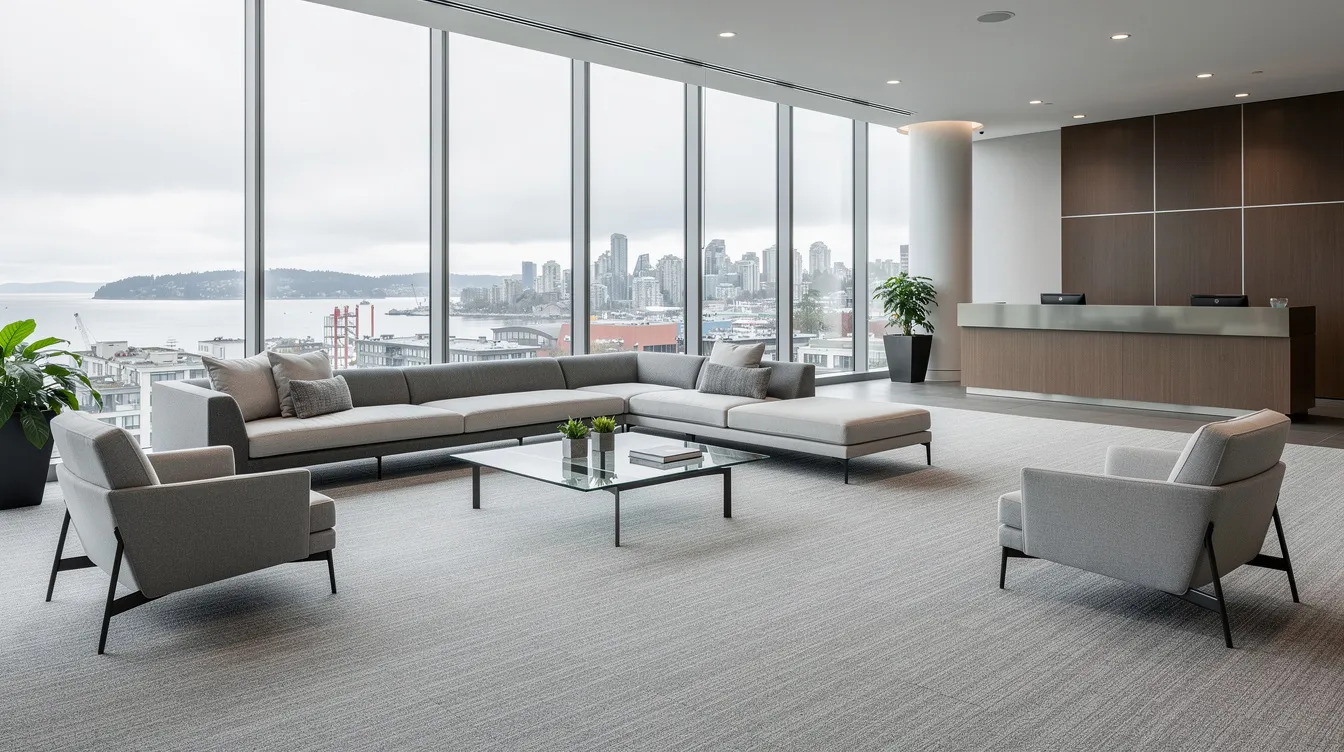
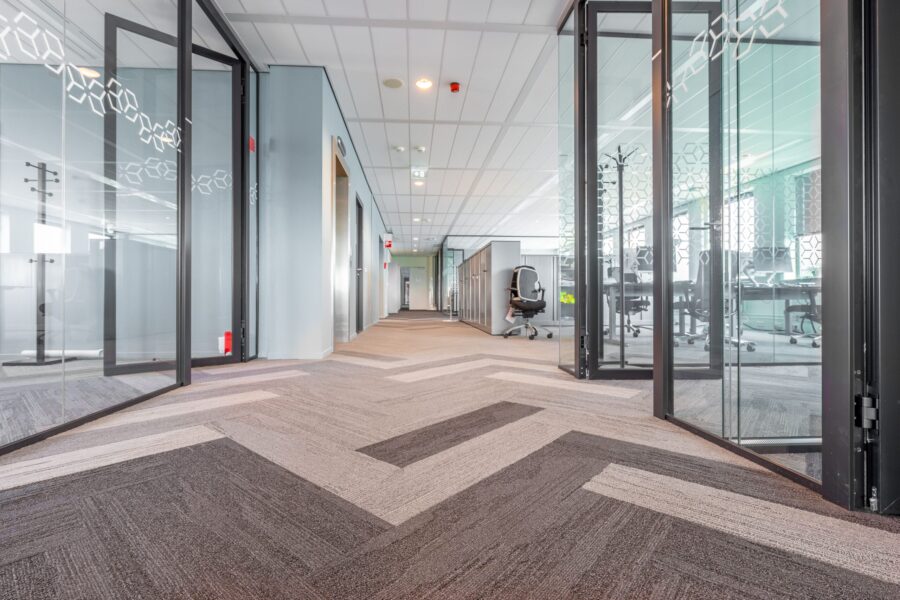
The image depicts a modern office lobby in Vancouver, featuring a clean carpet and a professional arrangement of furniture. The well-maintained carpet enhances the indoor air quality, showcasing the importance of carpet cleaning services in creating a welcoming environment.

Summary: Turning Carpets from IAQ Risk into IAQ Asset

Carpets in commercial buildings can either trap and slowly release pollutants or, when maintained properly, function as part of an effective air quality management system. Evidence-based carpet cleaning processes, combined with smart scheduling, Vancouver-specific planning, and HVAC integration, meaningfully improve what occupants breathe.

Review your current practices. Treat carpet cleaning services not as a cosmetic expense but as a critical component of workplace health, risk management, and tenant satisfaction. As research on carpets, VOCs, and particles evolves, partnering with professional carpet cleaning providers who stay current with best practices gives your facility a measurable edge.

Give us a Ring

As a quality-first commercial cleaning company, Metropolitan doesn’t just want you to be happy with your experience and the cleaning itself; we want to build a long-term relationship that is easy–check out our cleaning services, or reach out!

📞 Call us at 778-565-5435

Or Request a Quote today!

Frequently Asked Questions About Commercial Carpet Cleaning and Indoor Air Quality

How often should commercial carpets be cleaned to support good indoor air quality?

  • High-traffic areas like lobbies and corridors may need quarterly deep cleaning plus frequent interim maintenance.
  • General office areas with moderate traffic can be deep cleaned every 6–12 months with daily HEPA vacuuming.
  • Facilities with sensitive populations (medical, schools, elder care) may require more frequent cleaning based on IAQ policies.
  • Homes with pets should clean carpets every 3–4 months; the same logic applies to commercial spaces welcoming service animals.

Do carpets have to be replaced to improve indoor air quality, or is cleaning enough?

  • Thorough professional carpet cleaning can significantly improve IAQ without replacing carpet in most cases.
  • Replacement may be necessary when carpets are severely worn, water-damaged, or contaminated with mould that no longer responds to treatment.
  • A qualified carpet cleaner or building hygienist can assess whether restoration or removal is more cost-effective from both IAQ and lifecycle perspectives.

Will staff or tenants notice strong chemical smells after commercial carpet cleaning?

  • Modern carpet cleaning professionals use low-VOC, low-odour solutions that minimize chemical smells compared to older products.
  • Scheduling major work for evenings or weekends allows residual odours and moisture to dissipate before staff return.
  • Good ventilation and HVAC operation after cleaning further reduces any remaining scent and supports better drying time outcomes.

How can I tell if a carpet cleaning company really supports better indoor air quality?

  • Check for IICRC certification, clear written processes, and use of HEPA-filtered vacuums and controlled-moisture methods.
  • Ask for references from other Vancouver commercial clients who can speak to both appearance and perceived air quality improvements after the job.
  • Companies willing to discuss IAQ goals, provide transparent pricing, and integrate their work with your HVAC schedule are more likely to deliver real results.

Do we need to close offices or retail spaces during carpet cleaning?

  • Many commercial cleaning appointments in Vancouver are done after hours or overnight to avoid disruption to customers and staff.
  • Limited spot cleaning or low-moisture methods can sometimes be performed during business hours in small zones if walkways are managed with signage.
  • Plan and communicate with occupants to balance business continuity with safe, effective maintenance while surfaces become completely dry.
 

Cleaning Service Carpet: A Practical Guide for Vancouver Property & Office Managers

Cleaning Service Carpet: A Practical Guide for Vancouver Property & Office Managers

If you manage a commercial property, office, or strata building in Vancouver, you already know the carpet situation. Rain-soaked lobbies, grey traffic lanes in corridors, and that unmistakable musty smell after a long, wet winter. This guide breaks down exactly how to approach cleaning service carpet decisions for commercial spaces, covering methods, costs, scheduling, and the specific challenges of Vancouver's climate so you can protect your assets and keep tenants happy.

Key Takeaways

  • Professional carpet cleaning services for Vancouver commercial properties deliver significant ROI by reducing replacement costs, enhancing tenant retention, and maintaining healthier common areas.
  • Regular carpet cleaning can extend carpet life by 3–5 years in high-traffic commercial spaces such as strata lobbies, office corridors, and retail locations along Robson Street, Granville, and Broadway.
  • A planned commercial carpet cleaning schedule, quarterly or semi-annual, prevents costly permanent stains and odours in shared spaces.
  • Property and office managers can streamline operations by outsourcing cleaning schedules, establishing one recurring annual appointment covering all priority commercial common areas.
  • Selecting the right carpet cleaning company and method for Vancouver's wet climate and commercial traffic is crucial, focusing on quality and expertise rather than just the lowest price.

Why Vancouver Commercial Carpets Look Terrible So Fast

Vancouver's long rainy season runs roughly from October through April. During those months, every person walking through your building entrance tracks in moisture, sand, grit, and de-icer salts from Vancouver's temperate oceanic climate. That constant wet-soil loading is the single biggest reason commercial carpets in this city deteriorate faster than the manufacturer's lifespan suggests.

High-traffic commercial areas take the worst beating. Elevator lobbies, parkade entrances, and ground-floor common spaces along West Georgia and Kingsway accumulate dirt and debris at rates that overwhelm standard janitorial vacuuming. Moisture helps particles adhere to carpet fibres and grind deeper with every footstep, creating grey traffic lanes and permanent crushing that makes carpets appear dirty within a year of installation.

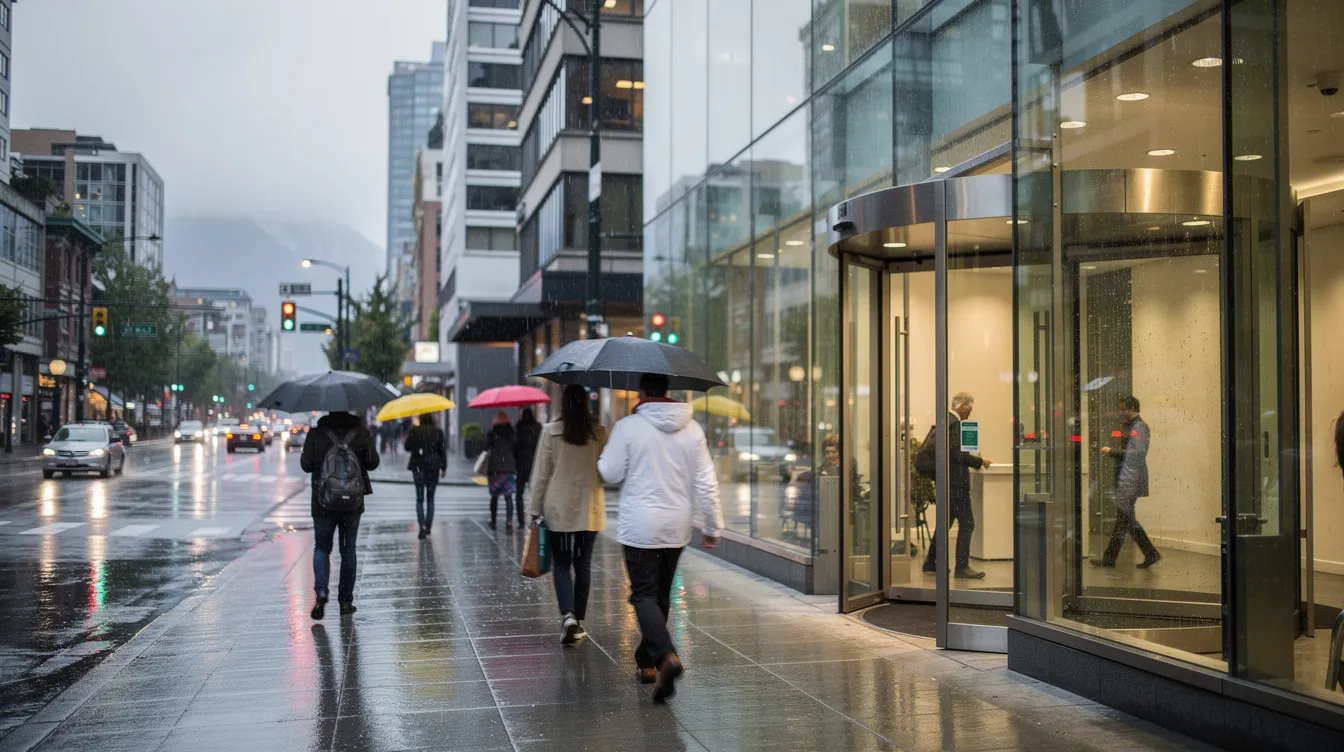
A rainy sidewalk in Vancouver shows people walking towards a glass-fronted commercial building lobby, with reflections of the cityscape shimmering on the wet pavement. The scene captures the hustle and bustle of urban life, hinting at the importance of maintaining clean carpets indoors for better indoor air quality and comfort.

Common commercial carpet stains compound the problem. Coffee spills in meeting rooms, take-out food in open-plan workplaces downtown and Mount Pleasant, and rolling office chairs that fray seams and flatten pile-all contribute to rapid soiling. In pet-friendly strata buildings, pet urine and tracked-in mud add another layer of damage.

Consider a 10-storey strata near Metrotown where rain and salt tracking produced dark traffic lanes across 2,500 square feet of lobby and corridor carpet. Or a 5,000 sq. ft. office near Waterfront Station, where roller chairs and daily foot traffic flattened nylon broadloom within 18 months. These are not outliers-they are the norm for Lower Mainland commercial properties without a planned cleaning strategy.

The Business Case: Cleaning Service Carpet vs. Early Replacement

Planned commercial carpet cleaning is a capital preservation strategy, not a cosmetic expense. The numbers make this clear.

Carpet cleaning costs vary by room size and condition, but professional carpet cleaning in Metro Vancouver typically runs CAD $0.30–$0.45 per square foot for standard offices. Professional carpet cleaning typically costs per room or by square footage, with minimum call-out fees of $185–$250 per visit. Compare that to carpet replacement at $6–$12 per square foot installed. For a 3,000 sq. ft. office, quarterly cleaning might cost $3,600–$5,400 annually, while full replacement runs $18,000–$36,000.

Carpets professionally cleaned on a set schedule can last through 2–3 lease cycles, extending lifespan by 40–60% compared to reactive cleaning. That means delaying a $20,000–$60,000 replacement project by years. Regular cleaning extends the life of carpets and improves appearance-this is documented across the industry.

A North Shore strata council that implemented semi-annual deep cleaning saw visibly cleaner common areas and fewer complaints at AGMs. The intangible benefits matter too: stronger first impressions for prospective tenants, fewer "the carpets look disgusting" emails to office managers, and improved staff satisfaction.

Professional carpet cleaning removes allergens like dust mites and pollen that accumulate in commercial spaces. Professional cleaning improves indoor air quality significantly, which can mean fewer sick days and better tenant comfort, especially in Vancouver's damp climate, where carpets act as reservoirs for allergens and particulates.

Understanding the Commercial Carpet Cleaning Process

If you need to justify a cleaning appointment to building owners or head office, here is exactly what the carpet cleaning process involves.

Step 1: Pre-inspection and walk-through. Carpet cleaning professionals assess high-traffic lanes, recurring spill zones, soil level in different areas, and carpet age. They identify whether you have nylon, polyester, olefin, wool, or triexta carpet fibres, each requiring different treatment. IICRC certification ensures technicians understand different carpet fibre types and can tailor their approach.

Step 2: Dry soil removal. This should be performed by existing janitorial staff before the scheduled carpet cleaning. Ideally, they should be using HEPA-filter rated vacuums.

Step 3: Pre-treatment and spot work. A targeted pre-spray addresses tough spots-coffee, salt residue, food spills common in lunchrooms and boardrooms or on carpets nearby. This removal phase uses specialized cleaning products formulated for commercial carpet fabrics.

Step 4: Primary cleaning method. The main cleaning process uses hot water extraction or low-moisture encapsulation to penetrate deep into carpet fibres and extract dirt, bacteria, allergens, and residue.

Step 5: Post-clean drying. Where necessary, air movers accelerate drying time so commercial corridors and lobbies are walkable within hours. The goal is to get carpets completely dry as quickly as possible, critical in Vancouver's humid conditions.

Choosing the Right Cleaning Method for Your Vancouver Property

Not every cleaning method fits every building. Property type, carpet fibres, and operating hours all matter.

Hot water extraction (often called steam cleaning) is the deep cleaning choice for heavily soiled strata corridors and lobby carpets after Vancouver's wet winters. Hot water extraction is recommended by most carpet manufacturers as the primary restorative method. Drying time typically runs 6–12 hours in Vancouver's humidity, so schedule accordingly.

Low-moisture encapsulation suits busy downtown offices requiring overnight cleaning with carpets dry by morning. Drying time drops to 30–60 minutes, making it ideal for spaces that cannot shut down. However, this method works best as interim maintenance, not as a standalone replacement for extraction.

Spot-only treatments suffice for boardrooms and kitchenettes with isolated stains, while full-area cleaning is necessary for worn traffic lanes. Knowing when to use each method is what separates the best carpet cleaning service providers from generic vendors.

Regarding carpet construction: commercial spaces typically use loop pile, cut pile, or carpet tile formats. Cut pile carpeting exposes the ends of the fibres and shows wear faster in corridors, while looped pile Berber carpet is popular for home areas but less common in commercial settings. Frieze carpet has tightly twisted fibres for durability in moderate-traffic zones, and texture cut pile carpeting has a velvety finish suited for executive spaces. Understanding what you have installed determines which cleaning method protects your investment.

Area rug cleaning is important for reception rugs, elevator cabs, and branded entrance mats. Some providers offer free next-day rug pick-up for off-site professional care. An Oriental rug requires more careful handling and costs more than standard synthetic pieces. Managers should always ask carpet cleaning professionals which method best suits their specific commercial carpet type.

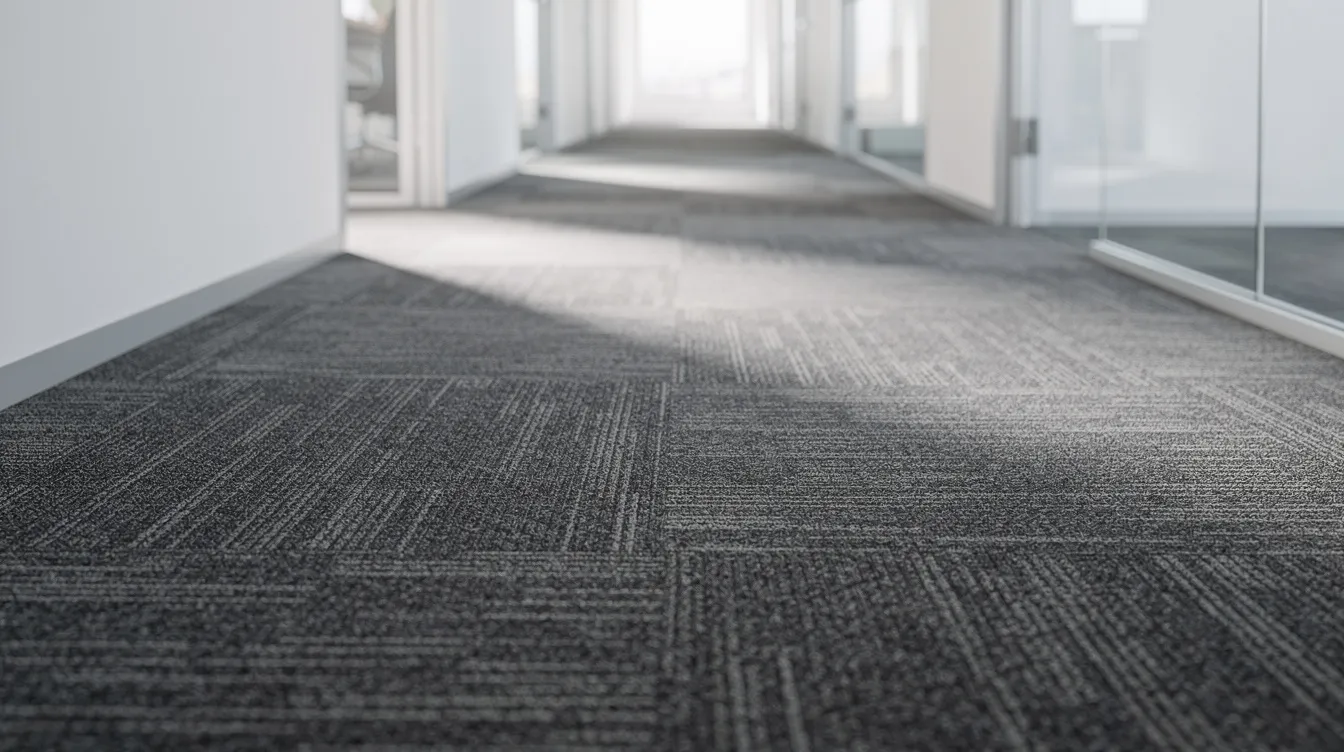
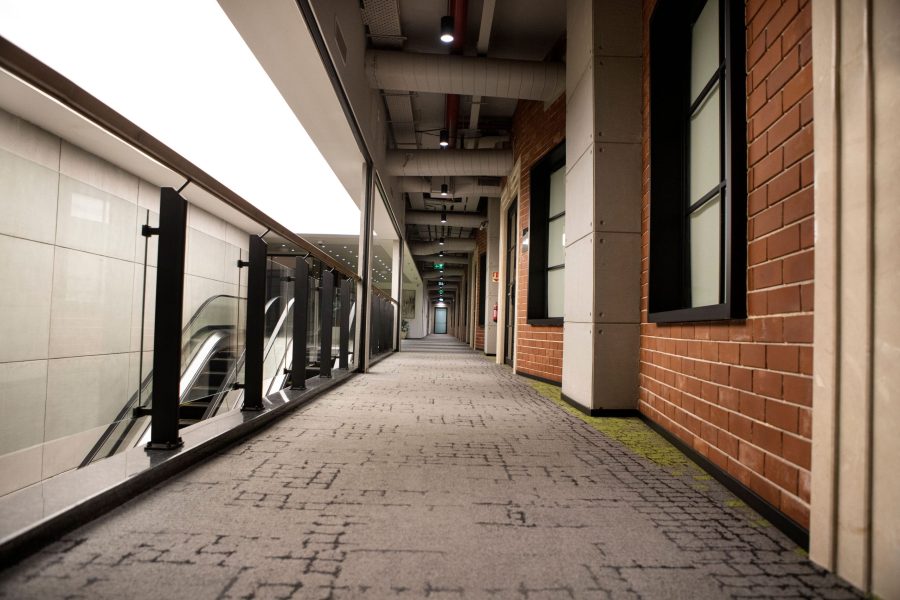
The image shows a close-up view of commercial carpet tiles in a modern office corridor, illuminated by natural light. The carpet fibers appear clean and well-maintained, highlighting the effectiveness of professional carpet cleaning services in enhancing indoor air quality and creating a welcoming environment.

What Property & Office Managers Should Expect from Carpet Cleaning Services

Use this as a checklist before approving any cleaning quote.

Pre-cleaning consultation includes discussing floor plans, exact carpet square footage, and prioritizing high-traffic commercial common areas like lobbies and elevators. Any accurate quote should come after a walk-through, not just a phone estimate. Pricing depends on the specific scope-a small synthetic rug usually costs less to clean than a large broadloom corridor.

Transparent pricing means line-item costs covering open office spaces, stairwells, area rug cleaning, upholstery cleaning, and emergency stain removal without surprise fees. Some carpet cleaning companies offer a fair price with upfront breakdowns. Carpet cleaning prices can include discounts for first-time customers. As an example, some companies across Canada offer promotions like 30% off rug cleaning for first-time customers. While Vancouver pricing differs, expect similar promotional structures from local providers. Reputable carpet cleaners may offer a money-back guarantee for their services.

Communication expectations involve advance tenant notifications, elevator bookings, and scheduling after-hours or weekends to minimize business disruption. A typical night-of-service flow looks like this: crew arrival at 6 p.m., setup of equipment in the loading dock area, systematic cleaning process, room by room, and a final walk-through with property managers or building caretakers before departure.

For further reading on how to get the most out of your carpet cleaning services, check out our expert tips.

Designing a Carpet Cleaning Schedule for Vancouver's Climate

Ad-hoc "when it looks bad" cleaning costs more and delivers poorer results than a planned schedule. Here is a practical framework.

ZoneRecommended FrequencyMethod
Ground-floor lobbies & entrancesQuarterlyHot water extraction + interim encapsulation
Main corridors & elevator lobbiesQuarterlyEncapsulation with annual extraction
Upper-floor hallwaysSemi-annualExtraction or encapsulation
Office floorsSemi-annualEncapsulation preferred
High-traffic retail (Granville, Robson)Monthly traffic lanes + semi-annual fullCombined approach
Reception rugs & elevator landingsAs needed (often quarterly)Area rug cleaning on/off-site

Seasonal timing matters. Schedule a post-winter deep clean in April–May to rid carpets of accumulated moisture, salt, and grit. Add a pre-rain season clean in September to refresh carpet fibres before the wet months return. Carpets should be cleaned three to four times a year to reduce allergens-this aligns perfectly with quarterly scheduling for high-exposure zones.

Establish an annual carpet cleaning calendar at the start of the fiscal year. Approve the schedule once, set recurring service dates, and revisit only if tenant mix or building use changes. This approach eliminates the back-and-forth of ad-hoc booking and ensures you always have clean carpets when it matters.

Handling Carpet Stains and Emergencies Between Visits

Spills and accidents happen between scheduled cleaning services. Property and office managers should maintain a simple, written spot-cleaning protocol for caretakers and janitorial staff, as it is just as important as regular cleaning.

Common commercial issues include coffee spills in meeting rooms, tenant event food and wine stains, pet accidents in pet-friendly strata buildings, and parkade leak stains. Carpet cleaning can help alleviate allergy symptoms when odour removal and deep extraction happen promptly.

Fast response is critical. Many carpet stains become permanent if untreated beyond 24–48 hours, especially on light-coloured commercial carpets. While DIY carpet cleaning is more affordable upfront, it can cause resoiling if incorrect cleaning products or techniques are used.

Practical dos and don'ts:

  • Do blot spills immediately with white cloths-never scrub
  • Do use manufacturer-approved spot treatment only
  • Don't use random household cleaners that can set stains or void carpet warranties
  • Don't over-wet the area-excess moisture in Vancouver's humidity invites mildew
  • Do ask your carpet cleaning companies if they offer priority or same-day spot call-outs for existing commercial clients

Coordinating Carpet Cleaning with Other Building Services

Align carpet cleaning with janitorial, window cleaning, and elevator maintenance to avoid scheduling conflicts and reduce tenant disruption.

Don't book corridor cleaning on the same night as a hardwood floor refinishing job in the amenity room.

Pre-cleaning tasks include:

  • Requesting tenants to clear floors of small items, boxes, and cables
  • Ensuring light furniture in lobbies is moved prior to crew arrival, heavy furniture and fixed installations can often be worked around, but discuss large moves with cleaning services in advance
  • Protecting sensitive equipment or server rooms from moisture

Bundling services-such as scheduling rug cleaning services alongside corridor carpet cleaning, or adding upholstery cleaning for lobby furniture-minimizes total downtime for commercial spaces.

Maintain a simple maintenance log recording each carpet cleaning date, method used, and problem areas. This documentation helps when budgeting for the next fiscal year or presenting to strata councils. It also gives your cleaning provider a record of what cleaning required attention last time, so they can deliver a more targeted job on every visit.

FAQ: Carpet Cleaning for Vancouver Commercial & Common Areas

How often should building carpets be professionally cleaned in Vancouver commercial properties?

Many Vancouver strata and office buildings benefit from quarterly cleaning of main lobbies and entrances, with semi-annual cleaning for upper corridors and office areas. Properties with heavy foot traffic, food service, or pets may require more frequent cleaning-sometimes every 6–8 weeks for high traffic areas. Managers should reassess frequency annually based on visible wear, tenant feedback, and any changes in building use.

Can carpet cleaning be done overnight or on weekends to avoid tenant disruption?

Most commercial carpet cleaners in Vancouver routinely schedule evening, overnight, or weekend appointments for offices and common areas. Confirm building access, elevator bookings, and alarm codes in advance to ensure smooth service. Low-moisture cleaning methods enable carpets to be dry and walkable by the next business day, so customers experience minimal interruption. Many providers let you book online or set up recurring schedules.

Is professional carpet cleaning safe for people with allergies or sensitivities?

Removing dust, pollen, and allergens from carpets improves indoor air quality for sensitive occupants. Carpet cleaning can help alleviate allergy symptoms by eliminating embedded dust mites and bacteria. Managers can request low-VOC, fragrance-free, eco-friendly cleaning solutions suitable for commercial offices and strata hallways. Tenant notifications allow sensitive individuals to avoid areas during and immediately after the process.

Will carpet cleaning remove all stains and traffic lanes?

Many stains can be significantly lightened or removed with proper stain removal techniques, but some older or chemically set stains may only improve rather than fully disappear. Traffic lane damage often involves fibre wear, not just soil-cleaning, which improves appearance but may not restore original colour completely. A carpet protector or stain protector applied after cleaning helps prevent future soiling. Pre-inspection helps set realistic expectations before work approval, so always request an accurate quote and honest assessment.

How should commercial spaces prepare before carpet cleaning?

Move small personal items, boxes, and loose cables off floors in offices and common areas for thorough access. Light furniture should be moved prior to the crew's arrival, where possible. Reserve parking if needed, confirm elevator access, and inform tenants about temporary corridor or lobby closures. Large furniture and fixed installations can often be worked around, but discuss heavy moves with your cleaning service in advance. Proper preparation ensures the quality of work matches the quality of planning.


10 FAQs Property Managers Have About Clean Services for Their Buildings

10 FAQs Property Managers Have About Clean Services for Their Buildings

Property managers in Vancouver and the Lower Mainland face unique challenges when hiring cleaning companies to maintain their commercial and residential buildings. They require reliable, locally owned services that consistently deliver exceptional cleaning tailored to offices, strata complexes, retail spaces, and multi-family residential properties.

Coordinating cleaning appointments that fit complex schedules and balancing tenant expectations with budget constraints are critical. Ensuring the cleaning company is fully insured, bonded, and trained for specialized tasks like post-construction cleanup, oven and window cleaning, and deep cleaning is essential.

This guide addresses these common concerns and offers practical insights to help property managers select and manage the right cleaning partner who takes pride in maintaining fresh, clean environments throughout Vancouver and the Lower Mainland.

Introduction: Professional Commercial Cleaning Services for Vancouver & The Lower Mainland

Reliable professional cleaning is critical in Vancouver, BC, for offices, strata buildings, retail spaces, warehouses, and other commercial properties to maintain hygiene, safety, and a positive impression. Vancouver's climate-roughly 2,200 mm of annual rainfall-accelerates the buildup of grime, moss, and moisture-related issues in commercial spaces, making recurring cleaning not optional but a core operational necessity.

This guide is designed specifically for building managers, facility managers, admin managers and assistants, property managers, and small business owners in the Lower Mainland who oversee commercial properties. We focus exclusively on commercial cleaning services, including office buildings, strata common areas, retail units, light industrial spaces, and medical or professional offices. Cleaning services can be categorized into residential, commercial, and specialized services, but for this article, we zero in on the commercial side.

High-density areas such as Downtown Vancouver, Metrotown in Burnaby, Surrey City Centre, and rapidly growing commercial hubs in Coquitlam and Langley rely heavily on trusted professional cleaning providers.

1. What commercial cleaning services do you offer for office, strata, and retail properties?

Commercial cleaning involves scheduled cleaning for offices, schools, retail spaces, and shared facilities. Here is what a comprehensive cleaning company typically covers:

  • Routine office cleaning includes nightly or weekly cleaning of workstations, meeting rooms, lobbies, and washrooms in buildings along Burrard Street, Broadway Corridor, and Surrey's King George Blvd. Standard cleaning is regular maintenance usually done weekly or bi-weekly to keep commercial spaces presentable and hygienic.
  • Strata and condo common-area cleaning covers lobbies, elevators, hallways, amenity rooms, fitness areas, and parkade access points in areas like Yaletown, Coal Harbour, Brentwood, and Port Coquitlam. This includes everything from front door glass to elevator button panels.
  • Retail units and medical/professional offices in Richmond, Langley, and New Westminster receive front-of-house cleaning, washroom sanitizing, dusting fixtures, and maintenance of glass doors and display areas. Routine residential cleaning includes tasks like dusting, vacuuming, and bathroom cleaning, and these same fundamentals apply to commercial washroom and breakroom upkeep.
  • Floor care options include sweeping, mopping, machine-scrubbing hard floors, vacuuming carpets in high-traffic corridors, and specialized care for hardwood floors to preserve finish and durability.
  • Flexible scheduling is offered to commercial clients, including early-morning, after-hours, and weekend cleaning to avoid disrupting tenants and staff. Customized cleaning schedules can be tailored to specific needs and foot traffic patterns in each building.

2. Do you provide specialized commercial cleaning services and add-ons?

Yes. Beyond regular cleaning, professional cleaners handle a range of specialty and project-based work that property managers routinely need:

  • Post-construction cleaning removes construction debris, dust, and residues from renovation or build projects, preparing commercial spaces for occupancy and reducing health risks. Post-renovation cleaning is one of the most requested add-ons for building managers overseeing tenant improvements.
  • Deep cleaning targets hidden dirt and grime in high-use areas such as kitchens, washrooms, elevators, and amenity spaces, often scheduled seasonally or before major events. Deep cleaning services target hidden dirt and grime in homes and offices alike-think behind equipment, inside vents, and grout lines.
  • Specialty cleaning includes services like carpet cleaning and post-construction dust removal. Specialized cleaning services may also include carpet cleaning, window cleaning, and pressure washing for building exteriors. Carpet cleaning in Metro Vancouver typically runs $0.25 to $0.50 per square foot, with minimum service charges around $185–$250.
  • Detailed kitchen cleaning includes degreasing appliance exteriors, cabinet fronts, backsplashes, and sanitizing shared staff kitchens. Oven cleaning is a common add-on during move-out cleaning or deep clean projects.
  • Washroom detail work involves grout scrubbing, descaling fixtures, polishing chrome, and disinfecting high-touch points to maintain hygiene standards.
  • Move-in and move-out cleaning services help commercial tenants and property managers prepare spaces for new occupants. For rental property turnovers, these services help recoup security deposits by ensuring the entire home or unit meets landlord's and inspection standards.
  • Short-term rental cleaning prepares properties for new guests quickly, handling turnarounds for commercial rental units between tenants.

Cleaning services can be customized for specific client needs-whether that means scent-free products for a medical office or heavy-duty degreasing for a restaurant kitchen.

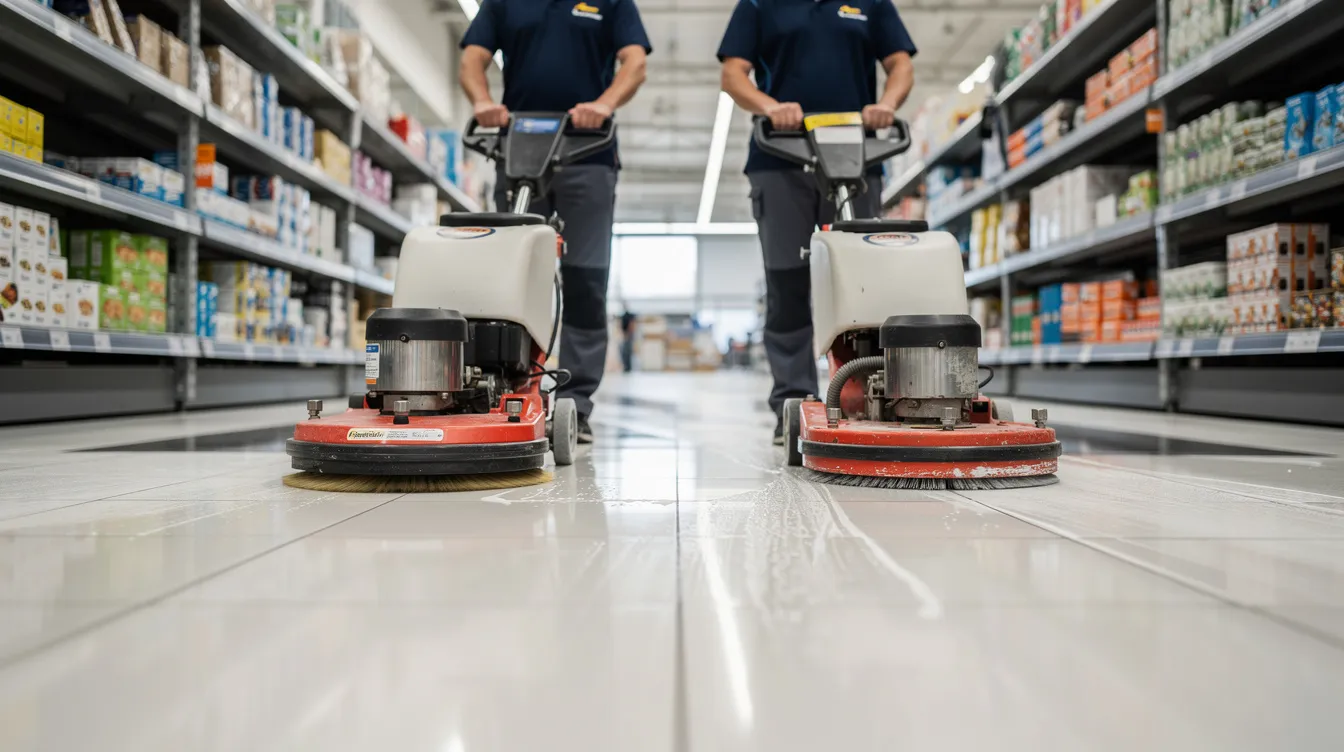
A professional cleaning team is seen in close-up, diligently using commercial floor scrubbing equipment on polished tile in a large retail space, showcasing their attention to detail and commitment to providing exceptional service. This image highlights the expertise of cleaning professionals dedicated to maintaining a sparkling clean environment for commercial clients.

3. How are your cleaning professionals trained and insured?

For building managers responsible for multi-million-dollar assets, the cleaning team working in your property needs to be vetted, trained, and covered. Here is what to expect from a professional service provider:

  • The cleaning team should be fully insured in British Columbia, with commercial general liability coverage and WorkSafeBC workers' compensation. Always verify current certificates.
  • Trained cleaners follow detailed checklists for thorough cleaning-this is non-negotiable for strata and office work.
  • Crews follow site-specific instructions for buildings in downtown Vancouver, Surrey Central, and business parks in Richmond and Delta, respecting access hours and security requirements.
  • Consistency is prioritized by assigning the same regular team to recurring clients whenever possible. This is especially valued by strata councils and office managers because a trusted cleaner familiar with the building catches problems faster and delivers a more reliable cleaning experience.

4. What scheduling and access options are available for commercial cleaning?

Scheduling flexibility is one of the most important factors when providing cleaning services to commercial properties in the Lower Mainland.

  • Frequency options include one-time cleans, weekly, bi-weekly, and monthly service for commercial clients, plus nightly cleans for larger offices or retail locations. Standard cleaning is regular maintenance usually done weekly or biweekly, but many managers also schedule periodic deep cleans quarterly. Vancouver providers typically accommodate both one-time and recurring cleaning schedules.
  • Typical building access times range from 6 pm–11 pm for downtown offices to early mornings for retail on Robson Street or Richmond's No. 3 Road. After-hours work avoids tenant disruption but requires clear alarm and lockup procedures.
  • Key-handling and fob/access-card procedures are managed securely with labelled keys, sign-out logs, and designated on-site storage to maintain building security.

Facility and property managers are encouraged to provide building orientation notes covering parking, loading bays, waste rooms, and any restricted floors to improve cleaning efficiency. Booking online or by phone for a cleaning appointment should be straightforward-look for providers with clear, responsive scheduling systems.

5. How do you ensure quality control and customer satisfaction?

Long-term relationships with Vancouver and Lower Mainland commercial clients depend on predictable quality and clear communication. Here is how top cleaning companies maintain standards:

  • Inspection processes include periodic site checks by supervisors, a detailed checklist left on-site for large facilities, and photo verification for move-out or post-renovation cleaning projects. Many services offer a 100% satisfaction guarantee for cleaning.
  • Communication channels include email, phone, and text updates before and after service, especially for off-hours commercial cleaning. If something is missed, a worry-free re-clean policy means the provider returns promptly at no extra charge.
  • Customer satisfaction is maintained through documented follow-ups after initial cleans, simple issue reporting processes, and rapid touch-up visits when necessary. Regular professional cleaning reduces dust, allergens, and germs in homes and offices, and professional cleaning reduces allergens and improves indoor air quality-both measurable benefits you can point to when justifying your cleaning budget to ownership.
  • Service logs can be maintained for building managers, recording dates, cleaning scope, and any maintenance or wear-and-tear observations made by cleaners-such as water damage, peeling paint, or cracked grout that might otherwise go unnoticed.
  • Managers are encouraged to share seasonal or event-based cleaning needs, such as year-end tenant appreciation events or summer move-in waves for commercial tenants.

The image shows a person from the neck down, focused on writing on a clipboard, possibly detailing tasks related to house cleaning or office cleaning services. The setting suggests an organized environment, emphasizing attention to detail and professionalism in cleaning services.

6. What factors affect commercial cleaning pricing and how are quotes provided?

Prices in Vancouver and the Lower Mainland vary based on size, scope, access, and cleaning frequency. Here is how to navigate the quoting process:

  • Primary cost drivers include square footage, number of washrooms, flooring types (including hardwood floors and carpet), current cleanliness level, and whether the service is regular recurring cleaning, deep clean, or post-construction cleaning. Hiring professional cleaners saves time and energy for individuals and businesses-professional cleaning saves an average of 2–3 hours per week, which adds up fast across a multi-building portfolio.
  • Commercial cleaning services for offices and strata are often quoted per visit or monthly, based on a defined scope and frequency. Hourly rates in the region typically range from $40 to $60 for standard janitorial work, with strata monthly costs running from about $800 for small buildings to $6,000+ for large complexes with extensive amenities.
  • Many companies use a flat rate pricing model for predictability-property managers prefer knowing exactly what they will pay each month. Discounts for recurring services are common in cleaning companies.
  • Managers should provide floor plans or approximate square footage, photos, and current cleaning challenges (e.g., construction dust, heavy foot traffic) when requesting a professional cleaning quote.
  • Using the same company for both common-area cleaning and occasional unit turn cleans can improve pricing consistency and service quality. Professional cleaning services improve hygiene and increase productivity-a direct benefit for office tenants and retail operators.

7. How do I choose the right commercial cleaning company for my building?

Choosing the right cleaning company is one of the most impactful decisions a property manager makes. Here is a practical checklist:

  • Verify insurance: Confirm the company is fully insured, holds active WorkSafeBC coverage, and maintains commercial general liability insurance. This is non-negotiable for commercial and strata work. Ask for current certificates of insurance and bonding.
  • Ask about training and supervision: How are cleaners evaluated? What does onboarding look like for a new building? Will the same cleaning team consistently service the property? A company that takes pride in crew retention delivers better results.
  • Confirm service range: The right cleaning company should offer both regular cleaning and specialized project work, so one partner can handle daily office cleaning through to post-renovation cleanup-plus house cleaning services and home cleaning services for managers who also oversee furnished rental property units or executive suites. UrbanMop, for example, offers cleaning services tailored to unique customer needs across both residential and commercial clients.
  • Check reviews and references specifically from Vancouver, Burnaby, Surrey, and nearby cities. Prioritize feedback from other property managers and business owners who can speak to reliability, quality, and whether the company does an excellent job under real conditions.
  • Review contracts carefully: Ensure service agreements clearly outline scope, frequency, supplies, equipment, and procedures for reporting and resolving issues. Look for a satisfaction guarantee and clear protocols for touch-ups or a re-clean if standards are not met.

A locally owned cleaning company with deep roots in the Lower Mainland will understand the climate, the buildings, and the expectations of local clients better than a national chain parachuting in.

8. How far in advance should I book deep cleaning or post-construction cleaning?

  • Deep cleans and post-construction cleaning slots book quickly around peak renovation seasons and major commercial move dates. Spring (March–April) and fall (October–November) are especially busy.
  • Booking at least 7–10 days in advance is recommended for small offices and strata common areas; 2–3 weeks ahead for larger commercial spaces or entire rental buildings.
  • Managers handling multiple units should provide schedules early to allocate sufficient cleaning teams. Share your timeline as soon as the project scope is confirmed-this ensures the provider can deliver a complete, worry-free turnaround without rushing.

9. Do your cleaners bring their own cleaning supplies and equipment?

  • Yes, professional cleaners bring their own commercial-grade cleaning supplies, vacuums, mops, and equipment suitable for all commercial properties. You do not need to supply your own cleaning supplies unless you have specific requirements.
  • Clients can request specific brands, eco-friendly, or scent-free products to accommodate sensitivities, pets in pet-friendly office environments, or green building policies. If your building has tenants with allergies or chemical sensitivities, make this part of the site orientation. General home cleaning and house cleaning for rental units within your portfolio can use the same provider, keeping things streamlined for your family of properties.

10. Can you clean outside of regular business hours to avoid disruption?

  • Yes, most commercial cleaning in downtown Vancouver, Burnaby, and Surrey occurs early morning, evenings, or weekends to minimize disruption. This is standard for office cleaning services and strata cleaning across the Lower Mainland.
  • Building managers should confirm security and alarm procedures in advance to facilitate after-hours access. A sparkling clean lobby greeting tenants each morning is the result of cleaners working quietly the night before-a reliable, behind-the-scenes professional service that keeps your building running smoothly.

The image depicts a modern commercial building in Vancouver at night, showcasing a brightly illuminated lobby visible through large glass entrance doors, highlighting the inviting atmosphere of the space. This setting reflects the attention to detail and professional service often associated with reliable commercial cleaning services.

Choosing the Right Cleaning Service Partner

Choosing the right cleaning service partner is essential for property managers aiming to maintain safe, hygienic, and welcoming commercial buildings in Vancouver and the Lower Mainland.

By understanding these frequently asked questions, managers can confidently select professional cleaning companies that meet their building's unique needs, ensure consistent quality, and provide worry-free service. Whether your top priority is a sparkling clean home for a rental turnover, a fresh office environment for commercial tenants, or a completely satisfied strata council, the right partner will deliver excellent work backed by proper insurance, trained staff, and a guarantee you can count on.

📞 Call us at 778-565-5435

Or Request a Quote today!

Prices for Commercial Carpet Cleaning Services in Vancouver (2026 Guide)

Prices for Commercial Carpet Cleaning Services in Vancouver (2026 Guide)

If you manage an office, retail space, or strata property in the Lower Mainland, knowing current carpet cleaning prices helps you budget accurately and avoid overpaying. This guide breaks down what commercial carpet cleaning services actually cost in Metro Vancouver in 2026, from per square foot rates to add-on treatments, so you can compare quotes with confidence.

Key Takeaways

  • Most commercial carpet cleaning in Vancouver ranges from about $0.25–$0.50 per square foot, with typical office jobs falling in the $0.30–$0.45 range. Minimum service calls generally run $185–$250 per visit.
  • Offices pay less per square foot when cleaning multiple rooms or whole floors in a single visit, thanks to reduced setup and mobilization overhead.
  • Prices vary depending on carpet type, cleaning method (steam cleaning vs dry carpet cleaning), building access, soil level, and extra services like stain removal or deodorizing.
  • Recurring maintenance plans can reduce annual carpet cleaning cost by 10–30% compared with one-time deep cleaning events.

How Much Does Commercial Carpet Cleaning Cost in Vancouver in 2026?

So, how much does carpet cleaning cost for a commercial space in Vancouver right now?

Across Metro Vancouver, carpet cleaning costs range from $0.25 to $0.50 per square foot for professional carpet cleaning, with most standard office jobs landing between $0.30 and $0.45.

For smaller defined spaces, expect $80–$120 per room for standard office-sized rooms of 150–250 sq ft. Minimum service fees for carpet cleaning range from $100 to $150 for residential jobs, but commercial call-outs in Vancouver typically start at $185–$250 once you factor in truck-mount setup and travel.

To put those numbers in context: cleaning a 1,000 sq ft professional office in Burnaby with moderate soil via hot water extraction might cost roughly $250–$350. A 5,000 sq ft floor in a downtown Vancouver tower with heavy traffic, lobbies, and cubicle zones could run $1,750–$2,500 or more, depending on carpet condition and extras.

For comparison, the national average cost for carpet cleaning is roughly $180 per service, but that figure skews toward smaller residential jobs. In Ontario, carpet cleaning costs can range from $40 to $60 per room for residential work, which is useful context but not directly comparable to commercial rates here.

Evening and weekend appointments for offices and retail spaces in the Lower Mainland may carry a small premium, typically 10–15%, compared with standard weekday slots. Most commercial quotes are customized after a site visit or floor plan review, especially for multi-tenant buildings or spaces with many cubicles and obstacles.

Whenever getting carpet cleaning quotes, make sure you know how to get the best out of whichever service you go with.

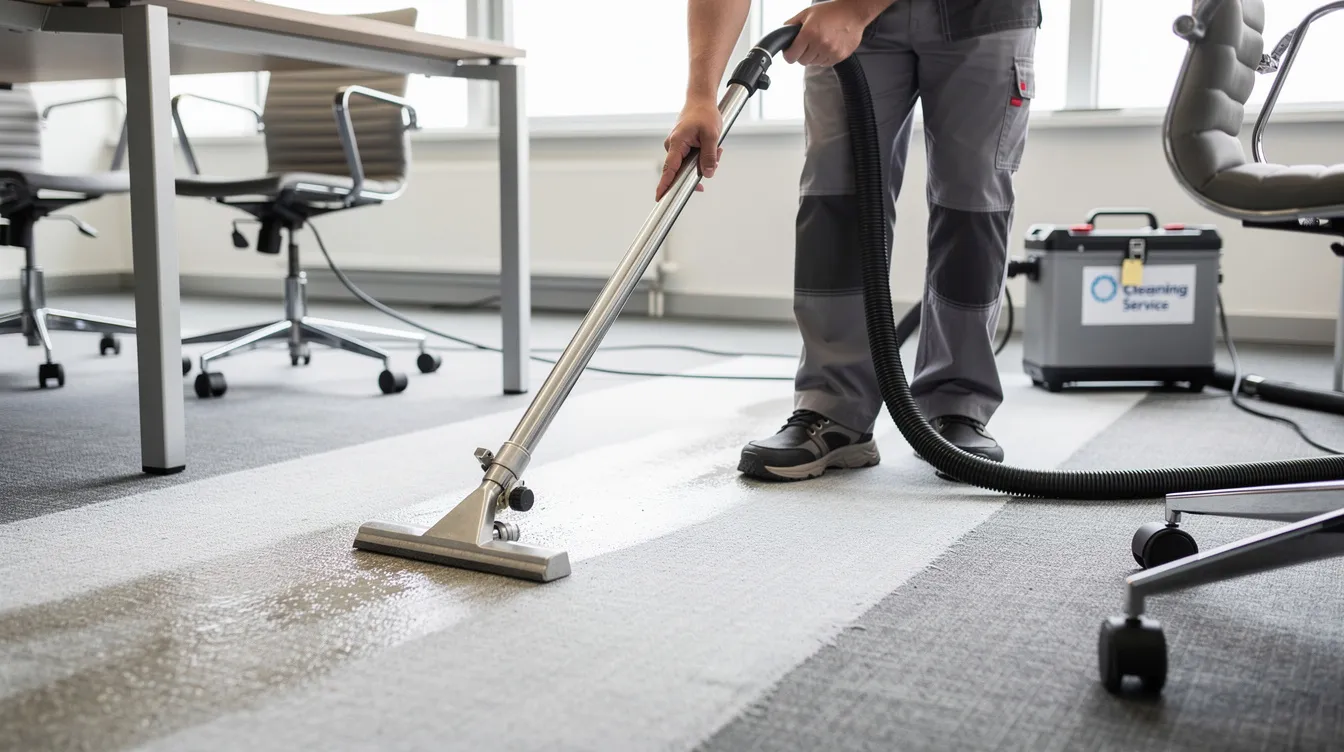
The image shows a professional carpet cleaning service in an office, focusing on the lower half of the scene, including a technician using specialized equipment to clean the carpet. The process highlights the thorough cleaning of carpet fibers to remove surface dirt and stubborn stains, improving indoor air quality.

Pricing Models: Per Square Foot vs Per Room for Commercial Spaces

Common pricing structures include charging by room or by square foot, and the model a cleaning company uses depends largely on the space layout. For open-plan offices, hallways, lobbies, and large retail areas, per square foot pricing ($0.30–$0.45 per square foot) is standard because it scales predictably with square footage. For defined spaces like small boardrooms, private offices, and meeting rooms, per-room pricing is more practical.

Expected carpet cleaning costs typically range from $25 to $90 per room, depending on size and service level. Here is how packages generally break down:

Package LevelPer Room CostWhat's Included
Basic cleaning$25–$40Light pre-vacuum, single-pass extraction
Standard$40–$60Pre-treatment, extraction, spot treatment
Premium$60–$90Deep cleaning, stain removal, protector

Most homeowners spend around $40 to $60 per room for standard deep cleaning, and commercial per-room rates often align with that range for smaller offices. Cleaning a standard room costs $40 to $90+ on average, depending on soil and carpet condition.

The cost per room usually drops when cleaning multiple rooms or entire floors during the same visit. If you are cleaning 5–10 rooms together, you might see 15–25% lower rates compared with booking each room individually. For budgeting purposes, per square foot pricing tends to be easier when managing entire floors or tenant suites, while cost per room works well for smaller, well-defined spaces.

Average Costs by Space Type in Vancouver Offices and Facilities

Different areas within a commercial building attract different rates because use patterns and soil level vary significantly. Open-plan office areas and coworking spaces with regular cleaning histories typically fall at the lower end of the range, around $0.25–$0.35 per square foot in Metro Vancouver.

High traffic areas like reception lobbies, elevator lobbies, corridors, and clinic waiting rooms often cost slightly more-$0.35–$0.45 per square foot-because they need more thorough cleaning, spot treatment, and sometimes multiple extraction passes. Staircases and hallways are often priced separately from flat carpeted floors; stairs may cost around $30 to $90 per set for carpet cleaning, depending on length and condition.

Staff lunchrooms, cafeterias, and break rooms-the commercial equivalent of a dining room-frequently require extra pre-treatment for food and beverage spills, grease, and coffee stains, which can push the per square foot cost up by $0.05–$0.10. Common areas in strata buildings (hallways, amenity rooms, lobby carpets) are usually priced per square foot with possible discounts when scheduling multiple common areas in one visit.

Carpet Cleaning Prices by Method: Steam, Dry, and Low-Moisture

The cleaning method you choose affects both price and downtime, which matters when your space cannot stay closed for long. Here is how the main methods compare for commercial clients:

Hot water extraction (often called steam cleaning) is the most common deep cleaning method. Steam cleaning removes 97% of dirt and bacteria, making it the preferred choice for restorative work. Cleaning method affects pricing; steam cleaning is generally more expensive, typically $0.25–$0.40 per square foot in Vancouver. Drying time runs 4–6 hours, so after-hours scheduling is common. Many carpet manufacturers require hot water extraction to maintain warranties.

Dry carpet cleaning uses a cleaning powder and vacuuming method, with faster turnaround, and spaces can reopen within an hour. This cost-effective option runs roughly $0.08–$0.15 per square foot and works well for maintenance between deep cleans.

Encapsulation cleaning uses a foaming solution that crystallizes dirt, which is then vacuumed away. It is a popular low-moisture cleaning process for 24/7 operations and medical offices. Carpet shampooing involves applying foam and vacuuming it up, suitable for moderate soil. Bonnet cleaning only cleans the top third of the carpet and removes surface dirt, so it is not a substitute for thorough cleaning but can handle interim touch-ups.

Specialized equipment for delicate carpet fibres like wool in executive boardrooms or luxury installations will increase per square foot prices compared with standard nylon office carpet. Carpet type influences cleaning costs due to varying cleaning methods required.

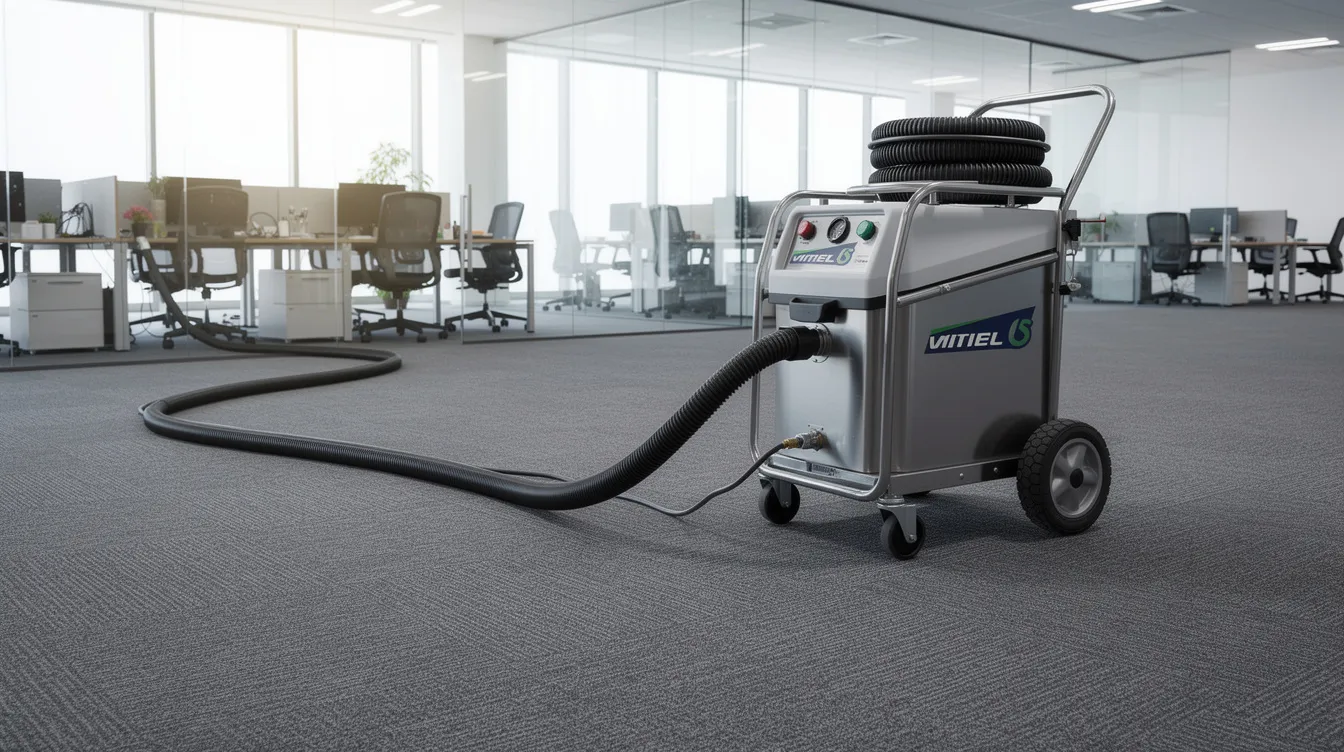
The image features a commercial carpet cleaning machine with hoses, positioned on a large open office floor, showcasing the equipment used for professional carpet cleaning services. This advanced cleaning equipment is essential for maintaining well-maintained carpets and improving indoor air quality in high traffic areas.

Key Factors That Affect Commercial Carpet Cleaning Prices in the Lower Mainland

Vancouver carpet cleaning prices vary depending on a few factors that facility managers can plan around. Here are the major cost drivers:

  • Square footage: Room size significantly affects carpet cleaning costs. Larger continuous areas allow more efficient setup, reducing the per square foot rate. Jobs below a certain square footage may still carry minimum service fees.
  • Carpet's condition and soil level: Carpets with heavy traffic lanes, trapped dirt, or stubborn stains require more pre-treatment, slower equipment speed, and additional cleaning solution. A well-maintained carpet costs less to clean than one neglected for years.
  • Frequency: One-off jobs cost more per visit than recurring maintenance contracts. Regular cleaning prevents long-term carpet damage from dirt accumulation.
  • Accessibility and logistics: Downtown Vancouver towers with limited loading dock access, tight elevators, and security sign-in requirements add labour time. Ground-floor retail in Surrey or Richmond is typically faster and cheaper to service.
  • Carpet type: Loop pile and Berber carpets are generally easier to clean than cut-pile plush. Light-coloured lobby carpets need more detailed spotting. Carpet cleaning costs vary by room size and carpet type.
  • Furniture moving: Moving heavy furniture for carpet cleaning may incur additional charges. You can move furniture yourself to avoid extra charges from carpet cleaners.

Provide accurate floor plans, photos, and notes on known issues (coffee spills, copier toner, grease near kitchens) when requesting quotes to get realistic pricing.

Additional Treatments and Their Costs

Base carpet cleaning prices usually cover standard cleaning only. Optional additional treatments increase both cost and results. Here are the most common add-ons for Vancouver businesses:

  • Stain removal: Specialized treatments for difficult stains like ink, toner, coffee, and red wine can add $15 to $65 to the cleaning cost, depending on severity. Professional carpet cleaners can remove stains that basic cleaning cannot touch, addressing tough stains and lingering smells.
  • Carpet protector: Applying protective coatings like Scotchgard increases the final price of carpet cleaning, typically adding $0.10–$0.25 per square foot. This is worthwhile for high-traffic corridors and entrance areas.
  • Deodorizing and disinfection: Recommended after water leaks, flu season, or tenant turnover in medical or childcare spaces. These additional services improve results for spaces concerned with indoor air quality.
  • Special treatments: Overall, special treatments can add $10 to $30 per room to costs, depending on the product and application method.

Always ask what is included in basic cleaning and what counts as an extra so you can compare quotes between Vancouver professional carpet cleaners accurately.

Cost Differences: One-Time Deep Clean vs Ongoing Maintenance Plans

A one-time deep cleaning of heavily soiled carpets often costs more per square foot because it requires extra pre-treatment, multiple passes, and longer dwell time. Heavily soiled commercial areas can reach $0.40–$0.75 per square foot for restorative extraction.

Maintenance contracts-quarterly or semi-annual-lower the per-visit carpet cleaning cost by spreading mobilization and setup charges across more visits. Bundle multiple rooms for discounts on carpet cleaning services. Use promotions or loyalty discounts to save money over the year. Regular maintenance extends carpet life and reduces cleaning frequency, which directly impacts your carpet's lifespan.

Model your annual cleaning costs: compare one intensive deep clean per year vs quarterly visits. Frequent maintenance keeps well maintained carpets looking professional and can delay costly replacement by several years.

Some Vancouver commercial carpet cleaners offer volume discounts, priority scheduling, and fixed pricing for clients who sign 12–24 month service agreements, providing the best value and budgeting certainty.

Budgeting Examples for Vancouver Offices, Retail, and Strata Properties

Concrete budgets help you forecast costs for 2026 and upcoming fiscal years. Here are three representative scenarios:

Small professional office (1,000 sq ft, Richmond): Open office area, two private offices, and a small staff break room. At $0.30–$0.35 per square foot for standard hot water extraction, expect roughly $300–$350 per visit. A maintenance plan with semi-annual visits would run about $550–$650 per year.

Mid-size downtown Vancouver floor (5,000 sq ft): Corridors, open-plan areas, larger rooms, meeting rooms, and reception. At $0.35–$0.45 per square foot with additional treatments for the lobby and high-traffic zones, a one-time restorative clean might cost $1,750–$2,250. A quarterly maintenance contract could bring the annual total to $4,500–$6,000, but with consistently clean carpet throughout the year.

Strata common areas (2,000 sq ft, Burnaby high-rise): Hallways, lobby, amenity room. At $0.25–$0.35 per square foot, an annual clean runs $500–$700 plus any minimum service fee. Schedule carpet cleaning during off-peak seasons for lower prices-late spring or early fall work well for strata properties.

The image depicts a clean, modern high-rise lobby in Vancouver, featuring a plush carpeted floor and large windows that showcase the city skyline. This inviting space highlights the importance of professional carpet cleaning to maintain well-maintained carpets and improve indoor air quality.

Rug Cleaning and Specialty Carpet Areas in Commercial Settings

Area rug cleaning in commercial settings-reception rugs, boardroom runners, executive office pieces-is priced differently from wall-to-wall broadloom. Area rugs are usually quoted per rug based on size and material rather than per square foot of the entire space.

For common commercial rug sizes, expect roughly $60–$90 for a synthetic 5×7 rug, with fine wool or designer pieces costing significantly more. Rug cleaning for runners and entrance mats follows similar per-piece pricing. Rotating and periodically cleaning entrance mats helps keep the surrounding broadloom clean and can reduce the frequency and cost of professional cleaning service for the whole floor.

Inventory all rugs and mats when seeking quotes from professional carpet cleaners so that costs are included up front rather than added later as unexpected extras.

How to Compare Quotes from Vancouver Commercial Carpet Cleaners

When comparing quotes from any cleaning service, look beyond the lowest number. Here is what to check:

  • Whether pricing is per room or per square foot, and which areas are included (offices, hallways, stairs)
  • What additional treatments are included in the base price versus optional add-ons
  • Whether the cleaning company carries appropriate liability insurance and WorkSafeBC coverage
  • Experience with commercial buildings in the Lower Mainland, with references from similar properties
  • After-hours availability, approximate drying times for each cleaning method, and any building-specific requirements like COI certificates

The Carpet and Rug Institute recommends cleaning every 12 to 18 months for standard commercial spaces, which provides a useful baseline for scheduling. Professional carpet cleaning service providers who follow industry standards and hold IICRC certification tend to deliver more consistent results with advanced equipment.

Verify that quotes specify the cleaning process, number of visits, and any exclusions. A transparent quote from a professional cleaning company makes it far easier to compare apples to apples and find excellent service at a fair price.

📞 Call us at 778-565-5435

Or Request a Quote today!

FAQ: Commercial Carpet Cleaning Prices in Vancouver

How often should a Vancouver office have its carpets professionally cleaned?

Most offices in Metro Vancouver benefit from professional carpet cleaning every 6–12 months. High-traffic areas should be cleaned every 6 to 12 months, including corridors, entrances, and lunchrooms. Homes with pets or children should clean carpets every 6 to 12 months as well, and the same applies to pet-friendly offices. Buildings dealing with heavy winter moisture and rain, common from November to March, often schedule an extra clean in late winter or early spring to address trapped dirt and improve indoor air quality. Medical, childcare, and food-service facilities may require quarterly service to meet hygiene requirements.

Do commercial carpet cleaners in Vancouver usually move office furniture?

Many providers will shift light, movable items like chairs and small tables, but large desks, filing cabinets, and workstations are typically left in place. Many professionals charge extra for furniture moving during carpet cleaning-expect per-room or per-hour surcharges. Decide in advance which areas need to be fully cleared to control both disruption and cost.

Is it cheaper to clean or replace commercial carpet in Vancouver?

Cleaning is almost always cheaper in the short term. A thorough cleaning might cost a few hundred to a few thousand dollars, while replacing commercial carpet, including labour, can easily cost $4–$8 per square foot. If carpets are structurally sound but dingy, a deep steam clean with additional treatments can extend the carpet's lifespan by several years, keeping dust mites and allergens at bay while maintaining air quality. Very worn or backing-damaged carpet in older buildings may be a better candidate for replacement. A reputable cleaner should advise when cleaning will not deliver acceptable results.

Can I get a discount for cleaning multiple rooms or multiple locations?

Yes. Many Vancouver carpet cleaners charge less per square foot or per room when servicing multiple rooms, entire floors, or several sites during the same contract period. Property managers overseeing multiple buildings across the Lower Mainland should ask for bundled pricing or multi-site contracts. Scheduling all work in fewer visits lowers travel and setup time, which is a cost-effective approach that delivers the best value.

How far in advance should I book commercial carpet cleaning in the Lower Mainland?

For standard office jobs, 2–3 weeks' notice is usually sufficient, but peak periods in late summer and year-end may require 4–6 weeks for preferred dates. Emergency work after a spill or leak is often available same-day but may carry a rush fee. Plan cleaning around known shutdowns, tenant turnovers, or renovation schedules to avoid rush premiums and keep your entire home or office running smoothly.


Steam Cleaning Carpet Cleaner: What Building Owners Need to Know

Steam Cleaning Carpet Cleaner: What Building Owners Need to Know

If you searched for “steam cleaning carpet cleaner,” you’re likely looking to buy a home unit.

But if you manage commercial properties in Metro Vancouver, what works for a 1,200 ft² home won’t cut it for a 20,000 ft² office floor in Burnaby.

Key Takeaways

  • Most machines marketed as “steam carpet cleaners” at Canadian retailers are actually hot-water extractors, not true steam units—and this distinction directly impacts cleaning performance in commercial settings.
  • Consumer-grade carpet cleaners lack the tank capacity, pump pressure, and vacuum power needed for strata common areas, office corridors, or healthcare facilities across the Lower Mainland.
  • For commercial properties from Surrey to North Vancouver, truckmount or high-capacity portable extractors deliver 85-95% soil removal versus 60-75% with steam-only methods, plus faster drying times critical in BC’s humid climate.
  • Small home steamers have a legitimate role as spot-cleaning tools for emergency spills, but scheduled professional carpet maintenance remains essential for deep cleaning.
  • Regional factors—including 1,200+ mm annual rainfall, high humidity along the Fraser River corridor, and local IAQ expectations—make proper equipment selection especially important here.

What People Mean By “Steam Cleaning Carpet Cleaner” (And Why It Matters For Facilities)

When building owners search for a carpet steam cleaner, they’re usually picturing machines from brands like Bissell, Hoover, or Rug Doctor sold at Home Depot, Canadian Tire, or London Drugs. Here’s the problem: these carpet cleaners aren’t true steam units at all.

The terminology confusion runs deep in online listings and retail specs. Understanding what you’re actually buying—or hiring—matters for facilities managing thousands of square feet.

Three terms you need to distinguish:

  • True steam cleaner: Heats water to 212°F+ to produce low-moisture vapour, often 250-300°F at the boiler. Excellent for sanitizing surfaces, but lacks rinsing capability for deep soil removal.
  • Consumer carpet cleaner: Home upright machines operating on 120V household power, typically reaching 150-180°F water temperature. Despite marketing phrases like “powerful steam clean,” these are hot-water extractors with limited capacity.
  • Commercial carpet extractor: Professional truckmount or portable systems delivering 200°F+ cleaning solution at 300-1,200 PSI, with powerful suction for moisture recovery.

You should know that spec sheets reveal more than marketing claims. Look for water lift (measured in inches), pump PSI, and heater wattage rather than vague phrases about steam power.

For commercial carpets in multi-tenant offices, residential towers, and healthcare facilities around Vancouver, this confusion creates real problems:

  • False expectations about germ kill and stain removal
  • Underestimated drying times in high-traffic lobbies
  • Overestimated coverage capacity for large square footage
  • Potential warranty violations with major carpet brands installed post-2015
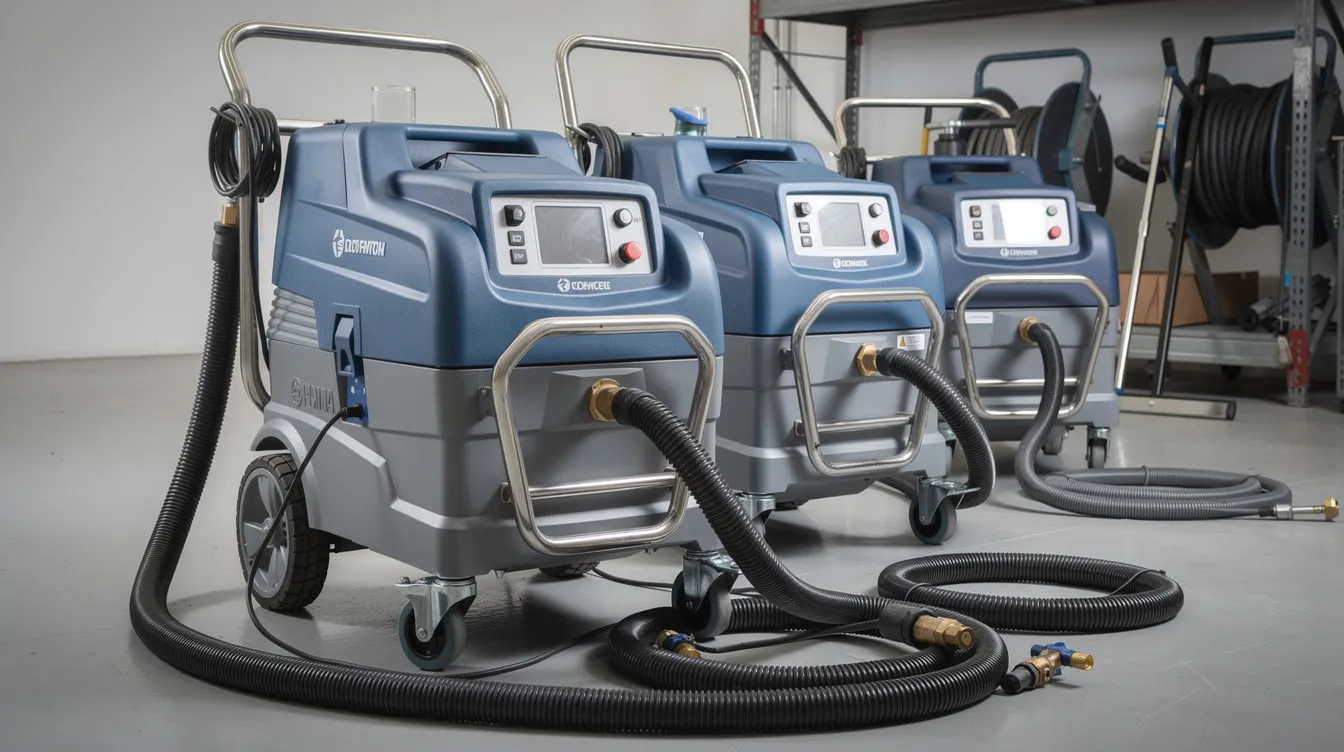
The image showcases professional commercial carpet cleaning equipment, featuring large recovery tanks and industrial hoses designed for powerful suction. This versatile machine is ideal for tackling stubborn stains, pet messes, and everyday dirt on carpets and upholstery, ensuring a deeper clean with ease.

Home Steam Cleaners vs Commercial-Grade Extractors: Capability Gap You Should Not Ignore

If you’re considering purchasing a home machine for your building or strata common areas, the capability gap between consumer and commercial equipment deserves careful consideration.

Tank capacity differences: Consumer portable cleaners hold 1-2 gallons of cleaning solution and recovery water. Commercial portables feature 10-20+ gallon tanks, while truckmounts offer virtually unlimited capacity via direct water supply.

Pump pressure matters: Home units typically deliver under 150 PSI—often as low as 50 PSI. Professional setups generate 300-500 PSI for portables and 1,000-1,200 PSI for truckmounts, driving cleaning solution deep into carpet fibres.

Vacuum performance: Consumer machines use single 2-stage vacuums, achieving around 80-100 inches water lift. Commercial extractors employ dual or triple vacuum systems at 150+ inches, extracting 30-50% more moisture than home units.

Practical implications for Lower Mainland facilities:

Consider a typical scenario: a 20,000 ft² office floor in Burnaby. A 2-gallon home unit designed for 800-1,200 ft² homes might require an entire day of constant refilling, waiting, and moving between sections. A professional truckmount completes the same area in 4-6 hours with superior results.

Weak extraction in consumer units leaves more moisture in dense commercial broadloom. In Metro Vancouver’s 75%+ average humidity, this prolongs dry times from 4-6 hours to 12-24 hours—creating slip-and-fall risks and potential odours.

The real cost calculation: A $600 home steamer plus 8-10 hours of janitorial overtime at Vancouver’s $30-40/hour rates equals $400-600 per use. Professional service runs $0.10-0.20/ft², often proving more affordable in the long run.

Realistic roles for consumer machines in commercial settings:

  • Emergency spot clean on a 1-2 m² spill
  • Tenant DIY in-suite use
  • Quick touch-ups between scheduled professional visits
  • Not suitable for corridors, lobbies, meeting rooms, or amenity spaces

How True Steam & Hot-Water Extraction Actually Clean Commercial Carpets

Understanding the mechanics helps facility managers make informed decisions about equipment and contractor selection.

Hot-water extraction process (often called “steam cleaning” on invoices):

  1. Pre-vacuum with commercial uprights featuring rotating brushes to remove 70-80% of loose soil
  2. Pre-spray alkaline or enzyme cleaner with a 10-15 minute dwell time for breaking down proteins and oils
  3. Agitation via counter-rotating brushes (CRB) or rotary machines at 200-300 RPM
  4. Hot-water rinse at 200°F+ with extraction via truckmount or high-performance portable
  5. Post-grooming for uniform appearance
  6. Forced air drying with air movers (2,000-5,000 CFM) for 4-6 hours of drying

What genuine steam units do well:

  • Sanitizing small areas via 212-300°F contact (kills 99% of surface germs)
  • Cleaning tile, grout, and edges
  • Dealing with greasy elevator thresholds and entrance transition strips
  • Treating stubborn stains in localized spots

True steam lacks the soil suspension and extraction capability needed for full-floor carpet cleaning. Without detergent rinsing, it can actually set stains rather than remove them.

You should know that many carpet warranties from major manufacturers installed in BC offices and condos since 2015 explicitly reference IICRC S100 methods. These standards assume professional-grade equipment, not household machines. Shaw Industries, the world’s largest carpet manufacturer, specifically recommends truckmount hot-water extraction for warranty compliance.

When interviewing contractors, ask whether they use truckmount systems or 15-amp portables, and when they switch between them--know what to ask to get the most out of your your service. Truckmounts work for street-level retail in downtown Vancouver; high-lift portables serve better for high-rises in North Vancouver, where vehicle access is limited.

A close-up view of an industrial carpet cleaning wand is shown extracting water from a commercial carpet, highlighting the powerful suction and effectiveness of professional carpet cleaners in removing dirt and stubborn stains. The image emphasizes the cleaning solution being utilized for a deeper clean and maintenance of the carpet.

Why Facility Managers In The Lower Mainland Rely On Professional Carpet Cleaning Programs

For facility managers, strata councils, and asset managers overseeing properties from Surrey to North Vancouver, professional programs offer advantages that DIY approaches simply cannot match.

Business reasons to choose professional service:

FactorDIY ApproachProfessional Program
Budget predictabilityReactive purchases, surprise repairsScheduled annual costs
Tenant complaintsInconsistent resultsDocumented, reliable outcomes
Capital protectionRisk of damageWarranty compliance
Staff efficiencyDiverted from core tasksFocused on higher-value work

Regional factors demanding professional attention:

Metro Vancouver’s climate creates unique challenges. With 1,200+ mm annual rainfall—peaking October through March—entries and parkades see constant tracked-in moisture, dirt, and de-icing agents like calcium magnesium acetate. These substances corrode carpet fibres if not properly extracted.

Higher humidity levels in older buildings along the Fraser corridor make fast drying essential. Professional cleaners servicing the Lower Mainland typically:

  • Use truckmounts where vehicle access allows
  • Bring high-lift portables to upper floors
  • Employ air movers and dehumidifiers (50-70 pints/day) to ensure 4-6 hour drying
  • Meet BC’s ASHRAE 62.1 IAQ standards for indoor air quality

Recommended cleaning frequencies by usage class:

  • Quarterly: Main lobbies, elevator banks (20,000+ daily steps)
  • 2-3x annually: Office corridors, amenity rooms
  • Annually: Low-traffic boardrooms, storage areas

From a thought-leadership perspective, treat carpet maintenance as a performance metric alongside HVAC preventive maintenance or elevator uptime. Buildings with documented professional programs report 40-50% fewer IAQ complaints.

When A Small Steam Cleaning Carpet Cleaner Still Makes Sense (And When It Really Doesn’t)

If you already own a consumer machine, it can still support your maintenance program—within appropriate limits.

Appropriate uses in commercial settings:

  • Same-day response to coffee spills in meeting rooms
  • Quick touch-ups in amenity lounges between scheduled cleans
  • Addressing everyday messes without deploying full cleaning crews
  • Supporting tenants with pet messes or pet hair issues in residential buildings
  • Treating small upholstery spots on furniture

Common misuses to avoid:

  • Assigning janitorial staff to deep-clean entire tower corridors with a small upright (a 10,000 ft² project could take 2-3 days)
  • Using home steam cleaners on wool or specialty carpets in higher-end downtown Vancouver lobbies without manufacturer guidance
  • Attempting post-flood recovery with residential equipment lacking adequate extraction
  • Relying on consumer units for areas requiring warranty-compliant cleaning

Internal policies worth implementing:

  • Set maximum area limits (50-100 m² per incident) for in-house machines
  • Require staff to log where and when units are used for tracking recurring issues
  • Train staff on pre-testing chemicals on hidden carpet sections
  • Document that rental machines like Rug Doctor models are supplemental, not primary

For any moisture incident that soaks underlay, stairwells, or multiple suites, managers in Richmond, Langley, or New Westminster should treat it as a water-damage event requiring IICRC-certified restoration firms.

How To Choose A Carpet Steam Cleaner If You Still Want To Buy One

Some readers will proceed with purchasing a machine regardless. The goal here is to help you choose wisely and integrate it effectively into a broader maintenance plan.

Key specs to scrutinize:

SpecificationConsumer GradeLight Commercial
Tank capacity1-2 gallons5+ gallons
Water lift80-100 inches120+ inches
Pump PSI50-150200+
Heater typeTap-hot dependentInline heater to 200°F

Build quality considerations:

  • Robust wheels suitable for moving across long corridors
  • Separate, clearly labelled clean/dirty tanks to minimize operator error
  • Accessible recovery tank lids for easier sanitation
  • Durable hose connections for repeated use
  • Attachments for versatility on different surfaces

A 100-unit strata in Port Coquitlam wanting independence between professional visits might consider light-commercial portable units like the Mytee Lite 8070, which offers 120 PSI and 100” water lift—modest but meaningful improvements over consumer models.

Even a well-chosen machine should slot into a documented carpet care strategy: daily vacuuming with CRI-approved machines, interim encapsulation cleaning (which is easy on water usage), and scheduled hot-water extraction by professional cleaners.

Before purchasing, contact a commercial service provider for a site-specific recommendation. Healthcare clinics or mixed-use buildings require assessments that account for carpet type, traffic patterns, and regulatory requirements.

Cost, Risk, And ROI: Steam Cleaner Purchase vs Professional Service In Metro Vancouver

Building owners and asset managers benefit from analyzing this decision through a risk and ROI lens rather than focusing solely on purchase price.

Direct cost comparison over 3-5 years:

ApproachPurchaseConsumables/YearLabour/Year5-Year Total
Consumer ($600)$600$200$5,000+$8,000+
Light-commercial ($2,500)$2,500$500$2,000$5,000
Professional 2x/year$0$0$3,000$6,000

Indirect costs are often overlooked:

  • Staff time diverted from higher-value tasks
  • Risk of overwetting leading to odours or mould claims ($10,000+ potential)
  • Increased tenant complaints when DIY results prove inconsistent
  • Accelerated resoiling from chemical residues
  • Voided warranties requiring premature carpet replacement

Scenario comparison: A 150-suite strata in Surrey weighing a $600 home steamer plus caretaker time against two professional deep cleans annually finds that the professional option delivers 95% soil removal, 50% fewer complaints, and warranty protection—while the DIY approach risks moisture damage in BC’s humid climate.

Risk mitigation through professional service:

  • Correct chemical selection preserves stain-resistance treatments
  • Proper extraction prevents residue that accelerates resoiling
  • Documentation supports lease compliance and capital planning

For most Lower Mainland commercial environments, a modest annual professional budget plus a basic spotter machine for money-saving emergency responses yields better lifecycle ROI than trying to own the entire process with an underpowered home unit. The choice becomes affordable when viewed over the carpet’s full 10-15 year lifespan versus 5-7 years with DIY methods.

Frequently Asked Questions About Steam Cleaning Carpet Cleaners For Commercial Properties

Can I use a home steam carpet cleaner to maintain the common areas in my strata building?

A home unit can handle isolated spots in hallways or amenity rooms effectively, but it’s not suitable for full-corridor or lobby deep cleaning in most Metro Vancouver stratas. The capacity limitations—typically 1-2 gallon tanks—mean constant refilling, while weak extraction leaves moisture that dries slowly in BC’s humid conditions.

For regular maintenance of common-area carpets, strata councils should schedule professional hot-water extraction at least annually, supplemented by daily vacuuming and occasional in-house spot cleaning. This approach proves more effective and cost-efficient in the long run and can extend the life of your carpet.

How long should carpets take to dry after proper cleaning in a commercial space?

With professional hot-water extraction and adequate ventilation or air movers, most commercial carpets in the Vancouver area are dry to the touch within 4-6 hours. This timeline is ideal for minimizing disruption in high-traffic lobbies.

Consumer-grade machines with weaker vacuum often leave 20-30% more moisture, extending dry times to 8-12 hours or longer. In humid conditions, this creates slip-and-fall risks and potential microbial growth—neither of which building operators should find acceptable.

Does our rainy Lower Mainland climate change how often we should clean carpets?

Yes. Higher rainfall and tracked-in moisture mean high-traffic areas often require professional cleaning 2-4 times per year rather than the annual schedule sufficient in drier climates.

Entryways, elevator lobbies, and parkade access points need the most frequent attention. Upper-floor corridors and low-traffic meeting rooms can follow a less intensive schedule, but consistent maintenance remains essential.

What should I ask a carpet cleaning contractor before hiring them for my building?

Before committing, ask these key questions:

  • What equipment do you use (truckmount vs portable) and why for my specific building?
  • Do you follow IICRC S100 standards?
  • What drying times can I expect given our building’s ventilation?
  • What experience do you have with similar facilities in the Lower Mainland?
  • How do you handle spots that wick back or recurring traffic-lane soil?

Request a written maintenance plan and post-cleaning report to support internal audits, warranty compliance, and capital planning. A professional who can’t provide documentation isn’t the right deal for commercial properties.

Find a Trusted Provider

Metropolitan has been serving the Lower Mainland for over 40 years and has kept our clients for a minimum of 15 years. We use hot water extraction as our primary method in order to restore carpets and decrease the soil deposited at the deepest levels. We can also provide additional methods wherever they’re needed and pair these with our other cleaning services to provide you a consolidated cleaning program.

📞 Call us at 778-565-5435

Or Request a Quote today!