Maintaining commercial floors is essential for safety, aesthetics, and long-term savings. Using the right floor maintenance machine suited to your flooring and cleaning needs ensures efficient care, extends floor life, and reduces costly repairs.
This guide dives into everything you need to know about floor maintenance, the benefits of stripping and waxing floors, machine types, and why professional services matter.
What Is Floor Maintenance and Why Does It Matter?
Floor maintenance involves all the cleaning and care tasks necessary to keep flooring surfaces safe, attractive, and durable.
This includes routine cleaning such as sweeping and mopping, as well as more intensive procedures like floor stripping and floor waxing.
Regular maintenance not only improves the look of your floors but also prevents damage from dirt, moisture, and wear.
Without proper care, floors can deteriorate quickly, leading to expensive repairs or replacement.
Different industries have unique needs for floor upkeep.
For example, healthcare facilities require stringent hygiene protocols, while retail stores focus on maintaining a polished appearance. Knowing what is floor maintenance and tailoring your program accordingly is key to effective commercial floor maintenance.
Types of Flooring and Their Maintenance Needs
Choosing the right maintenance approach starts with understanding your flooring material. Each type demands specialized care:
Hardwood floors: Sensitive to moisture and abrasion, hardwood floors need careful handling. Learning how to strip and wax wood floors properly is essential to maintain their beauty without causing warping or staining.
Vinyl Composition Tile (VCT) and tile floors: Common in commercial spaces, these floors benefit greatly from regular stripping and waxing floors to maintain shine and protect against wear.
Selecting the appropriate floor maintenance machine and commercial floor cleaning supplies for your floor type will ensure longevity and safety.
Choosing the Right Floor Maintenance Machine
Using the correct machine is critical to effective maintenance and floor protection.
Here are the main types used in professional floor cleaning services:
Auto Scrubbers
Auto scrubbers are versatile machines that clean large areas efficiently by scrubbing, rinsing, and vacuuming dirty water in a single pass. They are ideal for linoleum, tile, and sealed concrete floors in healthcare, retail, and educational facilities.
Low-Speed Buffers (175–300 RPM)
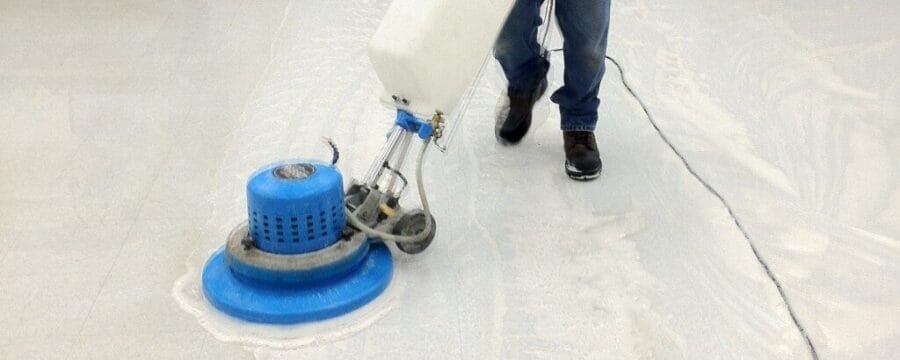
Low-speed buffers are used primarily for scrubbing and floor stripping. They agitate cleaning solutions to remove dirt and old wax layers, making them perfect for VCT, linoleum, and tile floors in offices and commercial kitchens.
High-Speed Burnishers (1000–2500+ RPM)
High-speed burnishers are designed to polish and restore shine by smoothing wax coatings. They are commonly used in retail and healthcare settings to maintain glossy surfaces.
Orbital Floor Machines
Orbital floor machines provide chemical-free floor stripping and gentle sanding. They are ideal for eco-conscious facilities and delicate floors like hardwood and linoleum.
Cylindrical Brush Scrubbers
Cylindrical brush scrubbers use rotating brushes to clean textured or uneven surfaces, including grout lines and anti-slip flooring. They are commonly found in manufacturing plants, commercial kitchens, and food prep areas.
Choosing the right floor maintenance machine depends on your specific flooring, traffic levels, and desired outcomes. A professional team can advise and supply the ideal equipment.
The Benefits of Stripping and Waxing Floors
Regular stripping and waxing of floors protects surfaces from scratches, dirt, and moisture. Stripping removes old wax and contaminants, while waxing applies a new protective layer that enhances appearance and safety.
This process not only beautifies floors but also makes them easier to clean moving forward, saving time and money.
How Much Does It Cost to Strip and Wax Floors?
If you’re wondering how much it costs to strip and wax floors, the price typically varies depending on the size of the area, floor type, and complexity of the job.
Here’s a general breakdown:
Small offices (under 1,000 sq ft): $300–$500
Mid-sized facilities: $500–$1,500
Large commercial spaces: $2,000 or more
Costs are also influenced by the quality of commercial floor cleaning supplies used and whether green or specialty products are requested.
While it might seem costly upfront, regular stripping and waxing significantly reduce long-term maintenance expenses by extending floor life and improving safety.
Additionally, investing in professional services ensures the job is done efficiently and correctly, preventing costly mistakes that DIY attempts often cause.
Industry-Specific Maintenance Requirements
Floor care needs differ by sector:
Offices: Require moderate maintenance, typically stripping and waxing every 6 to 12 months.
Retail and healthcare: High traffic areas need more frequent service, sometimes quarterly, to maintain hygiene and appearance.
Industrial facilities: Depending on wear, customized schedules protect high-use floors while balancing operational downtime.
Customizing your floor maintenance schedule optimizes longevity and safety.
The Importance of Hiring Professionals
Attempting to strip and wax floors without experience or proper machines risks damage and uneven finishes. Hiring professional hard floor cleaning services ensures the right equipment, techniques, and safety measures are employed.
Professionals also understand compliance and health standards relevant to your industry, providing peace of mind and superior results.
Preparing for a Strip and Wax Job
A successful strip and wax requires prep work:
Move furniture and clear the area
Place wet floor signs and barriers
Schedule adequate drying and curing time (often overnight)
Professionals manage these steps to minimize disruption and ensure a smooth process.
How Floor Cleaning Services Help Prevent Slips and Falls
Use appropriate cleaning products for your floor type
Schedule professional floor care services regularly
Avoid harsh chemicals on sensitive surfaces like linoleum and hardwood
These simple steps complement professional maintenance and keep floors looking their best.
The Right Floor Machine is Only the Beginning
Selecting the right floor maintenance machine and working with professional cleaners are essential to preserving your floors’ condition, appearance, and safety.
From offices to industrial sites, tailored floor care programs protect your investment and create welcoming, hazard-free environments.
For expert advice and trusted commercial floor maintenance, consult with professionals who understand your floors’ unique needs. Need expert help with your office maintenance or commercial office cleaning?
Contact Metropolitan Building Maintenance at 778-565-5435 for dependable service across the Lower Mainland or send us your details and needs, and we’ll get back to you right away.
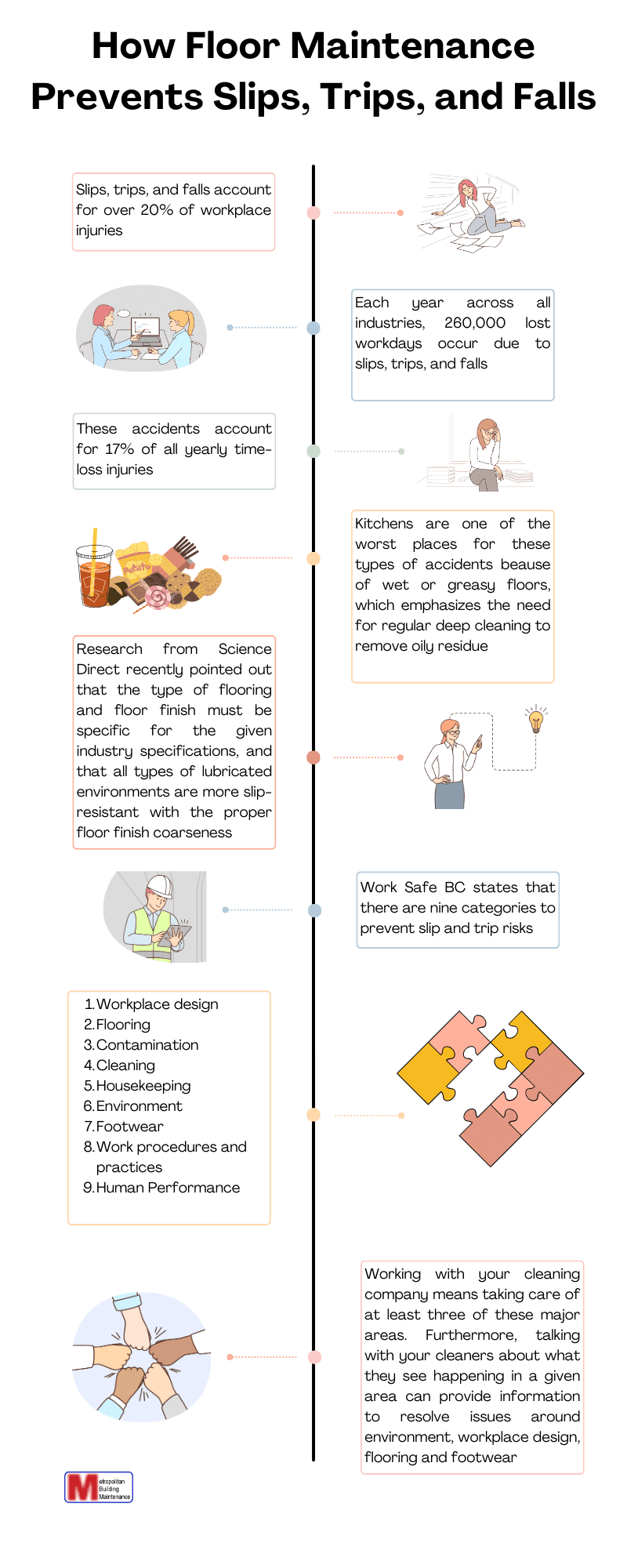
Slips, trips, and falls remain one of the leading causes of workplace injuries across Canada. According to the Canadian Centre for Occupational Health and Safety (CCOHS), these incidents account for about 17% of all time-loss injuries each year.
Professional floor cleaning services are one of the most effective ways to reduce this risk in commercial buildings.
Here are five key ways these services contribute to safer, more slip-resistant environments.
1. Routine Cleaning Removes Hazards Like Spills and Debris
Spills, dirt buildup, and debris are common culprits behind slips and trips.
A regularly scheduled floor cleaning program ensures these hazards are promptly removed — especially in high-traffic areas such as lobbies, hallways, and break rooms.
Here are just a few examples of how floor contaminants create risk in commercial spaces:
🧃 Spilled drinks or coffee in break rooms can leave sticky, slippery residue that poses a fall hazard.
🥪 Dropped food crumbs or packaging can cause tripping, especially if overlooked during spot cleaning.
🥾 Dirt and grit tracked in from shoes in lobbies can reduce floor traction and wear down finishes faster.
🧻 Paper scraps or supplies in hallways can become tripping hazards if not quickly removed.
🌧️ Moisture from rain or snow near entryways creates slippery surfaces that need constant attention.
Professional janitorial teams are trained to spot these issues early and remove them thoroughly using the right tools and cleaning procedures.
By using commercial floor cleaning supplies and floor maintenance machines where appropriate, they help ensure clean, dry, and hazard-free floors throughout the day.
2. Proper Floor Finishes Improve Traction
Applying the right floor finishes (like wax or non-slip coatings) can significantly increase surface grip, especially on vinyl composite tile (VCT), linoleum, or concrete floors.
Over time, foot traffic and moisture can wear down protective layers, making floors slick.
Professional cleaners not only strip and wax floors as needed but also use slip-resistant finishes that meet safety guidelines.
🧪 Fact: Research from Science Direct recently pointed out that the type of flooring and floor finish must be specific for the given industry specifications, and that all types of lubricated environments are more slip-resistant with the proper floor finish coarseness.
3. Wet Floor Signage and Protocols Help Prevent Accidents
It’s not just about cleaning — it’s also about communication. Professional janitorial teams follow strict safety procedures during and after cleaning to prevent slip-and-fall incidents. These include:
🟡 Placing “Wet Floor” signage in clearly visible areas before mopping or spot-cleaning.
🚫 Blocking off high-risk zones (e.g., freshly waxed floors or stairs) to limit access during drying.
🧴 Using quick-dry products and proper ventilation to reduce downtime and floor slipperiness.
👷 Wearing slip-resistant footwear and training staff to recognize when to alert building occupants to hazards.
📝 Documenting cleaning times and signage placement for liability protection.
These steps ensure that staff, clients, and visitors are aware of temporary hazards and can navigate the space safely.
4. Deep Cleaning Eliminates Grime That Causes Slips
Over time, dirt, grease, and residues can build up, especially in kitchens, entrances, and industrial areas.
Standard cleaning may not be enough to tackle these tougher areas — and that buildup creates dangerous slick spots.
Deep cleaning, including steam and power scrubbing, removes these layers of grime and restores the floor's original traction.
It’s an essential part of floor care services that keep both front-facing and behind-the-scenes areas safe.
Every commercial space is different — from office buildings with carpeted walkways to retail stores with polished tile floors. A one-size-fits-all approach doesn’t cut it.
Reputable floor cleaning providers assess your specific flooring types, foot traffic patterns, and risk zones to create a tailored maintenance plan. This includes determining how often to strip and wax floors based on usage and flooring type.
When it comes to stripping and waxing of floors, frequency matters — neglect can lead to safety hazards and costly floor replacements.
Before a strip and wax job, areas should be cleared of furniture, signage placed, and surfaces allowed to fully dry — a process that’s easier with professional coordination.
Checking All Factors in Your Environment
It's important to remember that you can't solve slips, trips, and falls by simply attending to the floor type, footwear, and cleanliness.
Your professional cleaners are integral to prevention, but other elements like workplace design, office or facility procedures and practices, and the willingness of staff to clean up if no housekeeping is nearby are also important.
Proper stripping and waxing of floors extends the lifespan of your investment, postpones costly repairs, and enhances the building’s appearance.
It also provides liability protection. When there's documented proof of consistent maintenance, you're showing due diligence and reducing the chance of injury-related claims.
Keep Your Business Safe from the Ground Up
Preventing slips, trips, and falls starts with smart flooring maintenance.
At Metropolitan Building Maintenance, we offer expert floor stripping, floor waxing, commercial floor care, and professional hard floor cleaning services across a wide range of industries.
Whether you need help understanding how to care for commercial flooring or need flooring maintenance tips tailored to your space, we’re here to help.
When it comes to keeping your building looking clean, professional, and safe, few tasks are as important—or as overlooked—as regular floor maintenance. One of the most effective ways to protect and enhance commercial flooring is through the stripping and waxing of floors.
This process doesn't just restore shine; it protects your investment, reduces wear and tear, and helps prevent costly repairs down the line.
In this blog, we’ll walk you through what stripping and waxing entails, what to expect during the process, and why hiring a professional is the smart choice for any business.
What Is Stripping and Waxing of Floors?
Stripping and waxing floors is a multi-step floor care procedure designed to remove old layers of finish, clean deep into the surface, and then apply new coats of wax to restore protection and shine.
Here’s how it typically works:
Stripping: Using a commercial-grade stripper and a floor maintenance machine, professionals remove built-up wax, dirt, and grime from the floor’s surface.
Neutralizing & Cleaning: Once stripped, the floor is neutralized to remove any chemical residue.
Waxing: Multiple coats of high-quality wax are applied, drying between each layer to build a smooth, glossy finish.
This process doesn’t just improve the look of your floors—it adds a protective layer that prolongs their life and improves safety.
What Types of Flooring Can Be Stripped and Waxed?
Not all floors are created equal. Here's a quick breakdown of common surfaces suitable for this service:
Vinyl Composite Tile (VCT): Extremely common in offices, schools, and healthcare settings.
Tools of the Trade – Machines, Waxes, and Green Products
Professionals use specialized equipment and products to deliver high-quality results:
Types of Floor Machines
Low-Speed Buffers: Ideal for stripping wax and dirt.
High-Speed Burnishers: Used to polish and shine floors.
Auto Scrubbers: Great for cleaning large areas efficiently.
Types of Floor Wax
Acrylic Wax: Most common and cost-effective.
Urethane-Reinforced Wax: Offers extended durability, ideal for high-traffic zones.
Specialty Waxes: Designed for rubber or wood flooring, ensuring proper adherence and finish.
Green Floor Care Products
Environmentally friendly products are available for both stripping and waxing. These are:
Non-toxic and low-VOC (volatile organic compounds)
Safer for people and pets
Ideal for buildings seeking LEED certification or following green policies
Using eco-friendly commercial floor cleaning supplies shows your commitment to sustainability while protecting your indoor air quality.
How to Prepare Your Office for a Strip and Wax Job
Preparation plays a huge role in how smoothly the service goes, and depending on the agreement, you might pay for the janitorial company to do this for you, but if not–
Here’s what to expect:
Clear the Space: Remove all furniture, mats, and movable items from the floor area.
Plan for Downtime: Allow time for waxing and curing—typically a few hours, or overnight for large areas.
Communicate with Staff: Let your team know which areas will be inaccessible and why.
Ventilation: Professionals may set up fans and/or open windows to help speed up drying and reduce odour.
Preparing properly helps ensure the floor cleaning services are both effective and efficient.
Why You Should Hire a Professional for Floor Waxing
Attempting to strip and wax a floor on your own may seem cost-effective—but it often leads to damage, uneven finishes, and even safety hazards. Professional floor care services come with:
Expert knowledge of flooring types and compatible products
High-performance machines for even application
Faster turnaround and longer-lasting results
Professionals also have access to commercial floor maintenance equipment and know how to deliver results that meet safety and aesthetic standards.
How Floor Cleaning Services Prevent Slips and Falls
One of the major benefits of routine floor maintenance is improved safety. Over time, dirt buildup and worn finishes can reduce traction, making slips and falls more likely.
Proper waxing restores grip and helps prevent injuries—especially in high-traffic or wet areas.
The price of stripping and waxing floors varies depending on:
Square footage
Type and condition of flooring
Number of wax coats required
Furniture removal and prep work
On average, costs range from $0.50 to $2.00 per square foot.
While this may seem like an expense, consistent maintenance helps avoid costly floor replacements and improves your building’s overall appearance—saving money over time.
Long-Term Value of Consistent Floor Maintenance
Routine stripping and waxing of floors is a smart investment.
Not only does it extend the life of your flooring, but it also:
Enhances professional image
Improves employee and customer safety
Reduces long-term maintenance costs
Whether you manage an office, retail space, or healthcare facility, a proactive floor care plan helps protect your assets and your people.
Choosing the Right Floor Care Partner
Not all professional hard floor cleaning services are created equal.
Knowing what to expect during the stripping and waxing of floors helps you plan better, save money, and extend the life of your floors. From the right tools and waxes to green products and industry-specific routines, each detail matters when it comes to maintaining commercial floors.
For reliable, professional, and eco-conscious floor cleaning services, trust a team that understands your flooring inside and out.
Need expert help with your office maintenance or commercial office cleaning? Contact Metropolitan Building Maintenance at 778-565-5435 for dependable service across the Lower Mainland.
When it comes to commercial floor care, one size does not fit all. Different industries place different demands on their flooring—some needing routine cleaning, while others require regular full-service treatments like stripping and waxing.
This blog explores the industries that most frequently invest in floor stripping and waxing, why it matters, and how smart maintenance decisions can protect your floors—and your bottom line.
Why Stripping and Waxing Floors Matters More Than You Think
Stripping and waxing floors involves removing old layers of finish and dirt, thoroughly cleaning the surface, and applying a new protective wax coating.
This process revives a dull or damaged floor, enhances its appearance, and creates a protective barrier that guards against moisture, scuffs, and daily wear.
More importantly, regular floor maintenance is a matter of safety. Slippery, worn-down floors are a leading cause of workplace accidents.
Slips and falls account for over 8 million hospital emergency room visits annually, making them the leading cause of such incidents (source). Stripping and waxing floors regularly can significantly reduce these risks by maintaining traction and cleanliness.
It also saves money. Preventive maintenance can help businesses avoid early floor replacement and expensive structural damage. In fact, the ISSA reports that for every dollar spent on preventative maintenance like floor care, companies save up to $10 in future repairs or replacements.
Different Industries, Different Floor Care Requirements
Every industry has unique requirements when it comes to flooring.
A hospital floor doesn’t experience the same type of traffic—or demand the same cleanliness standards—as a retail store or restaurant. Understanding your specific needs is key to building a sustainable floor maintenance schedule.
Let’s explore which industries strip and wax floors most often and why.
1. Healthcare Facilities
Hospitals, dental offices, and clinics demand rigorous cleaning protocols.
Floors in healthcare environments must be both hygienic and durable, often made of linoleum or vinyl composite tile (VCT). These floors are exposed to heavy foot traffic, frequent disinfecting, and the movement of equipment—all of which degrade wax coatings faster than in other industries.
Stripping and waxing every 2–4 months is common in medical settings.
It helps prevent the spread of pathogens and ensures that floors remain slip-resistant and easy to sanitize. Investing in professional hard floor cleaning services ensures compliance with health regulations and minimizes disruption to patients and staff.
2. Educational Institutions
Schools and universities experience near-constant foot traffic from students and staff.
Gymnasiums, cafeterias, and hallways are particularly hard on floors, often requiring quarterly or semi-annual waxing. Scheduled academic breaks—summer or winter holidays—are the perfect time to complete full stripping and waxing jobs.
Flooring in schools is typically made from VCT or linoleum, both of which respond well to proper waxing.
With the help of commercial floor cleaning supplies and floor maintenance machines, janitorial teams or external floor care services can restore these high-use areas efficiently.
3. Retail and Shopping Centers
In retail, appearances matter. Shiny, clean floors create a positive first impression and encourage customer confidence.
Whether it's a boutique or a large shopping mall, floors take a beating from constant foot traffic, shopping carts, and weather-related debris.
Retail locations often strip and wax floors every 3–4 months to maintain their polished look.
Beyond aesthetics, regular floor waxing also prevents slips and falls, especially in wet weather, contributing to customer and staff safety.
4. Restaurants and Food Service
The combination of food spills, grease, and moisture makes restaurant floors especially vulnerable to wear and tear.
Front-of-house flooring must look presentable, while kitchen floors need to meet health and safety regulations. Stripping and waxing floors in these settings may occur every 2–3 months, depending on usage.
Waxing creates a durable surface that resists stains and helps prevent accidents in these high-risk areas.
To get the best results, restaurants should rely on professional floor cleaning services that use high-grade commercial floor cleaning supplies tailored to greasy environments.
5. Offices and Business Parks
In professional settings, clean floors contribute to brand perception, employee satisfaction, and a healthy workspace.
While offices don’t experience the same level of wear as healthcare or retail spaces, common areas like lobbies, break rooms, and restrooms require attention.
Office buildings typically schedule stripping and waxing two to four times per year.
Prepping for a strip and wax job often involves clearing out furniture, vacuuming, and scheduling the work outside of business hours. Working with professional services ensures minimal downtime and a lasting result.
6. Industrial and Manufacturing Facilities
Industrial spaces like warehouses and factories may not seem like typical candidates for waxing, but floor care plays a crucial role in safety and operational efficiency.
These environments are tough on floors due to heavy equipment, oil, and grime.
Facilities often strip and wax their floors quarterly—or even monthly in high-traffic zones.
The goal is to maintain a clean, safe, and slip-resistant surface. Durable finishes also make it easier to remove oil and debris, reducing long-term cleaning costs and downtime.
7. Government Buildings and Public Facilities
Courthouses, municipal offices, and public libraries see consistent use and must maintain a clean, professional image.
Linoleum and terrazzo are common flooring choices in these spaces. Stripping and waxing is usually done seasonally or semi-annually.
Public buildings often have budgetary and safety requirements that call for professional floor care services to maintain compliance and manage costs effectively.
Types of Flooring That Benefit from Stripping and Waxing
Different materials require different care strategies:
VCT (Vinyl Composite Tile): Found in schools, offices, and retail—ideal for routine stripping and waxing.
Wood Floors: Requires caution. How to strip and wax wood floors involves using low-moisture methods and specialized wax to avoid damage.
Concrete Floors: Found in industrial settings. Often sealed, but still benefits from occasional waxing to reduce dust and wear.
Why You Should Hire Professionals to Strip and Wax Floors
Stripping and waxing may seem straightforward, but doing it improperly can damage flooring and leave residues that attract even more dirt. Professionals bring:
Access to industrial-grade floor maintenance machines.
Knowledge of flooring types and proper chemical use.
Hiring professional floor cleaning services not only ensures better results—it also protects your investment and your reputation.
What to Expect When Preparing for a Strip and Wax Job
A professional team will guide you through prep steps like:
Moving furniture or scheduling around office hours.
Taping baseboards or sensitive surfaces.
Sweeping and prepping the floor before stripping.
Applying and curing layers of wax—often overnight.
The result is a fresh, safe, and professional-looking floor ready to handle whatever your business throws at it.
Floor Maintenance Is an Investment in Your Business
Whether you manage a busy hospital, a bustling retail shop, or a quiet office suite, your floors make an impression.
Routine floor stripping and waxing not only protects your surfaces—it safeguards your staff and customers, reduces liability, and saves money in the long term.
Don’t wait until your floors look worn out. Partner with professional hard floor cleaning services and build a maintenance schedule tailored to your industry. Your floors—and your bottom line—will thank you.
Need expert help with your office maintenance or commercial office cleaning? Contact Metropolitan Building Maintenance at 778-565-5435 for dependable service across the Lower Mainland.
Managing a commercial property is never a one-season job. While your maintenance schedule likely covers the basics, truly proactive property managers know that seasonal shifts bring specific demands—especially when it comes to cleanliness, safety, and appearance.
This checklist focuses on seasonal commercial maintenance tasks regarding janitorial cleaning, floor care, carpet cleaning, exterior window washing, and parking lot cleaning.
With the right strategy and service providers, your property will remain pristine, professional, and ready for whatever the season brings.
Spring: Refresh and Recover from Winter
Spring is the time to reset. After months of heavy foot traffic, damp conditions, and salt or grit buildup, commercial properties need focused attention.
Spring Priorities:
Deep Dusting and Vent Cleaning Dust from closed windows and heating systems affects indoor air quality. Use janitorial cleaning services to thoroughly clean vents, baseboards, and high surfaces.
Floor Maintenance and Resealing Winter wear calls for machine scrubbing or resealing—especially on VCT or tile. Partner with a maintenance cleaning provider that specializes in spring floor restoration.
Parking Lot Cleaning Sand, gravel, and salt residue can deteriorate surfaces. Pressure washing is a key element of commercial property maintenance in spring.
Summer: Shine and Maintain
Summer brings better weather—and a chance to tackle outdoor and aesthetic improvements that reinforce your building’s professionalism.
Summer Priorities:
Exterior Window Washing (High-Frequency) Longer daylight hours mean more visible smudges and streaks. Find the right cleaning frequency with a skilled commercial cleaner.
Day Porter or Light Janitorial Service With more visitors and employees on-site, consider daytime janitorial service to maintain high-traffic areas, restrooms, and common spaces.
Parking Lot Re-striping and Sealcoating A freshly striped and sealed lot improves both safety and curb appeal. Consider it a key part of building & maintenance.
Monitor for Mould and Moisture Humidity can cause hidden moisture issues. Address these early with targeted cleaning services for commercial interiors.
Fall: Prepare for the Cold
Fall is the transition phase—perfect for preparing your property for harsh winter conditions and keeping it clean as the weather turns wetter.
Fall Priorities:
Matting Systems & Entryway Cleaning Install heavy-duty mats and increase office maintenance to minimize dirt tracked inside.
Carpet & Upholstery Cleaning Fall is the time to remove allergens and embedded summer dust with professional carpet cleaning services.
High Dusting and Light Fixture Cleaning Heating systems kick up dust—book standard janitorial services to clean ceiling vents, fans, and lights.
Final Exterior Window Cleaning Before Winter A pre-winter wash removes debris that could freeze and stain surfaces. This is particularly important in wetter climates like Vancouver, BC.
Parking Lot Sweeping & Drain Clearing Leaves and debris clog drains, increasing flood risks. Include lot sweeping and water-flow checks in your building cleaning plan.
Winter: Keep It Safe and Sanitary
Winter is about keeping interior environments clean, dry, and safe for tenants and visitors while minimizing weather-related wear.
Carpet Spot Cleaning & Deodorizing Moisture buildup leads to odours and stains. Spot treatment is key to maintaining clean, fresh environments.
Restroom and Touchpoint Sanitization Cold and flu season heightens the need for sanitization. Use janitorial services focused on high-touch points, fixtures, and communal areas.
Indoor Window Spot Cleaning Prevent smudges and condensation buildup with ongoing window maintenance, especially in customer-facing areas.
Snow Debris in Parking Areas Even with plowing handled externally, follow up with maintenance cleaning to remove residue and prevent slip hazards.
Choosing a Partner for Year-Round Commercial Maintenance
Executing a strong seasonal plan means having a dependable, all-in-one provider.
Local knowledge is also critical. An experienced team specializing in building maintenance in Vancouver, BC, understands climate-specific needs and offers tailored janitorial services with a commitment to eco-friendly cleaning.