
How to Disinfect an Office Chair: A Step-by-Step Guide
An office chair is a critical piece of furniture in any workplace.
Whether at a desk or in a meeting room, employees often spend hours each day sitting in the same chair, leading to the accumulation of germs, bacteria, and allergens.
In this guide, we’ll explain how to disinfect an office chair, along with some useful tips to make the process more effective.
Step 1: Gather Your Cleaning Supplies
To start, you’ll need the right cleaning materials for an office.
Here’s a list of what you’ll need for disinfecting an office chair:
- Disinfectant wipes: Choose wipes that are effective against germs and bacteria. Ensure that the disinfectant is safe for office furniture and doesn’t damage the materials.
- Spray disinfectant: For more extensive cleaning, a spray disinfectant that is suitable for upholstery or office furniture is ideal.
- Microfiber cloth: Microfiber cloths are gentle on surfaces and effective at picking up dirt and germs.
- Vacuum cleaner: A vacuum with an upholstery attachment is helpful for removing dust and debris from the chair.
- Water and mild soap: For fabric office chairs, you may need water and mild soap for a deeper clean.
If you're looking for a place to purchase these items, you can check out our blog on The 10 Best Janitorial Supply Companies in Vancouver for more information!
Step 2: Vacuum the Chair Thoroughly
Before you begin disinfecting, it’s essential to remove any visible dust, crumbs, or debris from the chair.
Use a vacuum cleaner with a soft brush or upholstery attachment to clean the fabric, seams, armrests, and wheels. This ensures that the disinfectant you use won’t mix with dirt, which could create a sticky residue.
Vacuuming also helps to reduce the allergens present in the chair, providing a cleaner environment for employees who suffer from allergies.
Step 3: Wipe Down All Surfaces
Now that the chair is free from loose dirt, it’s time to disinfect the surfaces.
Use disinfectant wipes or a microfiber cloth sprayed with disinfectant to clean all parts of the chair. Pay special attention to high-touch areas such as:
- Armrests: These are often touched by several people throughout the day, making them hotspots for germs and bacteria.
- Backrest and seat: Since employees spend extended periods sitting in the chair, disinfecting these areas is essential for reducing exposure to germs.
- Chair controls: The lever for adjusting height and tilt often comes in contact with hands, so make sure to wipe these areas as well.
Ensure that the disinfectant you’re using is suitable for the material of the chair.
For example, a leather chair may need a specialized cleaner, while a fabric chair can typically be cleaned with a standard disinfectant.
Step 4: Clean the Chair’s Wheels and Base
Office chair wheels are often overlooked during cleaning, but they can accumulate dust, dirt, and hair. To clean the wheels:
- Vacuum the wheels: Use your vacuum cleaner to remove hair, dust, and debris from the wheels.
- Wipe with a damp cloth: If needed, use a cloth dampened with mild soap and water to clean the wheels and the chair's base. This will help remove dirt buildup.
Maintaining clean wheels not only helps with the overall hygiene of the chair but also ensures smooth movement and prevents the buildup of grime that could cause wear on the wheels.
Step 5: Disinfecting High-Touch Areas
When cleaning office chairs, don’t forget to disinfect the high-touch areas that are often neglected:
- Keyboard and mouse: While cleaning the chair, take the opportunity to disinfect office equipment, such as keyboards and mice, as they are common sources of germs.
- Office phone: Another frequently touched surface that needs disinfecting.
- Shared items: Items like staplers, coffee mugs, and pens that are shared among employees should also be disinfected regularly.
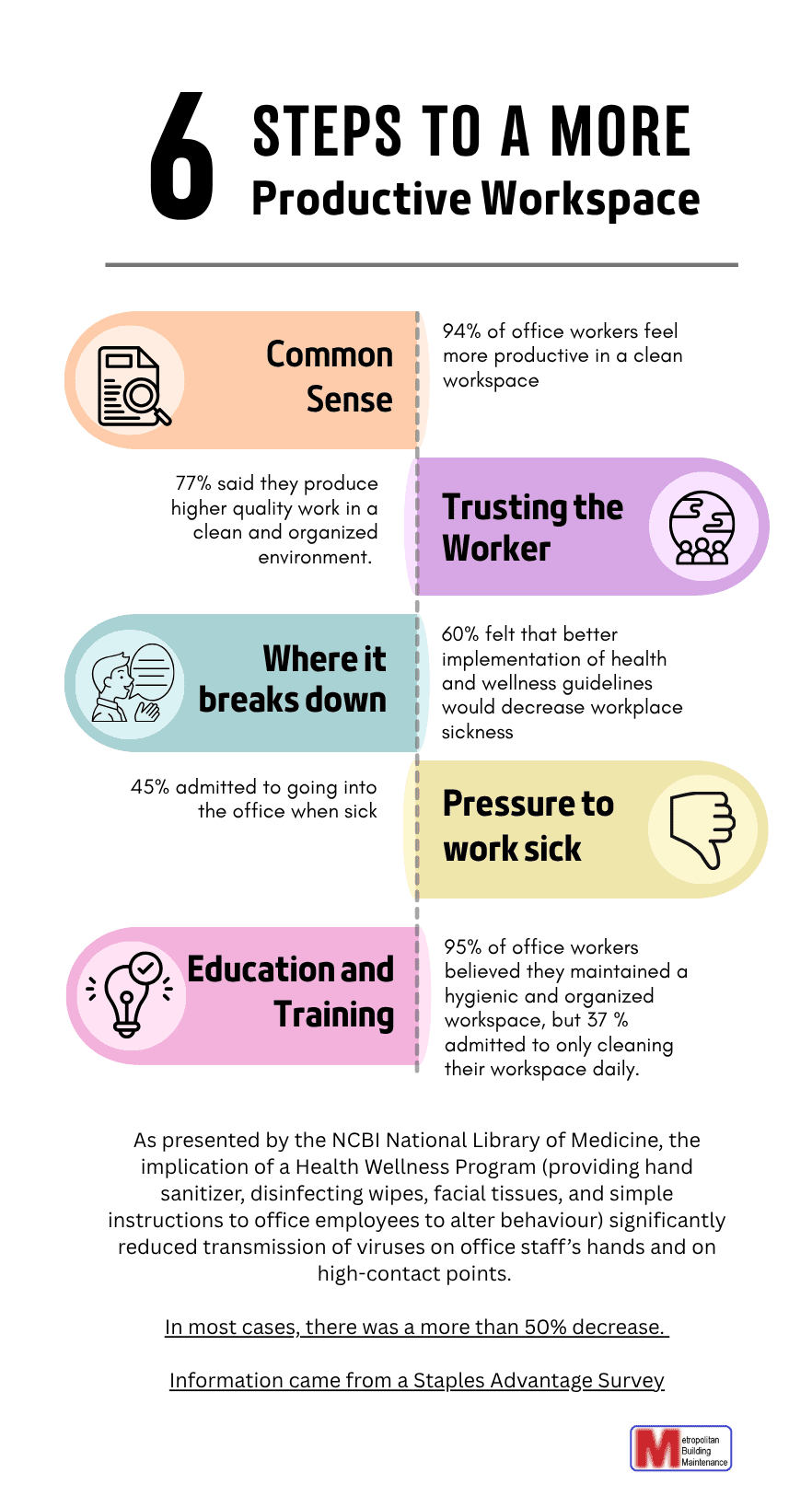
Six Steps to a More Productive Workspace
The Importance of Green Cleaning
Green cleaning is particularly important in office spaces, as it helps reduce exposure to harmful chemicals, promotes better air quality, and minimizes the environmental impact of cleaning routines.
Eco-friendly disinfectants and cleaning tools that are just as effective as traditional cleaners but are safer for both employees and the planet.
Green cleaning can also support your company's sustainability goals, making it an excellent choice for businesses looking to enhance their environmental footprint.
Use a Commercial Office Cleaning Service for a Deeper Clean
Professional commercial janitorial services are particularly helpful for large offices or businesses that require frequent cleaning of multiple office chairs, desks, and communal spaces.
A cleaning company will handle all the routine maintenance, allowing your employees to focus on their work in a clean, healthy environment, but it’s good to understand the costs.
Why Disinfecting Office Chairs Matters
Office chairs can harbour harmful bacteria, viruses, and allergens, which can contribute to illness and reduce employee productivity.
A clean office environment, supported by office cleaning commercial cleaning services, helps:
- Reduce the spread of germs: Disinfecting high-touch surfaces and shared office equipment limits the transmission of bacteria and viruses.
- Promote employee well-being: Regular cleaning creates a healthier, more comfortable workspace that boosts employee morale and reduces sick days.
- Enhance the office's appearance: Well-maintained chairs contribute to a clean, professional look that makes a positive impression on clients and visitors.
Are You About to Search “Office Cleaning Services Near Me?”
By regularly cleaning and sanitizing chairs, your office can reduce the spread of germs, improve air quality, and create a more comfortable space for employees to work.
If you prefer a professional touch, consider hiring commercial office cleaning services to ensure a thorough and consistent cleaning process and if you're wondering what commercial office cleaning cost, check out our blog!
Keeping your office chairs disinfected is an important step in maintaining a safe and productive workplace. Check out our services or reach out to Metropolitan to find out more and request a free quote!

