Maintaining an ideal office in Vancouver goes far beyond appearances.
A professionally cleaned workspace is critical for creating a safe, productive, and welcoming environment for employees and clients. Finding an office cleaning service you can trust means understanding their history, quality, and customer service before they even start.
In today’s competitive business landscape, cleanliness communicates professionalism, attention to detail, and care for employee well-being. You can’t waste time with the wrong company.
Vancouver’s rainy winters, dusty spring construction, and high urban traffic mean offices face unique cleaning challenges. Professional services should adapt to these seasonal fluctuations, protecting flooring and maintaining hygiene year-round.
This blog will provide a detailed list of all the services you will need to maintain the ideal office space for you, your staff, and your clients.
Impacts
Proper office cleaning affects several aspects of your business:
Health and Safety: Dust, allergens, and bacteria accumulate in high-traffic areas, carpets, and shared equipment. Professional cleaning reduces exposure and lowers illness-related absenteeism.
Productivity: Employees in clean, well-maintained environments report higher focus and job satisfaction. Clutter and dirt can be distracting and create a negative workplace experience.
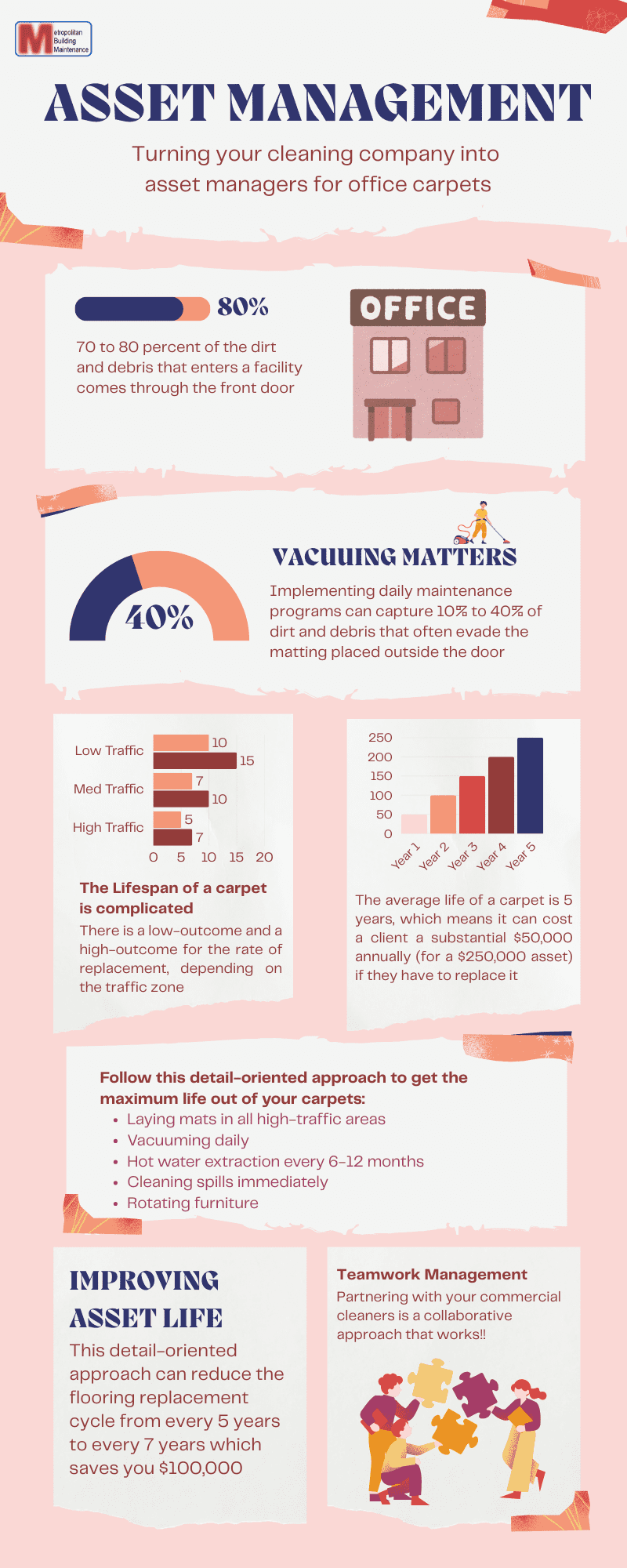
Asset Longevity: Floors, carpets, and furniture are significant investments. Regular maintenance prevents wear, scratches, and damage, extending their lifespan and saving money in the long term.
Pro Tip: If your company doesn’t already provide inspections, ask them to schedule periodic audits of cleaning services to ensure consistency and identify opportunities for preventative maintenance.
The Importance of a Trusted Office Cleaning Service
Hiring the right office cleaning service is more than just outsourcing tasks—it’s investing in a partner that understands your workplace, industry standards, and the health of your employees.
Industry-Specific Cleaning Needs
Each industry has different requirements for cleaning frequency, methods, and equipment:
Healthcare Offices: Clinics, hospitals, and dental offices require strict sanitation protocols. High-touch surfaces, such as exam tables, doorknobs, and waiting room chairs, are sanitized multiple times per day. Floors may require anti-microbial treatments, and carpets are cleaned more often or avoided entirely in patient areas.
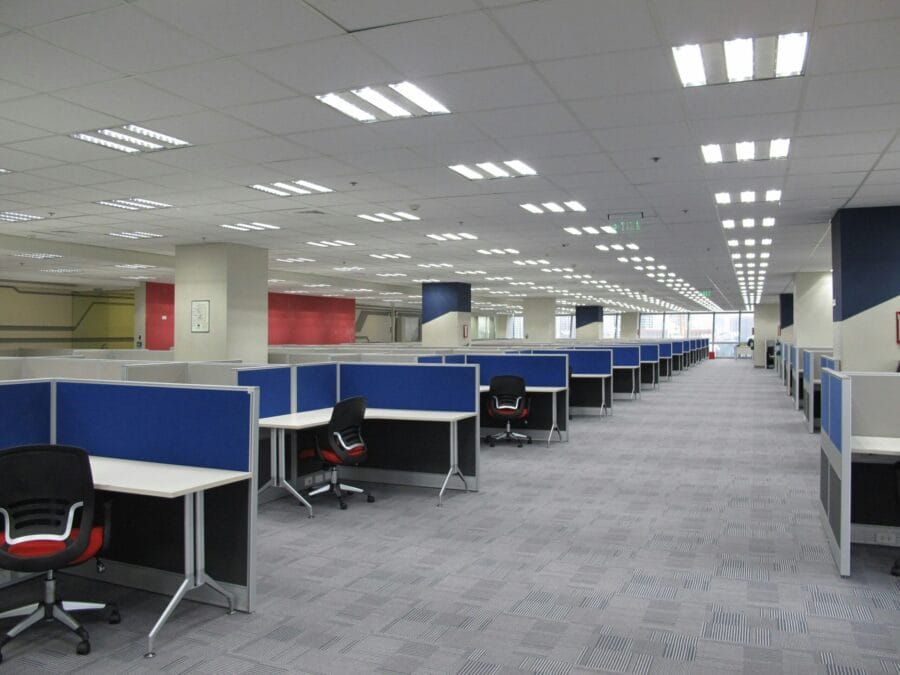
Corporate Offices: Law firms, tech startups, and finance offices prioritize aesthetics and comfort. Carpeted areas improve acoustics and employee comfort, while polished floors and clean windows maintain professional client impressions. Reducing allergens and odours is critical to maintaining ideal air quality.
Retail Spaces: High foot traffic requires daily or weekly floor cleaning, window washing, and spot treatments for carpets or mats. Entrance areas and displays must be consistently presentable for customers.
Industrial or Manufacturing Spaces:Safety, such as slips, trips, and falls, is a top priority. Floors must be free from debris, oil, or chemicals, and staff often require industrial-strength cleaning products and equipment to maintain compliance with workplace safety standards.
Seasonal Cleaning Considerations
Winter: Rain and snow increase floor dirt and slip hazards, requiring more frequent mopping and mat cleaning.
Spring: Construction dust and pollen increase indoor allergens, making carpet cleaning and HVAC maintenance more important.
Summer: Dust accumulation on windows and high sunlight exposure necessitate more frequent exterior cleaning.
Fall: Leaf debris and mud tracked indoors increase cleaning needs, particularly in entryways and high-traffic corridors.
How Professional Services Save Money
A trusted office cleaning service is a cost-saving investment:
Prevents premature wear on floors, carpets, and furniture.
Reduces employee illness and absenteeism through better air quality.
Avoids costly DIY mistakes that can damage office assets.
Extends the lifespan of janitorial supplies and equipment by using proper storage and techniques.
Floors are among the most heavily trafficked areas in any office. They endure dirt, moisture, and daily wear, making regular maintenance critical to protect your investment and maintain a professional appearance.
Daily or Weekly Upkeep
Regular dust mopping, sweeping up debris, and wet mopping are key to keeping floors and wax clean, safe, and sparkling. This is done with a neutral pH cleaner or in bathrooms and kitchens, a light disinfectant surface cleaner.
Some heavy-use flooring or transition spaces between shops and offices might need to be waxed more regularly to keep from dulling or being damaged.
Stripping and Waxing Floors
Stripping and waxing floors is essential in high-traffic office spaces. This process removes old layers of wax, deeply cleans the floor, and applies a protective finish.
High-traffic office floors typically require stripping and waxing every 3–6 months to maintain appearance and durability. However, it’s not uncommon to do it every 6-12 months, depending on need.
Step-by-Step Process
Preparation: Remove furniture, rugs, and mats to avoid damage.
Stripping: Apply commercial floor stripper to dissolve old wax layers.
Scrubbing: Use a high-speed floor maintenance machine to lift residue.
Rinsing: Remove residue to prevent streaking.
Drying: Ensure floors are fully dry before applying wax.
Waxing: Apply multiple thin coats of commercial wax for durability and shine.
Buffing (optional and additional cost): Improves to a glossy, high-shine finish.
Pro Tips:
Always test new wax products in a small area before applying to the entire floor.
Microfiber pads reduce scratching during buffing.
Schedule stripping and waxing outside peak office hours to minimize disruption.
Types of Flooring and Maintenance Needs
Different flooring types require tailored care:
Linoleum Flooring: Durable and easy to maintain; benefits from regular stripping and waxing to preserve shine. Some older types might have issues with colour bleeding. Proper rinsing is very important wth linoleum.
Vinyl Composite Tile (VCT): Buffing and waxing prevent scratches and dullness. Avoid harsh chemicals that may degrade the finish. These tiles can take a lot of punishment and can usually come back to nearly new looking from a regular strip and wax yearly cycle.
Hardwood Floors: Sensitive to moisture; use specialized cleaning products to avoid warping. Wood shouldn’t need to be stripped and waxed very often.
Concrete Floors: Sealed concrete should be cleaned with pH-neutral products and polished periodically to maintain durability.
Industry Example: A tech startup may have carpeted offices with linoleum in hallways and kitchens. Daily vacuuming keeps carpets fresh, while weekly washing and waxing preserves hallways–but after a year of waxing, there will be 52 layers, and if they aren’t removed, they can start to yellow and create tiny changes in the evenness of the surface.
Tools and Equipment
Professional floor maintenance uses specialized equipment to ensure optimal results and rigorous systems in order to do this heavy labour in the quickest possible timeframe:
Auto-scrubbers: Efficiently clean large areas.
Scrubbing Pads: Using the right grit is essential to proper stripping.
Buffers and polishers: Restore shine to waxed floors.
Wet/dry vacuums: Remove water or cleaning solution quickly.
Microfiber mops: Reduce streaking and improve efficiency.
Floor polishers: Maintain high-gloss finishes.
Pro Tip: Household cleaners or DIY machines can damage commercial flooring, shorten its lifespan, and leave streaks.
Cost Considerations
Strip and wax floors: $0.75–$2.00 per square foot, depending on floor type and condition, and scheduling.
Routine cleaning: $0.15–$0.50 per square foot for mopping and an additional amount for laying down regular wax.
Seasonal Tip: Increase floor cleaning frequency during Vancouver’s winter months to prevent water damage from rain, snow, and salt.
Preventive Maintenance Tips
Use entrance mats to trap dirt before it reaches the flooring–ideally, every entrance has at least a 6-foot mat.
Rotate furniture placement occasionally to prevent uneven wear patterns–in many cases, this is not possible given the size of spaces and furniture, and the direction of doors and windows, and that’s okay.
Schedule deep cleaning outside peak hours to minimize disruption–this is pretty standard for most cleaning companies, though some companies require service during daytime hours. Things like stripping and waxing and carpet cleaning are so disruptive that they can only be done after hours.
Carpet Cleaning Services
Carpets are essential in many offices, providing comfort, sound insulation, and aesthetic appeal. However, they also trap dirt, dust, allergens, and bacteria, which can negatively affect air quality and employee health if not properly maintained.
Regular carpet cleaning improves longevity, appearance, and indoor air quality, while protecting the investment in office furnishings.
While DIY carpet cleaners are available, they often fail to remove deep-seated dirt and moisture, potentially causing mould or fibre damage.
Professional carpet cleaning uses industrial-grade equipment, specialized solutions, and trained staff to thoroughly clean carpets without harming fibres or adhesives.
Pro Tip: Avoid steam cleaning carpets yourself unless you have professional equipment and experience; residential machines cannot achieve the same extraction power as commercial carpet cleaners, and it’s easy to overwet a surface if you’re not sure how much water is being sprayed.
Carpet Cleaning Methods
Professional services use several approaches depending on carpet type, traffic, and stain severity–if the company has any expertise, they will use hot water extraction as this provides the deepest and most effective cleaning. Types of processes include:
Hot Water Extraction (Steam Cleaning):
Uses hot water and a cleaning solution injected deep into carpet fibres.
Extracts dirt, allergens, and bacteria.
Ideal for high-traffic areas or offices with health requirements.
Can be portable units or a truck mount.
Dry Cleaning/Encapsulation:
Low-moisture method using a dry compound or foam that crystallizes dirt for vacuuming.
Mostly for appearance and doesn’t clean deep into the fibres.
Quick-drying; suitable for offices needing minimal downtime.
Spot Cleaning:
Ideal to have a spot cleaning kit on-site for staff or daily cleaning staff.
Focuses on high-traffic areas or stains.
Essential in entrances, break rooms, or near copier stations.
Encapsulation Combined with Bonnet Cleaning:
Often used in corporate offices for large open spaces.
Protects carpet fibres and provides a polished appearance with minimal moisture.
Industry-Specific Needs
Different sectors require different cleaning approaches because of the type of dirt and the volume of traffic:
Healthcare Offices:
Frequent deep cleaning to reduce germs and allergens.
Often combines steam cleaning with green cleaning agents.
Corporate Offices:
Biannual full carpet clean with spot cleaning monthly or bonnet cleaning with encapsulation every 3-6 months.
Focus on aesthetics and odour control for client-facing spaces.
Retail Spaces:
High-traffic carpets near entrances may require monthly or quarterly cleaning.
Spot cleaning for spills, especially during peak shopping seasons.
Industrial or Lab Spaces:
Specialized cleaning solutions to handle oil, grease, or chemical residues.
Dry cleaning methods are preferred in areas sensitive to moisture.
Tools and Equipment
Professional carpet cleaning requires advanced equipment that is regularly maintained to function at its best. It goes beyond just running a vacuum and requires specialized tools designed for different environments, soil levels, and carpet types:
Upholstery and Carpet Wands – These precision tools attach to extraction machines to deliver water and cleaning agents deep into carpet fibres, then remove soil and moisture in one pass. Upholstery wands are smaller and designed for furniture, corners, and tight spaces, while carpet wands handle large surface areas efficiently.
Portable Carpet Cleaning Units – Compact machines that can be moved floor-to-floor inside offices or business parks. Ideal for multi-storey buildings where access is limited, these units provide hot water extraction without needing vehicle-based power.
Truck-Mounted Systems – The gold standard for deep carpet cleaning in commercial spaces. Truck mounts deliver stronger suction and higher water temperatures than portable units, allowing faster drying and superior soil removal—especially effective in large offices, lobbies, and high-traffic hallways.
Floor Machines with Bonnets (Encapsulation Cleaning) – Low-moisture systems that use a rotary floor machine with a bonnet pad to apply encapsulation solution. This method is excellent for maintaining appearance between deep cleanings because carpets dry quickly and can be back in use within an hour.
Spot Cleaning Kits – A must-have for day-to-day carpet maintenance. A professional kit typically includes:
pH-balanced spotting solution
Enzyme cleaners for food and organic stains
Solvent-based spotters for grease and oil
Absorbent towels or spotting brushes
A portable handheld extractor for quick moisture removal
Winter: Heavy rain and mud increase dirt accumulation; consider extra entrance mat cleaning, providing a boot brush at the entrance, or other methods to decrease the volume of dirt and salt tracked in.
Spring: Construction dust and pollen require deeper cleans to maintain air quality, and with the increase of rain, damp carpets can release odours, or wet floors can be hazardous.
Fall: Leaf debris and seasonal dirt require spot cleaning in high-traffic areas. Sweeping, power blowing, or vacuuming entrances can decrease debris issues.
Standard commercial carpet cleaning: $0.25–$0.50 per square foot.
Deep steam cleaning: $0.40–$0.75 per square foot.
Spot treatments: $10–$50 per area, depending on severity.
Pro Tip: Rotate furniture on carpeted areas during cleaning to ensure even wear and prolong the lifespan, and use plastic mats under roller chairs.
Window Cleaning Services
Clean windows do more than improve aesthetics—they enhance natural light, employee mood, and client impressions. Dirty windows can block up to 40% of sunlight, negatively impacting energy efficiency and workplace comfort.
Professional vs. DIY
While small windows might be cleaned by staff, professional window washing services are essential for:
Safety: Exterior or high-rise windows sometimes require harnesses, scaffolding, ladders, tucker poles, and specialized equipment.
Efficiency: Professionals clean quickly with minimal disruption to office operations.
Quality: Trained staff avoid streaks, residue, or scratches.
Pro Tip: Never attempt high-window cleaning without proper training and equipment—slips and falls are a leading cause of office accidents during DIY cleaning.
Types of Services
Interior Window Cleaning: Removes dust, fingerprints, and water marks from inside office windows.
Exterior Window Cleaning: Tackles dirt, algae, and grime from outside, often requiring squeegees, water-fed poles, or power washing.
Full-Service Packages: Include both interior and exterior cleaning, plus frame and sill care.
Green cleaning is more than a trend—it is now a standard expectation for modern offices.
Implementing eco-friendly methods reduces chemical exposure, protects the environment, and improves indoor air quality.
Businesses adopting green cleaning practices demonstrate a commitment to sustainability and employee health, while often benefiting from lower long-term costs.
Vancouver offices face unique environmental challenges:
Rainy Winters: Green cleaning methods prevent harsh chemicals from entering drains.
High Urban Traffic: The need to remove lots of dust and street pollutants entering a building make non-toxic solutions safer for staff and visitors.
Corporate Sustainability Goals: Many Vancouver businesses prioritize environmentally responsible operations, making green cleaning a key factor in selecting a service provider.
Industry Example: A Vancouver tech company with open-plan offices benefits from eco-friendly cleaning solutions that protect sensitive electronics and improve air quality, supporting employee wellness programs and protecting office equipment.
Janitorial Supplies and Professional Standards
High-quality janitorial supplies and proper organization are crucial for efficient, effective cleaning. Well-stocked and properly managed supplies save time, reduce waste, and ensure consistency across services.
Microfiber Cloths: Reduce streaking and are reusable, reducing waste.
Mops and Buckets: Commercial-grade options last longer and clean more effectively.
Dust Mops and Brooms: For cleaning entry ways, long hallways, and debris buildup.
Washroom Totes: With a toilet brush, colour-code cloths that are only used in washrooms, and disinfectant spray.
Floor Maintenance Machines: Auto-scrubbers, buffers, and polishers for high-traffic areas.
Vacuum Systems: Industrial carpet cleaners for deep cleaning.
Green Cleaning Solutions: Chemical-free products for floors, carpets, and surfaces.
Safety Equipment: Gloves, goggles, and harnesses for high-window work or hazardous areas.
Disposable Supplies: This includes garbage bags, hand towels, toilet paper, and sanitary napkins, among other items.
Pro Tip: Labelling and organizing supplies on mobile cleaning carts ensures staff efficiency and accountability, while minimizing chemical overuse.
Choosing the Most Trusted Office Cleaning Service in Vancouver
Selecting a reliable office cleaning company is critical for maintaining your workspace and protecting your investment. A trusted provider ensures professional results, safety, and consistent service and is also a joy to work with and look for guidance from while creating a long-term relationship.
Key Factors to Consider
Reputation and Client References: Look for testimonials and case studies from local Vancouver businesses.
Staff Training and Certifications: Properly trained staff ensure safe handling of equipment, chemicals, and eco-friendly solutions.
Equipment Quality: Professional-grade machines produce better results, reduce wear, and save time.
Transparent Pricing: Clear rates prevent hidden fees and support budget planning.
Pro Tip: Choose companies that provide a single point of contact for scheduling, reporting, and feedback—this improves accountability and communication.
Questions to Ask Potential Cleaning Services
Do you offer consolidated services for floors, carpets, windows, and more?
What green cleaning practices do you implement?
Can you provide references in my industry?
How often do you recommend cleaning for each service type?
Do you supply your own equipment and cleaning products?
Red Flags
Lack of references or experience in your industry.
No green cleaning certifications or environmentally friendly options.
Vague pricing or hidden fees.
Staff not trained in specialized cleaning methods, like floor stripping or carpet steam cleaning.
Example: A Vancouver law firm seeking a professional cleaning service should confirm that the company can handle daily high-traffic floors, quarterly carpet cleaning, and biannual window washing, while also offering eco-friendly solutions that align with corporate sustainability goals.
Why a Trusted Office Cleaning Service Matters
Investing in a professional office cleaning service ensures your Vancouver workspace remains clean, safe, and productive. From floors and carpets to windows and eco-friendly practices, skilled cleaners protect assets, improve air quality, and save money over time.
Choosing a trusted provider guarantees consistent results, tailored services, and a healthier, more professional environment for employees and clients alike.
Maintaining a clean and healthy office environment is essential for employee well-being and productivity.
One often-overlooked aspect is the condition of office carpets.
Regular professional carpet commercial cleaning not only enhances the aesthetic appeal of your workspace but also significantly improves indoor air quality. Here's how:
Enhances Office Ambiance: Clean carpets contribute to a more inviting and professional workspace, positively influencing client impressions and employee morale.
Preserves Carpet Integrity: Regular cleaning maintains the texture and structure of carpet fibres, extending their lifespan and maintaining a polished appearance.
2. Removes Stains and Spots Quickly
Prevents Permanent Damage: Prompt attention to spills and stains prevents them from setting, reducing the risk of permanent discoloration.
Maintains Professional Image: A stain-free carpet reflects a well-maintained environment, crucial for businesses aiming to uphold a professional image.
Utilizes Specialized Techniques: Professional cleaners employ advanced methods to treat various stains effectively, ensuring removal without damaging the carpet.
3. Reduces Surface Dust and Debris Visibility
Enhances Cleanliness Perception: Even minimal dust and debris can make a carpet appear dirty. Professional cleaning lifts these particles, maintaining a consistently clean look.
Improves Lighting and Brightness: Clean carpets reflect light better, brightening the workspace and creating a more pleasant environment.
Supports Overall Cleanliness: A clean carpet complements other cleaning efforts, contributing to the overall cleanliness and hygiene of the office.
Promotes a Healthy Environment: Removing odour-causing bacteria and mould contributes to a healthier indoor environment, reducing the risk of respiratory issues.
Enhances Employee Comfort: A fresh-smelling office can improve employee satisfaction and productivity by creating a more pleasant working atmosphere.
Supports Respiratory Health: By reducing airborne allergens, professional cleaning helps decrease the risk of allergies and respiratory issues among employees.
Enhances HVAC Efficiency: Cleaner carpets reduce the strain on HVAC systems, promoting better air circulation and temperature control within the office.
Extends Carpet Lifespan: Preventing soil accumulation reduces wear and tear, extending the life of the carpet and delaying the need for replacement.
Supports Sustainable Practices: Regular maintenance is more environmentally friendly than frequent replacements, aligning with sustainable business practices.
7. Supports a Healthy, Inviting Workplace Environment
Reflects Company Values: A clean carpet demonstrates a commitment to quality and attention to detail, reflecting positively on the company’s values.
Enhances Employee Well-being: A clean and healthy environment contributes to improved employee morale and productivity.
Creates Positive First Impressions: Visitors and clients are more likely to have a favourable impression of a business that maintains a clean and welcoming environment.
Investing in professional cleaning services ensures that carpets remain in optimal condition, contributing to a positive and productive work environment.
Commercial carpets face constant wear. Lobbies, hallways, break rooms, and offices endure more foot traffic in a month than many homes see in a year.
Beyond dirt and spills, everyday activities like dragging chairs or moving equipment can fray fibres and dull colour. Many businesses only consider cleaning when stains are obvious or odours persist.
Understanding your carpet wash priceahead of time helps you plan maintenance, protect your investment, and maintain a professional, welcoming environment for staff and clients.
This guide dives into Canadian-specific costs, industry differences, carpet types, and why professional service outperforms DIY approaches.
Understanding Carpet Wash Price for Commercial Spaces
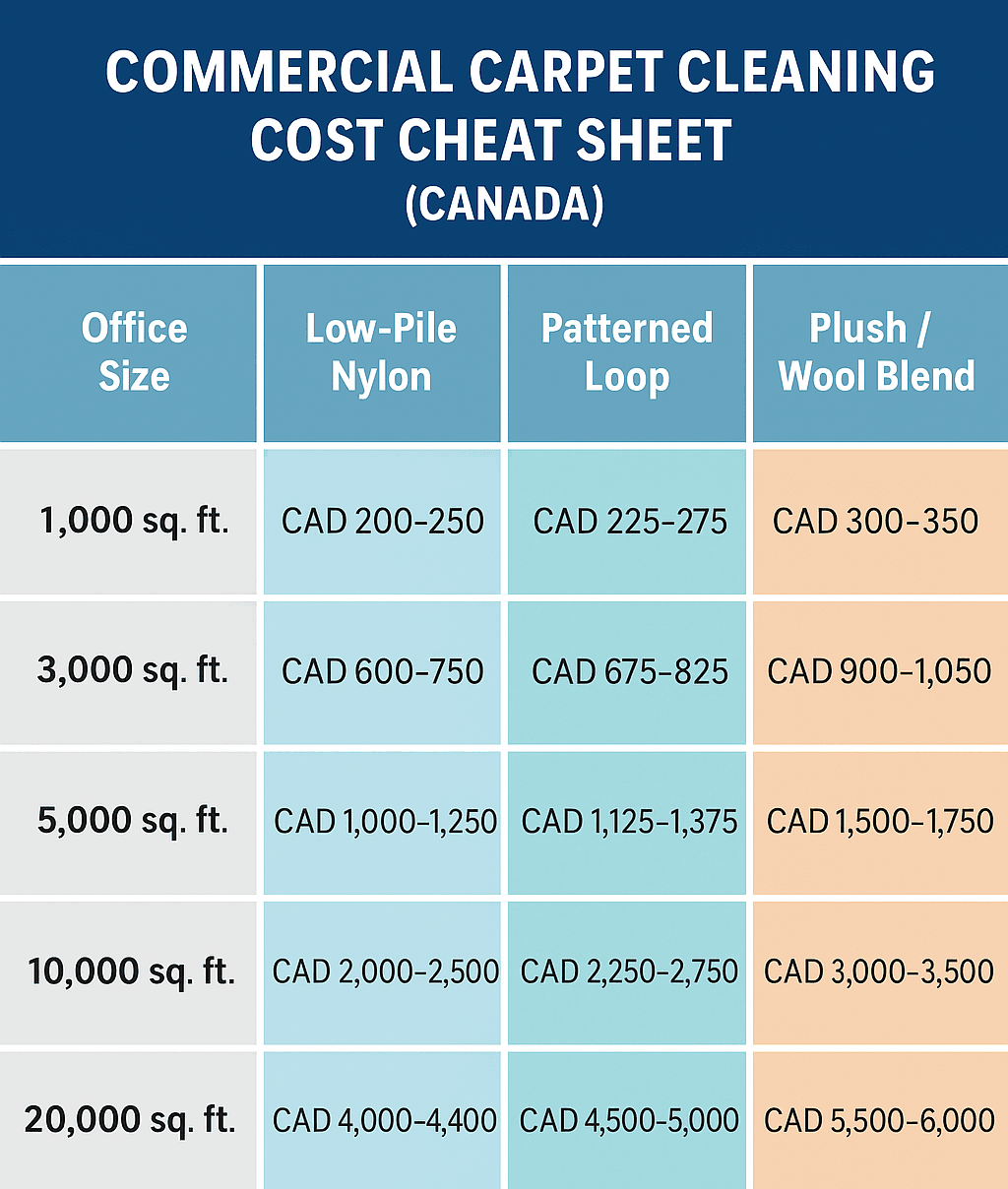
Carpet cleaning costs aren’t one-size-fits-all. Most providers calculate by square footage, but other factors significantly affect pricing.
Key cost influencers include:
Size of the space – Larger offices, showrooms, or open-concept workplaces require more labour, time, and equipment.
Carpet type – Low-pile office carpets are straightforward, while plush hospitality or natural-fibre carpets require specialized care.
Condition – Light dust and dirt need minimal effort. Heavy stains, gum, or coffee spills can require pre-treatment, extra passes, extended spot cleaning, or specialty cleaners.
Cleaning method – Steam extraction is highly effective but costs more; low-moisture encapsulation is cheaper but may require more frequent cleaning.
Small office (1,000 sq. ft.) at CAD 0.25/sq ft → CAD 250
Mid-size office (5,000 sq. ft.) at CAD 0.30/sq ft → CAD 1,500
Large corporate HQ (20,000 sq. ft.) at CAD 0.22/sq ft → CAD 4,400
Example scenario: A retail store with 8,000 sq. ft. of patterned loop carpet may pay CAD 0.35/sq ft for deep cleaning every 3 months, while a quiet law office of similar size might only need CAD 0.25/sq ft every 6–12 months.
Pro Tip: Schedule cleaning around low-traffic periods, such as evenings or weekends. This reduces disruption and allows carpets to dry without interruption, ensuring the space is ready when staff or customers return.
How Different Industries Affect Carpet Cleaning Needs
Each industry has unique carpet requirements, influenced by traffic, spill types, and hygiene standards.
Industry-specific examples:
Corporate offices: Coffee spills, toner dust, dirt tracked in from parking lots. Cleaning is often scheduled every 6–12 months.
Retail spaces: Heavy foot traffic, occasional product spills, seasonal rushes. Quarterly cleaning is common.
Healthcare facilities: High-risk areas like patient rooms, clinics, or labs require monthly or weekly cleaning and are likely handled by on-site cleaning staff. Spot treatment is critical for biohazardous spills.
Hospitality: Hotels, banquet halls, and event spaces often feature plush carpets. They need careful stain treatment and texture preservation, sometimes multiple times per month in lobbies or conference rooms.
Education: Schools, universities, and daycare centers face gum, food, and art supply spills. Cleaning usually happens during breaks once or twice a year, but high-traffic hallways may require interim spot cleaning.
Example scenario: A daycare center in Vancouver might need 6–8 professional cleanings per year for classrooms and hallways, while the administrative offices in the same building may only need two.
The Role of Carpet Type in Cleaning Cost and Method
Carpet type influences cost, method, and frequency of cleaning.
Low-pile (Berber): Common in offices. Durable and easy to clean. Resists staining but still requires regular maintenance to prevent soil accumulation.
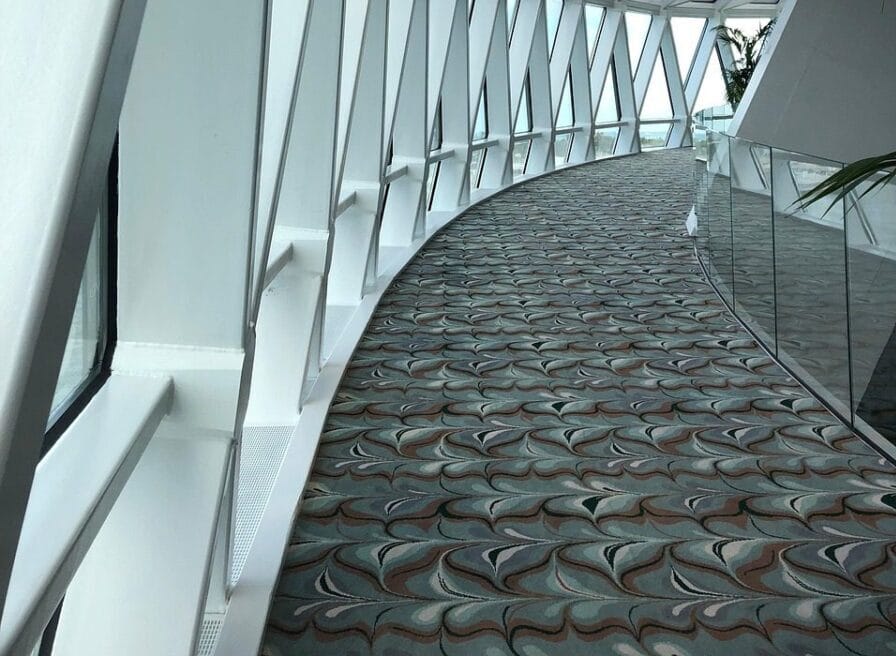
Patterned loop: Popular in retail for hiding dirt. Traps particles that require thorough extraction to prevent fibre wear.
Cut pile plush: Often in hotels or executive suites. Stains easily and needs gentle, precise cleaning to maintain appearance.
Fiber considerations:
Nylon: Highly resilient and responds well to hot water extraction. Cost-effective for heavy-use areas.
Wool: Natural fibre that requires lower temperatures, pH-balanced detergents, and longer drying time. Often found in high-end offices or boutique hotels.
Blends: Nylon-wool blends or polyester may have hybrid care requirements.
Professional commercial carpet cleaners and upholstery cleaners match the method to both fibre and weave, avoiding shrinkage, matting, or colour fading.
A 3,500 sq. ft. hotel lobby carpet may cost CAD 0.45–0.50/sq ft because it’s a plush wool blend, while an office of similar size with low-pile nylon may cost CAD 0.25–0.30/sq ft.
Professional Carpet Cleaning vs. DIY: Why It’s Worth the Investment
DIY may seem cheaper at first glance, but hidden costs often outweigh the initial savings.
Over-wetting can lead to mould, residue can attract more dirt, and uneven cleaning leaves traffic lane shadows.
Skilled stain removal for coffee, ink, grease, or biohazard spills.
Faster drying, consistent results, and guaranteed quality.
A Vancouver corporate office of 3,000 sq. ft. can be cleaned professionally in under three hours, with 4–6 hours drying time. A DIY attempt might take a full weekend, still leave damp areas, and possibly cause fibre damage.
Pro Tip: Combine carpet cleaning with other maintenance tasks like upholstery cleaning or tile and vinyl floor care. Bundling services often lowers overall costs and ensures a comprehensive clean.
How Carpet Cleaning Saves Money in the Long Run
Regular cleaning is an investment. Well-maintained carpets:
Last longer, delaying costly replacement (CAD 4–8 per sq ft installed).
Prevent expensive spot treatments for stubborn stains.
Reduce dirt buildup that damages fibres.
Cleaner carpets also improve air quality, reducing sick days and improving productivity. For busy offices or retail spaces, regular professional cleaning can extend carpet life by 3–5 years, saving thousands in replacement costs.
Example scenario: A law firm with 10,000 sq. ft. of office carpet may save CAD 15,000–20,000 over 5 years with a proper cleaning schedule compared to replacing worn-out carpets prematurely.
How Regular Carpet Cleaning Improves Air Quality
Carpets are essentially giant air filters, trapping dust, pollen, allergens, and other particles—but only if cleaned regularly.
Prepping Your Office for a Successful Carpet Cleaning
Preparation ensures the best results.
Light furniture, electronics, and cables should be moved or secured. Cleaners need access to power and water.
Steps for success:
Move chairs, plants, and light furniture.
Unplug electronics and secure loose cords.
Clear floor areas and hallways for equipment access.
Inform staff about drying times to avoid premature traffic.
A few thoughtful steps drastically improve results, minimize disruption, and ensure faster drying times.
Choosing the Right Commercial Carpet Cleaning Services
Selecting a provider is about more than price. It involves comparing several options to understand the general field of service and then verifying the quality of whoever you found to be the most customer savvy.
Key considerations:
Certifications (IICRC-trained technicians)
Service guarantees or satisfaction policies
Experience in your industry (office, retail, healthcare, or hospitality)
Eco-friendly, low-VOC cleaning options
Pro Tip: When searching, include your location and industry, for example: office carpet cleaning Vancouver rather than just carpet cleaning near me. Experienced commercial cleaners know how to handle different fibres, traffic patterns, and hygiene requirements efficiently.
From Clean to Smiles
The carpet wash price is more than a number—it’s a strategy for protecting your investment, extending carpet life, improving air quality, and maintaining a professional image.
Understanding cost factors—industry, carpet type, traffic, and cleaning method—ensures smarter budgeting and better long-term results.
The right office carpet cleaning company delivers results from quote to clean, providing peace of mind, healthier workspaces, and lasting value.
When it comes to running a successful business, the details matter — especially the environment where your team works and your clients visit.
A smart business owner knows that commercial office cleaning services aren’t just a box to check; they’re a strategic investment that impacts health, productivity, reputation, and the bottom line.
In this article, we explore the top 10 reasons why professional cleaning services make smart business sense and how partnering with experts can elevate your workplace.
1. Boosts Employee Health and Reduces Sick Days
A smart business owner knows that maintaining a healthy workplace goes beyond hiring a cleaning crew to mop floors and empty trash. It’s about building a true partnership with your commercial cleaning company — one that includes education and collaboration.
Professional janitorial services don’t just clean; they guide management on best practices like identifying high-touch surfaces, promoting frequent handwashing, and encouraging staff to take an active role in preventing illness. This team effort creates a culture of shared responsibility where everyone—from management to cleaners—is invested in maintaining health.
By using eco-friendly cleaning agents and green commercial cleaning services, businesses reduce exposure to harsh chemicals that can irritate staff, contributing further to wellness. The result? Fewer sick days, steadier productivity, and a resilient workforce ready to perform at its best.
Supporting source: According to the Centers for Disease Control and Prevention (CDC), effective cleaning and disinfecting in workplaces is critical to reducing the spread of infectious diseases and lowering employee absenteeism. CDC Cleaning and Disinfection Recommendations
2. Increases Productivity Through a Cleaner, More Comfortable Environment
A smart business owner understands that hiring professional cleaners is not just outsourcing a task — it’s creating a trusted partnership. When commercial cleaners become valued team members, they invest in creating a workspace that supports business goals.
This partnership ensures cleaning routines are tailored to employee needs, office rhythms, and specific challenges. Regular, thorough janitorial cleaning services minimize clutter, dust, and allergens that distract employees and drain mental energy. A clean, organized office space fosters mental clarity, reduces stress, and boosts overall morale.
Ultimately, this collaborative approach helps employees experience the best parts of their office every day, fueling focus, creativity, and productivity.
3. Creates Positive First Impressions with Clients and Visitors
A smart business owner knows that first impressions shape client perceptions long before a conversation starts. Professional commercial office cleaning services—including expert commercial window cleaning—ensure every surface gleams and every window lets in natural light.
Clean windows don’t just look good; they improve staff mental health by maximizing daylight and removing the distraction of dirt and smudges. This benefits everyone in the building and projects an image of professionalism and care.
From spotless floors to gleaming glass, a consistently pristine environment sends a powerful message that your business pays attention to detail and values quality — building trust with clients and visitors alike.
Using specialized commercial carpet cleaning equipment and professional steam cleaners, commercial cleaning companies extend the life of these assets, delaying costly replacements. This preventative care protects your budget and minimizes operational disruptions caused by repairs or renovations.
When trusted cleaning professionals monitor your office environment, they help protect your building’s physical integrity — a proactive move that keeps your business running smoothly.
Supporting source: The ISSA (International Sanitary Supply Association) highlights that proper maintenance and cleaning of carpets can extend their lifespan by up to 50%, resulting in significant cost savings. ISSA Carpet Maintenance Facts
5. Protects Your Business by Choosing Professional Expertise Over Cheap Alternatives
A smart business owner knows there’s a world of difference between hiring professional janitorial services and asking a friend or family member’s low-cost cleaning company to pitch in.
While informal options may save money upfront, they often lack the training, equipment, and standards required to maintain commercial spaces properly. Poor cleaning can damage carpets, floors, and furniture, leading to expensive repairs and replacements down the line.
Professional commercial carpet cleaners and janitorial services bring industry knowledge and specialized equipment designed to protect your office assets and keep your environment safe and inviting. This expertise safeguards your investment and ensures consistent, high-quality outcomes.
6. Ensures Compliance and Fosters a Culture of Respect for Cleaning Staff
A smart business owner recognizes that compliance with health and safety standards isn’t just a regulatory checkbox — it’s an opportunity to build a respectful and inclusive workplace culture.
This culture of respect ensures cleaning standards are consistently upheld, reducing risks and liability while creating a safer, more welcoming environment for everyone.
7. Attracts and Retains Talent by Prioritizing Wellness and Sustainability
A smart business owner knows that today’s employees seek employers whose values align with their own, especially around health and environmental responsibility.
Using eco-friendly janitorial services and earth-friendly cleaning products signals a genuine commitment to wellness and sustainability. These green commercial cleaning services reduce harsh chemical exposure and environmental impact, supporting healthier workplaces.
This commitment not only improves employee satisfaction but also enhances your employer brand, helping attract and retain top talent in competitive markets.
8. Saves Time and Reduces Stress by Consolidating Cleaning and Maintenance Services
A smart business owner knows that juggling multiple cleaning vendors can waste valuable management time and create inconsistent service.
By consolidating janitorial cleaning, commercial carpet cleaning, window washing, and other building maintenance under one trusted commercial cleaning company, business owners simplify communication and ensure a consistent quality standard.
9. Offers Flexible, Scalable Cleaning Plans Tailored to Business Needs
A smart business owner knows that business needs change over time due to growth, seasonality, or shifting workforce patterns.
Professional commercial cleaning companies provide customizable, scalable service plans that adapt accordingly. Whether it’s adjusting cleaning frequency, adding industrial cleaning services, or scaling back during slower periods, flexibility ensures resources are optimized without compromising cleanliness or safety.
This agility supports evolving workplaces and protects budgets.
10. Demonstrates Corporate Responsibility with Green Commercial Cleaning Practices
A smart business owner knows that sustainability is no longer optional — it’s a critical business imperative.
By partnering with green commercial cleaning companies that use eco-friendly cleaning agents, natural green cleaners, and environmentally friendly cleaning services, businesses reduce their environmental footprint and align with evolving ESG (Environmental, Social, Governance) standards.
This leadership not only benefits the planet but also strengthens brand reputation among clients, employees, and investors focused on corporate responsibility.
Supporting source: According to the Environmental Protection Agency (EPA), green cleaning programs improve indoor air quality and reduce environmental pollution. EPA Green Cleaning
Need a Trusted Partner?
A smart business owner knows that investing in professional commercial office cleaning services delivers far more than surface-level benefits. It’s a strategic choice that protects health, boosts productivity, safeguards assets, ensures compliance, attracts talent, streamlines operations, and advances sustainability goals.
Partnering with trusted cleaning professionals is an investment in your business’s future success and resilience. Ready to make the smart choice? Contact a reliable commercial cleaning company today to create a tailored cleaning plan that supports your goals.
Metropolitan Building Maintenance has nearly 60 years of experience in janitorial services, green commercial cleaning, and building maintenance. We’re local, responsive, and ready to customize a plan for your business.
If your floors are looking dull, scratched, or unevenly shiny, chances are it’s time to remove that old floor wax and start fresh. But should you grab a mop and go DIY—or call in professional floor cleaning services?
Whether you manage a busy office, a medical facility, or a retail space, maintaining your floors isn’t just about appearances—it’s about longevity, safety, and savings.
In this blog, we’ll break down how to strip and wax a floor properly, the pros and cons of DIY vs professional services, and what type of care different floors and industries really need.
What Is Floor Wax and Why Does It Matter?
Floor wax (often a synthetic polymer finish today) acts as a protective layer that enhances the shine of your floors while shielding them from scratches, spills, and scuff marks.
It’s a key part of any long-term floor care strategy, especially in commercial settings.
Floor waxing improves traction, reduces wear in high-traffic areas, and gives your space a clean, professional look.
However, it’s only effective when maintained properly—this means regularly stripping and reapplying wax when it becomes worn or uneven.
What’s Involved in Stripping and Waxing Floors?
Stripping and waxing floors is a multistep process that removes old wax, deep cleans the surface, and applies new protective coatings. Here’s a typical breakdown:
Stripping: The old wax is chemically broken down using a floor stripper.
Neutralizing: The residue is removed, and the surface is brought to a neutral pH.
Waxing: Multiple coats of floor finish are applied and left to cure.
Preparing for a strip and wax job often involves clearing the space, moving furniture, and taping off baseboards or sensitive equipment.
If you’re prepping an office, it’s smart to coordinate with your staff to schedule downtime or after-hours service.
Vinyl Composite Tile (VCT): A common commercial flooring type that responds well to waxing and can hold up to frequent maintenance.
Wood Floors: Special care is needed to avoid water damage and preserve finish—learn how to strip and wax wood floors without harming the grain.
Concrete and Sealed Surfaces: May require polishing rather than waxing, depending on the sealant.
DIY Floor Wax Removal – Is It Worth It?
Thinking of removing floor wax on your own? For small, low-traffic spaces, DIY might be manageable. Here’s what to consider:
Pros
Lower up-front cost
Full control over timing
Good for basic home applications
Cons
Time-consuming and labour-intensive
Requires access to commercial floor cleaning supplies
Mistakes can lead to permanent damage or safety risks
You’ll need to rent or buy a floor maintenance machine to do it right
DIY floor stripping often doesn’t produce the same level of shine, protection, or durability that professionals achieve—especially in commercial environments.
Why Hire Professional Floor Cleaning Services?
For commercial spaces, professional hard floor cleaning services are the smart, long-term choice. Here’s why:
Experience & Training: Pros understand how to care for commercial flooring across all material types and industries.
Different businesses require different approaches to flooring maintenance:
Offices & Business Parks: Quarterly or bi-annual floor waxing may be sufficient.
Medical Clinics: Must meet sanitation and slip-resistance standards; often waxed more frequently.
Retail & Schools: High foot traffic = more frequent stripping and waxing (every 3–6 months).
Warehouses: May require heavy-duty finishes and specialty floor maintenance machines.
That’s why commercial floor maintenance isn’t just a task—it’s a strategy tailored to your specific space.
Post-Wax Floor Care: Tips to Protect Your Investment
Once your floors are freshly waxed, protect that shine with smart habits:
Place mats at entrances to reduce grit and debris
Use neutral pH cleaners and avoid harsh chemicals
Schedule routine dust mopping and damp mopping
Follow a quarterly or seasonal maintenance schedule
These flooring maintenance tips help extend the time between wax jobs and preserve traction.
Should You Remove Floor Wax Yourself or Call a Pro?
If you’re a facility manager or property owner, here’s the takeaway:
DIY may work for small or residential projects—but it carries risks and equipment costs.
Professional floor care services ensure safety, shine, and durability while helping you stay compliant and prevent accidents.
Because stripping and waxing a floor is a restorative process, any mistakes in the process will get captured in the final product (like the wax yellowing if the floor hasn’t been properly neutralized), and it’ll be a huge waste of money to have to do it again.
Industries vary—so your maintenance strategy should, too.
Need Help With Stripping and Waxing Floors?
At Metropolitan Building Maintenance, we specialize in professional hard floor cleaning services for offices, business parks, and commercial properties across the Lower Mainland.
From linoleum flooring to VCT and sealed concrete, we tailor every job to your industry’s needs and budget.
When you're searching for a commercial cleaning company near me, you're not just looking for someone to take out the trash or mop a few floors — you're selecting a partner who will help maintain your building’s health, safety, and professional image.
With so many janitorial services and commercial cleaning providers available, knowing what to ask can save you time, money, and future headaches.
Whether you're managing an office, medical facility, or industrial site, here are 10 critical questions to ask before hiring a cleaning company — plus what their answers should tell you.
1. Are You Licensed, Insured, and Bonded?
This is non-negotiable. A professional janitorial service should be fully insured and bonded, with up-to-date business licenses and coverage like WorkSafeBC or WSIB. This protects you from liability in the case of on-site accidents or damage.
Why it matters: Accidents happen. Without proper insurance, your business could be held responsible. Always ask for proof.
2. What Types of Facilities Do You Specialize In?
Not every cleaner is right for every job.
Some excel in industrial cleaning services, while others focus on commercial office cleaning or strata properties.
Why it matters: A company with experience in your industry is more likely to meet regulations, understand traffic patterns, and anticipate cleaning challenges.
Tip: Ask if they have references from similar businesses or can offer industry-specific insights.
3. How Do You Hire and Train Your Cleaning Staff?
The quality of any commercial janitorial service is only as strong as the team doing the work.
Reputable companies will have detailed hiring processes, background checks, and robust training in place.
Why it matters: Trained, trustworthy staff ensure consistent cleaning and peace of mind — especially after hours.
4. What’s Included in Your Standard Janitorial Services?
The term “standard janitorial services” can vary widely.
Some companies include tasks like floor care, restroom sanitation, and high-touch disinfection in their base package — others charge extra. Regardless of how a company charges, make sure to ask them so you can understand their logistics and reasoning.
Ask for:
A clear breakdown of what’s included
How often each service is provided
What’s available as an add-on (e.g., window cleaning, carpet cleaning, or emergency services)
5. Do You Offer Eco-Friendly Cleaning Options?
If your business values sustainability, you’ll want a provider that offers green commercial cleaning services. That means using eco-friendly cleaning agents, low-VOC products, and practices that reduce water and chemical waste.
Why it matters: Eco-friendly cleaning supports employee health, improves indoor air quality, and aligns with LEED and ESG goals.
Why it matters: A company committed to quality control is less likely to let service levels slip over time.
7. What Products and Equipment Do You Use?
Ask whether they use professional-grade tools, HEPA vacuums, disinfectants, and — if it matters to your company — eco-friendly cleaning agents or natural green cleaners. Also, it would be good to ask them why they use the specific tools or cleaning solutions to get a big picture of their cleaning programs.
Why it matters: Using the right tools affects the quality and consistency of your results. If they cut corners here, it may reflect in the final clean.
8. Can You Provide Client References or Case Studies?
Any trustworthy commercial cleaning company near you should be happy to share references from other local clients — ideally, businesses similar to yours.
Ask for:
How long they have worked with current clients
If they have case studies or testimonials
Whether they’ve handled a facility of your size or complexity
9. What’s Your Emergency Response Process?
Sometimes you need a fast response — whether it’s a leak, spill, or post-construction cleanup. Make sure your provider can handle urgent situations quickly and professionally.
Ask:
What’s the typical response time?
Do they offer 24/7 support?
Are emergency cleanups included in your contract?
10. Can You Customize a Cleaning Plan for My Business?
Cookie-cutter solutions rarely work. The best providers tailor services based on your space, schedule, industry, and cleaning goals — including whether you want eco-friendly janitorial services or traditional commercial janitorial services.
A good plan should:
Have most, if not all, of the cleaning occur after the daily staff have gone home so there isn’t overlap or interference between cleaning and business.
Googling a “commercial cleaning company near me” is a start, but the real value comes from a smart interview process.
These 10 questions can help you find a partner who delivers consistent results, understands your priorities, and aligns with your values — whether that’s sustainability, cost-efficiency, or long-term facility care.
Need a Trusted Partner?
Metropolitan Building Maintenance has nearly 60 years of experience in janitorial services, green commercial cleaning, and building maintenance. We’re local, responsive, and ready to customize a plan for your business.