Maintaining a clean and well-kept office is essential for both employee satisfaction and building longevity. High-quality commercial office cleaning programs not only ensure a professional appearance but also support a healthy work environment and protect expensive flooring, carpets, and furniture.
This guide will walk you through the essential standards for office cleaning, including floors, carpets, windows, and green cleaning options, while highlighting what makes a top-tier cleaning company.
Understanding Core Office Cleaning Standards
High-quality office cleaning is not just about completing a checklist; it’s about consistency, accountability, and adherence to best practices.
Daily, weekly, and monthly standards help provide a clear framework for what should be done and how it should be measured. When paired with trained staff and a proactive approach, these standards translate to fewer complaints, healthier offices, and longer-lasting building materials.
A. Daily Standards
Garbage removal — prevents odour buildup and reduces pest risks by emptying waste receptacles in all high-traffic areas.
Dusting of horizontal surfaces — removes accumulated allergens and dust on desks, ledges, and shared equipment to maintain air quality.
Restroom touch-ups — ensures handwashing stations, toilets, and sinks remain sanitary and user-friendly throughout the day.
Spot mopping — addresses spills immediately to prevent slip hazards and protect flooring surfaces from stains.
B. Weekly Standards
Detailed restroom cleaning — deep scrubbing and disinfecting of all fixtures to maintain hygiene standards and prevent odour development.
Full vacuuming of carpeted areas — lifts embedded dirt and prolongs carpet lifespan while improving indoor air quality.
Wiping of doors and high-touch points — reduces the spread of germs on frequently handled surfaces like doorknobs, handles, and elevator buttons.
C. Monthly Standards
High dusting — removes dust from vents, ceiling corners, and other hard-to-reach areas that are missed in daily routines.
Deep cleaning of kitchenettes or break areas — prevents grease and food buildup, ensuring staff areas remain sanitary and visually appealing.
Glass cleaning for interior partitions — keeps transparent office dividers and conference room glass clear and professional in appearance.
By understanding these standards, facility managers can set expectations for staff and providers alike.
Next, it’s important to focus on one of the most visible and high-traffic areas in any office: flooring, which requires both daily care and planned deep maintenance.
Floor Maintenance in an Office: What to Know, Plan For, and Expect
Floors are one of the most heavily used surfaces in any office. Proper maintenance preserves appearance, prevents costly repairs, and ensures safe conditions for staff and visitors.
Understanding the types of flooring and appropriate maintenance procedures is essential for facility managers.
A. Understanding Office Flooring Types
VCT flooring — requires periodic strip and wax cycles to maintain a durable protective layer and a polished finish.
Linoleum flooring — benefits from gentler cleaning agents and eco-friendly products to avoid damaging the natural material.
Tile flooring — often requires grout care to prevent staining and reduce odour absorption.
Laminate flooring — sensitive to moisture; requires controlled wet cleaning methods to prevent warping or swelling.
B. Key Tasks & Standards
Routine sweeping and mopping — removes dirt, dust, and grit before they scratch or dull surfaces over time.
Floor stripping and waxing — removes old finish and applies a new coat to protect and restore VCT or tile surfaces.
Buffing with a floor maintenance machine — revives the shine and smoothness between major maintenance cycles.
Scheduled scrub-and-recoat cycles — maintain a consistent floor appearance without the disruption or cost of full strip-and-wax services.
C. Planning & Expectations for Facility Managers
Annual maintenance planning — incorporates budget and schedule considerations for deep cleaning, avoiding last-minute emergency services.
Traffic-pattern mapping — identifies high-use areas that require more frequent attention and informs cleaning cycles.
Clear reporting from your contractor — regular emails, phone calls, or quarterly check-ins provide accountability and transparency.
Proactive inspections — detect early wear or damage, allowing preventive action before costly repairs are needed.
High-traffic lanes — accumulate soil quickly and need targeted cleaning to prevent premature fiber wear.
Transition areas — such as entries and hallways where hard flooring meets carpet, tend to trap grit and require specialized care.
Commercial carpet cleaner systems — use powerful extraction methods that remove dirt without damaging fibers.
Industrial carpet cleaner equipment — delivers deep cleaning for large areas or stubborn stains, maintaining a professional appearance.
B. Standards & Best Practices
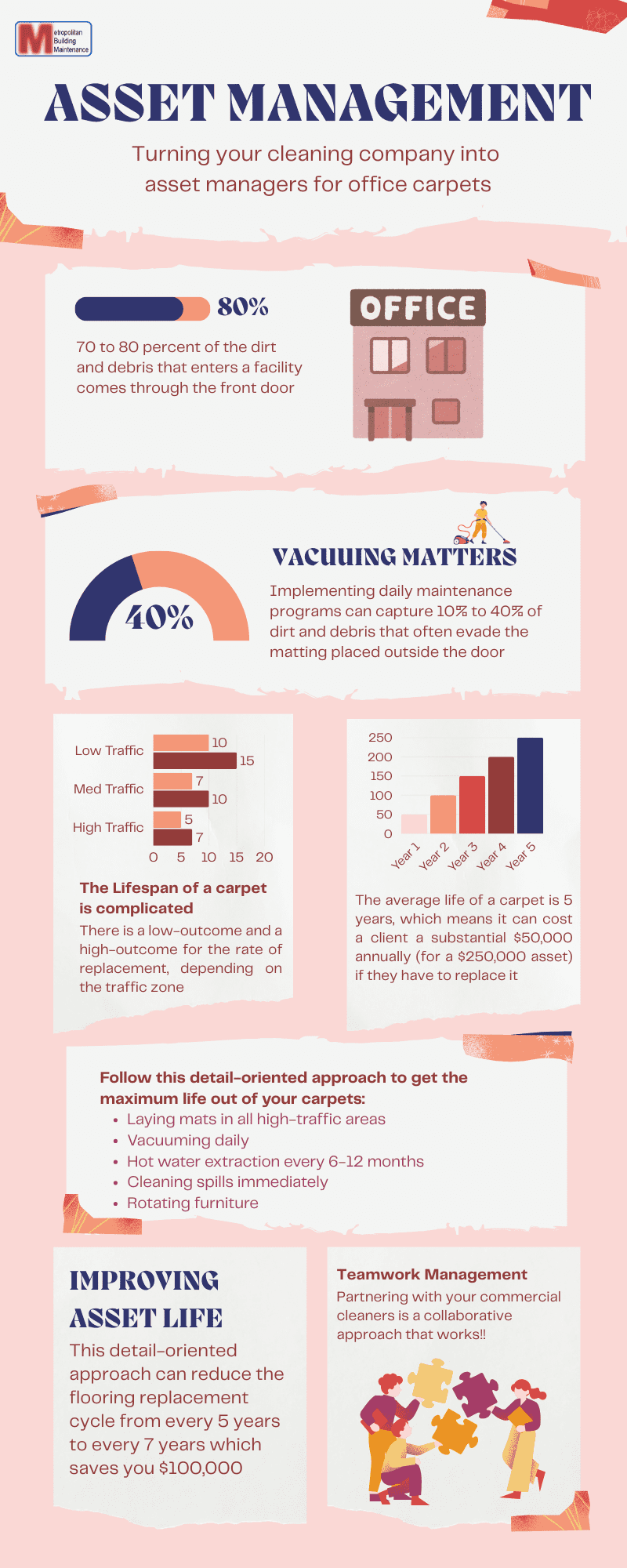
Daily vacuuming — removes surface dirt before it embeds into carpet fibres, reducing long-term maintenance costs.
Spot cleaning — addresses spills promptly to prevent staining and lingering odours.
Interim encapsulation cleaning — refreshes carpets between deep cleanings for ongoing maintenance and appearance.
Hot water extraction services — restore carpet fibres and remove deep-set dirt, extending life and improving indoor air quality.
Scheduled cleaning frequency — high-traffic areas may require cleaning every 1–3 months, while less-used offices may need 6–12 months between services.
C. Planning & Expectations
Annual carpet maintenance program — includes extraction, interim cleanings, and spot treatments for optimal lifespan.
Review of carpet cleaning solutions — ensures chemicals are compatible with the fibre type and prevent residue buildup.
Tracking high-soil zones — allows cleaning teams to focus on areas like reception, elevators, and corridors that experience heavy use.
Once carpets are maintained, attention should turn to windows. Clean interior and exterior glass contributes not only to aesthetics but also to light quality and tenant satisfaction.
Interior windows — benefit from frequent cleaning to remove fingerprints, dust, and office residue.
Exterior glazing — exposed to weather and pollution, requiring scheduled maintenance to prevent permanent staining.
Height and access considerations — may require lift equipment or trained technicians for safe exterior cleaning.
B. Professional Service Expectations
Streak-free glass cleaning — ensures clarity and avoids distractions from smudges or residue.
Frame and sill wiping — prevents dirt buildup that can transfer back onto windows and impact appearance.
Trained window washers — use proper safety equipment and techniques to deliver consistent results.
Beyond floors, carpets, and windows, modern facilities increasingly prioritize sustainable cleaning practices. Green cleaning is an essential consideration for facility managers looking to reduce environmental impact while maintaining high standards.
Green Cleaning Options & Sustainability Considerations
Modern offices increasingly focus on sustainability, tenant health, and indoor air quality. Green commercial cleaning programs help reduce chemical exposure, improve environmental impact, and align with broader building sustainability goals.
Environmentally friendly products — reduce VOC emissions and indoor air pollution, promoting healthier office spaces.
Chemical-free cleaning methods — prevent residue buildup on floors, carpets, and furniture while protecting sensitive materials.
HEPA-filtered vacuums — remove fine dust and allergens, improving overall air quality for occupants.
Proper waste management — includes recycling and safe disposal, minimizing environmental footprint.
B. Standards & Practices
Certified green cleaners — products approved by EcoLogo or Green Seal ensure safety and sustainability.
Microfiber cloths and pads — use less water and chemicals while effectively capturing dirt and microbes.
Dilution control systems — measure and mix chemicals precisely, reducing waste and improving consistency.
Staff training in green techniques — ensures products are used correctly for maximum effectiveness without overuse.
C. Planning for Green Cleaning
Documentation of products and methods — helps verify compliance with sustainability standards and informs tenant communication.
Audits and performance tracking — monitor results and adjust cleaning schedules or product selection as needed.
Integration with maintenance schedules — ensures green cleaning supports, rather than disrupts, other building maintenance activities.
With floors, carpets, windows, and sustainable practices addressed, the next step is understanding what makes a high-quality office cleaning company. The same principles that define effective cleaning routines also reflect the professionalism and reliability of the service provider.
What Makes a High-Quality Office Cleaning Company
While previous sections focused on standards and procedures, choosing the right provider is equally critical. A high-quality commercial cleaning company embodies the same principles you expect from their work: consistency, accountability, and continuous improvement.
Commitment to quality first — guarantees services and addresses any issues promptly to ensure client satisfaction.
History of excellence — demonstrates long-term experience with commercial office cleaning and a proven track record.
Trained and certified staff — ensures technicians can handle all equipment safely and use appropriate cleaning methods.
Proactive communication — provides updates, reports, and responds quickly to concerns, keeping facility managers informed.
Continuous improvement mindset — regularly updates procedures, invests in staff training, and adopts new techniques or eco-friendly practices.
Selecting a provider with these qualities ensures that the high standards outlined in this guide are consistently met. Beyond evaluating company credentials, facility managers should also consider scheduling, local service availability, and ongoing support for building-specific needs.
Planning, Local Services, and Facility Manager Considerations
A comprehensive cleaning plan coordinates all elements of a commercial office program—floor, carpet, windows, and green cleaning—while respecting building operations and tenant schedules.
A. Scheduling & Maintenance
Tailored cleaning schedules — account for office hours, peak traffic zones, and seasonal demands to minimize disruption.
Coordination with building operations — integrates cleaning with maintenance, events, or construction cleanup without interfering with workflows.
Documented inspections and follow-ups — ensures that every area meets agreed-upon standards consistently.
B. Local Service Considerations
Proximity to the building — local providers reduce travel time, respond quickly to emergencies, and understand regional weather impacts on floors and windows.
Familiarity with local codes — ensures compliance with provincial health, safety, and environmental regulations.
Community reputation — reviews and testimonials provide insight into reliability and quality.
C. Supply Management
On-site cleaning supplies — organized and readily available materials reduce downtime and ensure staff can follow correct procedures.
Use of appropriate janitorial supplies — chemicals, microfiber products, and floor pads are matched to building surfaces and green cleaning goals.
Inventory audits — track usage to prevent shortages or overstock, supporting both efficiency and sustainability.
Integrating high standards, sustainable practices, and professional management sets the foundation for a building that is clean, safe, and welcoming—every day.
Bring It All Together
Effective commercial office cleaning requires more than routine effort. It demands an understanding of standards, careful planning, and a partnership with a professional, high-quality service provider.
By combining structured cleaning schedules, well-trained staff, proper equipment, and sustainable practices, facility managers can maintain a clean, safe, and attractive office environment that protects assets, supports employee health, and impresses tenants and visitors alike.
Metropolitan Building Maintenance offers exactly that: complete facility cleaning, supply management, and long-term reliability across the Lower Mainland.
Across the Lower Mainland, more offices are rethinking what it means to be “clean.” Companies are discovering that a spotless workspace doesn’t require harsh chemicals or strong odours. With modern green commercial cleaning services, it’s now possible to keep every surface gleaming while supporting employee health and environmental sustainability. In other words, it’s time to clean green.
Green cleaning services rely on eco-friendly cleaning agents, natural green cleaners, and earth-friendly cleaning products that are biodegradable, low-toxicity, and safe for indoor environments.
Unlike older formulations, these solutions avoid volatile organic compounds (VOCs), chlorine, and petroleum-derived solvents—chemicals known to irritate lungs and harm air quality. Instead, they use plant-based surfactants, bio-enzymes, and natural acids that cut through grease, soap scum, and dirt with equal or greater efficiency.
Green commercial cleaning companies take it a step further by designing complete sustainability programs that include:
Refillable containers and concentrate systems to reduce waste
Reusable microfiber technology that cleans more effectively with less water
Certified products from organizations like Green Seal, EcoLogo, or EPA Safer Choice
In essence, to clean green is to clean smarter—delivering lasting cleanliness while minimizing environmental impact.
Why Green Cleaning Works as Well as—or Better Than—Traditional Cleaning
Modern green cleaners have come a long way from their early, vinegar-and-baking-soda days.
Today’s eco-friendly cleaning products are laboratory-tested to meet or exceed the performance of conventional cleaners, and they’re specifically designed for commercial use.
They work through mechanical efficiency rather than chemical aggression—using safer, naturally derived agents to lift, trap, and remove soil instead of dissolving it with harsh ingredients.
When paired with green clean cleaning services that follow professional cleaning protocols, results are consistently top-tier.
Here’s why green cleaning is equally (or more) effective:
Advanced chemistry: Biodegradable surfactants and chelating agents break down oils and residue effectively.
Improved air quality: No harsh odours, VOCs, or lingering residues.
Better for surfaces: Gentle, pH-balanced formulas extend the lifespan of floors, carpets, and furniture.
Consistent performance: Microfiber tools and HEPA vacuums physically capture 99% of fine particles and bacteria.
By choosing to clean green, businesses gain a higher level of cleanliness with fewer long-term maintenance issues.
Surfaces stay cleaner longer, indoor air remains fresher, and the entire office feels more comfortable and inviting.
Supporting Sustainability Through Everyday Cleaning
Sustainability isn’t just a marketing buzzword—it’s a measurable commitment that businesses can act on every day.
Cleaning operations, especially in commercial spaces, consume large amounts of chemicals, plastic, water, and energy. That’s why green commercial cleaning is such a powerful shift: it reimagines every step of the cleaning cycle for efficiency and environmental care.
Earth-friendly cleaning products come in concentrated, refillable containers to minimize packaging. Eco-friendly janitorial services use energy-efficient vacuums and low-flow floor machines to reduce power and water use.
Even the choice of mop or cloth matters: microfiber pads capture more debris and require less detergent, reducing waste by up to 95%.
Key sustainability wins from green cleaning:
Less chemical runoff: No toxins entering drains or local waterways.
Reduced packaging waste: Reusable containers and bulk systems.
Lower carbon footprint: Concentrated cleaners mean fewer shipments and less plastic.
Longer equipment life: pH-balanced products protect surfaces and finishes.
By integrating these small but meaningful steps, green commercial cleaning companies help clients align cleaning practices with corporate ESG or sustainability goals.
Over time, this reduces environmental impact while saving money through efficiency and reduced consumption.
Healthier Air and Happier Employees
Clean doesn’t just mean “shiny”—it means healthy. Many offices unknowingly battle Sick Building Syndrome, where chemical residues, synthetic scents, and inadequate ventilation cause discomfort, fatigue, or respiratory irritation.
Traditional cleaning products are a major contributor, releasing VOCs that linger long after cleaning is finished.
Switching to chemical-free cleaning practices is one of the simplest ways to improve indoor air quality. Eco-friendly cleaning agents eliminate harsh solvents, and natural green cleaners replace artificial fragrances with mild, plant-based alternatives.
The result is a space that feels—and smells—clean without that overpowering “chemical” scent.
Health benefits of cleaning green:
Reduced allergic reactions and respiratory irritation
Fewer headaches and fatigue symptoms from VOC exposure
Safer, non-toxic workspaces for cleaning staff and employees
Improved focus and morale thanks to cleaner, fresher air
Green cleaning is effective across every part of a commercial space. From carpets and floors to windows and high-touch office surfaces, there’s a sustainable method for each area that matches or exceeds traditional results.
Carpets: Deep Cleaning Without Harsh Residue
Office carpets collect dirt, allergens, and bacteria every day, making regular deep cleaning essential. Traditional shampoos often leave sticky residues that attract dust and soil quickly, forcing more frequent cleanings.
Modern eco-friendly cleaning agents avoid this issue through encapsulation cleaning—a process that traps soil in microscopic crystals that vacuum out easily once dry. These systems use less water, dry faster, and eliminate the risk of mould or mildew.
Benefits of green carpet care include:
Cleaner fibres and improved texture retention
Reduced drying time, minimizing downtime for offices
No sticky residue or synthetic scents
Longer carpet life due to gentler cleaning methods
Floor care is one of the biggest opportunities to clean green effectively. Traditional strippers and finishers can contain zinc or ammonia compounds that release odours and damage coatings over time. Earth-friendly cleaning products, on the other hand, use low-impact detergents and neutral pH formulations to remove dirt without degrading protective layers.
Modern chemical-free cleaning systems combine precision auto scrubbers and low-moisture cleaning pads to maintain floors while using minimal water and detergent. This approach supports long-term durability and a healthier environment.
Eco advantages of green floor maintenance:
Uses up to 80% less water and detergent
Maintains slip resistance and surface integrity
Eliminates harmful airborne chemicals
Extends finish life, reducing the need for recoating
For materials like vinyl, linoleum, and VCT, this sustainable approach delivers both beauty and performance while reducing cost and risk.
Windows: Clarity Without Chemicals
Windows play a key role in office ambience—more natural light means more energy and productivity. Yet traditional window cleaners often rely on ammonia or glycol-based solvents that emit strong fumes and harm nearby plants when rinsed outdoors.
Green-friendly cleaning alternatives use biodegradable, plant-derived surfactants or purified water systems that require no chemicals at all. Eco-friendly janitorial services using water-fed poles can reach multiple stories safely without detergents, leaving windows spotless and streak-free.
Why green window cleaning works better:
No chemical runoff or residue
Improved clarity and natural light
Safer for landscaping and stormwater systems
Fresher indoor air—no ammonia odours
With a professional green commercial cleaning company, even high-visibility glass can sparkle sustainably.
General Office Cleaning: Everyday Eco-Friendly Habits
Sustainability shines brightest in daily habits. Office cleaning covers dozens of small tasks—dusting, disinfecting, waste removal, and surface wiping—all of which can be improved with eco-friendly cleaning principles.
Environmentally friendly cleaning services now use hospital-grade, low-toxicity disinfectants that eliminate germs without harsh chemical blends. Refillable spray bottles, microfiber cloths, and colour-coded cleaning systems minimize cross-contamination while reducing landfill waste.
Simple ways offices can clean with green every day:
Use microfiber cloths instead of disposable wipes or paper towels
Replace single-use plastic liners with compostable alternatives
Choose eco-friendly cleaning agents for keyboards, phones, and desks
Opt for low-fragrance, chemical-free air fresheners or natural diffusers
These small changes make a big difference over time. By integrating clean with green principles into regular routines, offices create healthier spaces and set an example of corporate environmental leadership.
The Workplace Advantage: How Clean Green Benefits Everyone
When offices embrace clean green practices, the benefits ripple far beyond the cleaning team. A cleaner, healthier workspace improves morale, reduces absenteeism, and enhances a company’s reputation.
Employees notice—and appreciate—spaces that feel fresh rather than perfumed. Cleaners experience safer working conditions with fewer chemical exposures. Clients are greeted by an environment that reflects care, professionalism, and forward-thinking values.
The long-term business benefits include:
Healthier, more productive employees
Fewer maintenance issues and longer surface life
Enhanced company image as a sustainable organization
Positive first impressions for clients and partners
Ultimately, green commercial cleaning supports the two things every business values most: people and longevity.
In today’s competitive business landscape, companies are increasingly recognizing that employee well-being and environmental responsibility go hand in hand. Green Commercial Cleaning is no longer a niche initiative—it’s a strategic choice that reflects a company’s commitment to health, sustainability, and operational excellence.
Modern workplaces that adopt green cleaning practices are setting new standards for both employee health and corporate responsibility.
Here are five ways green cleaning is transforming workplace health, with practical tips you can implement immediately.
1. Elevating Air Quality to Support Wellness
Indoor air quality has a profound impact on employee productivity and well-being.
Traditional cleaning methods often introduce volatile organic compounds (VOCs) and harsh chemicals that linger in the air, contributing to respiratory irritation, headaches, and even Sick Building Syndrome.
By leveraging eco-friendly cleaning agents and natural green cleaners, workplaces can dramatically reduce these airborne irritants. The result is a safer, healthier environment where employees can breathe easier, focus better, and experience fewer disruptions due to air-quality-related illness.
Pro Tip: Place air-purifying plants in high-traffic areas and encourage frequent air circulation by opening windows or using air filtration systems.
2. Green Cleaning Practices for Floors and Carpets
High-traffic areas like carpets and floors are more than just surfaces—they are central to the health of any office environment.
Green clean cleaning services employ low-moisture techniques, chemical-free floor solutions, and biodegradable carpet cleaners that remove dirt and allergens without compromising employee health.
The benefits are tangible: employees are exposed to fewer allergens, chemical residues are minimized, and walking surfaces are safer.
Pro Tip: Implement a “no-shoes” policy or provide indoor slippers in sensitive areas, and pair it with regular green cleaning of carpets and mats to minimize allergen buildup.
3. Sparkling Windows Without the Chemicals
Traditional cleaning of interior and exterior windows often relies on harsh chemicals that may leave residues, causing irritation and health concerns for employees.
Through cleaning green practices, companies can maintain these areas safely and effectively.
Green-friendly cleaning products or even just water remove dirt and bacteria while preserving indoor air quality, reducing the risk of contact-related illnesses, and creating an environment where employees feel protected and valued.
Pro Tip: Cleaner windows let in more daylight, which can boost employee mood, focus, and overall productivity while reducing the need for artificial lighting.
4. Aligning Sustainability with Employee Health
The rise of green commercial cleaning reflects a broader understanding that environmental responsibility and employee wellness are intertwined. Biodegradable, refillable, and low-impact cleaning products not only reduce the environmental footprint of a facility but also contribute to a healthier workplace.
Organizations that adopt eco-friendly cleaning agents and partner with green commercial cleaning companies signal to employees and clients alike that sustainability is integral to operational excellence. This approach fosters workplace pride, boosts morale, and strengthens the company’s reputation as a forward-thinking, health-conscious employer.
Pro Tip: Educate staff on eco-friendly janitorial services to create a culture of environmental awareness.
5. Debunking Common Green Cleaning Myths
Despite widespread adoption, misconceptions persist about green cleaning:
Myth 1: Green cleaners are less effective. Reality: Modern green cleaning services consistently meet or exceed traditional standards.
Myth 2: Green is prohibitively expensive. Reality: Healthier employees mean fewer sick days, higher productivity, and long-term cost savings.
Myth 3: Green cleaning products can’t disinfect. Reality: Safe, eco-friendly cleaning products and techniques provide thorough sanitization without exposing employees to harmful chemicals.
Pro Tip: Track and share metrics like reduced absenteeism or cleaner indoor air measurements to demonstrate the tangible benefits of green cleaning.
A Strategic Approach to Health and Sustainability
From improving air quality to maintaining floors, carpets, windows, and high-touch surfaces safely, green cleaning practices deliver measurable benefits.
At Metropolitan, our chemical-free philosophy reflects decades of expertise in delivering environmentally responsible cleaning services that prioritize employee wellness.
By partnering with a trusted green commercial cleaning company, organizations can create workplaces that are safer, healthier, and more sustainable—today and for the future.
For companies committed to employee health and environmental responsibility, exploring green commercial cleaning services is a forward-thinking choice that delivers results.
Maintaining an ideal office in Vancouver goes far beyond appearances.
A professionally cleaned workspace is critical for creating a safe, productive, and welcoming environment for employees and clients. Finding an office cleaning service you can trust means understanding their history, quality, and customer service before they even start.
In today’s competitive business landscape, cleanliness communicates professionalism, attention to detail, and care for employee well-being. You can’t waste time with the wrong company.
Vancouver’s rainy winters, dusty spring construction, and high urban traffic mean offices face unique cleaning challenges. Professional services should adapt to these seasonal fluctuations, protecting flooring and maintaining hygiene year-round.
This blog will provide a detailed list of all the services you will need to maintain the ideal office space for you, your staff, and your clients.
Impacts
Proper office cleaning affects several aspects of your business:
Health and Safety: Dust, allergens, and bacteria accumulate in high-traffic areas, carpets, and shared equipment. Professional cleaning reduces exposure and lowers illness-related absenteeism.
Productivity: Employees in clean, well-maintained environments report higher focus and job satisfaction. Clutter and dirt can be distracting and create a negative workplace experience.
Asset Longevity: Floors, carpets, and furniture are significant investments. Regular maintenance prevents wear, scratches, and damage, extending their lifespan and saving money in the long term.
Pro Tip: If your company doesn’t already provide inspections, ask them to schedule periodic audits of cleaning services to ensure consistency and identify opportunities for preventative maintenance.
The Importance of a Trusted Office Cleaning Service
Hiring the right office cleaning service is more than just outsourcing tasks—it’s investing in a partner that understands your workplace, industry standards, and the health of your employees.
Industry-Specific Cleaning Needs
Each industry has different requirements for cleaning frequency, methods, and equipment:
Healthcare Offices: Clinics, hospitals, and dental offices require strict sanitation protocols. High-touch surfaces, such as exam tables, doorknobs, and waiting room chairs, are sanitized multiple times per day. Floors may require anti-microbial treatments, and carpets are cleaned more often or avoided entirely in patient areas.
Corporate Offices: Law firms, tech startups, and finance offices prioritize aesthetics and comfort. Carpeted areas improve acoustics and employee comfort, while polished floors and clean windows maintain professional client impressions. Reducing allergens and odours is critical to maintaining ideal air quality.
Retail Spaces: High foot traffic requires daily or weekly floor cleaning, window washing, and spot treatments for carpets or mats. Entrance areas and displays must be consistently presentable for customers.
Industrial or Manufacturing Spaces:Safety, such as slips, trips, and falls, is a top priority. Floors must be free from debris, oil, or chemicals, and staff often require industrial-strength cleaning products and equipment to maintain compliance with workplace safety standards.
Seasonal Cleaning Considerations
Winter: Rain and snow increase floor dirt and slip hazards, requiring more frequent mopping and mat cleaning.
Spring: Construction dust and pollen increase indoor allergens, making carpet cleaning and HVAC maintenance more important.
Summer: Dust accumulation on windows and high sunlight exposure necessitate more frequent exterior cleaning.
Fall: Leaf debris and mud tracked indoors increase cleaning needs, particularly in entryways and high-traffic corridors.
How Professional Services Save Money
A trusted office cleaning service is a cost-saving investment:
Prevents premature wear on floors, carpets, and furniture.
Reduces employee illness and absenteeism through better air quality.
Avoids costly DIY mistakes that can damage office assets.
Extends the lifespan of janitorial supplies and equipment by using proper storage and techniques.
Floors are among the most heavily trafficked areas in any office. They endure dirt, moisture, and daily wear, making regular maintenance critical to protect your investment and maintain a professional appearance.
Daily or Weekly Upkeep
Regular dust mopping, sweeping up debris, and wet mopping are key to keeping floors and wax clean, safe, and sparkling. This is done with a neutral pH cleaner or in bathrooms and kitchens, a light disinfectant surface cleaner.
Some heavy-use flooring or transition spaces between shops and offices might need to be waxed more regularly to keep from dulling or being damaged.
Stripping and Waxing Floors
Stripping and waxing floors is essential in high-traffic office spaces. This process removes old layers of wax, deeply cleans the floor, and applies a protective finish.
High-traffic office floors typically require stripping and waxing every 3–6 months to maintain appearance and durability. However, it’s not uncommon to do it every 6-12 months, depending on need.
Step-by-Step Process
Preparation: Remove furniture, rugs, and mats to avoid damage.
Stripping: Apply commercial floor stripper to dissolve old wax layers.
Scrubbing: Use a high-speed floor maintenance machine to lift residue.
Rinsing: Remove residue to prevent streaking.
Drying: Ensure floors are fully dry before applying wax.
Waxing: Apply multiple thin coats of commercial wax for durability and shine.
Buffing (optional and additional cost): Improves to a glossy, high-shine finish.
Pro Tips:
Always test new wax products in a small area before applying to the entire floor.
Microfiber pads reduce scratching during buffing.
Schedule stripping and waxing outside peak office hours to minimize disruption.
Types of Flooring and Maintenance Needs
Different flooring types require tailored care:
Linoleum Flooring: Durable and easy to maintain; benefits from regular stripping and waxing to preserve shine. Some older types might have issues with colour bleeding. Proper rinsing is very important wth linoleum.
Vinyl Composite Tile (VCT): Buffing and waxing prevent scratches and dullness. Avoid harsh chemicals that may degrade the finish. These tiles can take a lot of punishment and can usually come back to nearly new looking from a regular strip and wax yearly cycle.
Hardwood Floors: Sensitive to moisture; use specialized cleaning products to avoid warping. Wood shouldn’t need to be stripped and waxed very often.
Concrete Floors: Sealed concrete should be cleaned with pH-neutral products and polished periodically to maintain durability.
Industry Example: A tech startup may have carpeted offices with linoleum in hallways and kitchens. Daily vacuuming keeps carpets fresh, while weekly washing and waxing preserves hallways–but after a year of waxing, there will be 52 layers, and if they aren’t removed, they can start to yellow and create tiny changes in the evenness of the surface.
Tools and Equipment
Professional floor maintenance uses specialized equipment to ensure optimal results and rigorous systems in order to do this heavy labour in the quickest possible timeframe:
Auto-scrubbers: Efficiently clean large areas.
Scrubbing Pads: Using the right grit is essential to proper stripping.
Buffers and polishers: Restore shine to waxed floors.
Wet/dry vacuums: Remove water or cleaning solution quickly.
Microfiber mops: Reduce streaking and improve efficiency.
Floor polishers: Maintain high-gloss finishes.
Pro Tip: Household cleaners or DIY machines can damage commercial flooring, shorten its lifespan, and leave streaks.
Cost Considerations
Strip and wax floors: $0.75–$2.00 per square foot, depending on floor type and condition, and scheduling.
Routine cleaning: $0.15–$0.50 per square foot for mopping and an additional amount for laying down regular wax.
Seasonal Tip: Increase floor cleaning frequency during Vancouver’s winter months to prevent water damage from rain, snow, and salt.
Preventive Maintenance Tips
Use entrance mats to trap dirt before it reaches the flooring–ideally, every entrance has at least a 6-foot mat.
Rotate furniture placement occasionally to prevent uneven wear patterns–in many cases, this is not possible given the size of spaces and furniture, and the direction of doors and windows, and that’s okay.
Schedule deep cleaning outside peak hours to minimize disruption–this is pretty standard for most cleaning companies, though some companies require service during daytime hours. Things like stripping and waxing and carpet cleaning are so disruptive that they can only be done after hours.
Carpet Cleaning Services
Carpets are essential in many offices, providing comfort, sound insulation, and aesthetic appeal. However, they also trap dirt, dust, allergens, and bacteria, which can negatively affect air quality and employee health if not properly maintained.
Regular carpet cleaning improves longevity, appearance, and indoor air quality, while protecting the investment in office furnishings.
While DIY carpet cleaners are available, they often fail to remove deep-seated dirt and moisture, potentially causing mould or fibre damage.
Professional carpet cleaning uses industrial-grade equipment, specialized solutions, and trained staff to thoroughly clean carpets without harming fibres or adhesives.
Pro Tip: Avoid steam cleaning carpets yourself unless you have professional equipment and experience; residential machines cannot achieve the same extraction power as commercial carpet cleaners, and it’s easy to overwet a surface if you’re not sure how much water is being sprayed.
Carpet Cleaning Methods
Professional services use several approaches depending on carpet type, traffic, and stain severity–if the company has any expertise, they will use hot water extraction as this provides the deepest and most effective cleaning. Types of processes include:
Hot Water Extraction (Steam Cleaning):
Uses hot water and a cleaning solution injected deep into carpet fibres.
Extracts dirt, allergens, and bacteria.
Ideal for high-traffic areas or offices with health requirements.
Can be portable units or a truck mount.
Dry Cleaning/Encapsulation:
Low-moisture method using a dry compound or foam that crystallizes dirt for vacuuming.
Mostly for appearance and doesn’t clean deep into the fibres.
Quick-drying; suitable for offices needing minimal downtime.
Spot Cleaning:
Ideal to have a spot cleaning kit on-site for staff or daily cleaning staff.
Focuses on high-traffic areas or stains.
Essential in entrances, break rooms, or near copier stations.
Encapsulation Combined with Bonnet Cleaning:
Often used in corporate offices for large open spaces.
Protects carpet fibres and provides a polished appearance with minimal moisture.
Industry-Specific Needs
Different sectors require different cleaning approaches because of the type of dirt and the volume of traffic:
Healthcare Offices:
Frequent deep cleaning to reduce germs and allergens.
Often combines steam cleaning with green cleaning agents.
Corporate Offices:
Biannual full carpet clean with spot cleaning monthly or bonnet cleaning with encapsulation every 3-6 months.
Focus on aesthetics and odour control for client-facing spaces.
Retail Spaces:
High-traffic carpets near entrances may require monthly or quarterly cleaning.
Spot cleaning for spills, especially during peak shopping seasons.
Industrial or Lab Spaces:
Specialized cleaning solutions to handle oil, grease, or chemical residues.
Dry cleaning methods are preferred in areas sensitive to moisture.
Tools and Equipment
Professional carpet cleaning requires advanced equipment that is regularly maintained to function at its best. It goes beyond just running a vacuum and requires specialized tools designed for different environments, soil levels, and carpet types:
Upholstery and Carpet Wands – These precision tools attach to extraction machines to deliver water and cleaning agents deep into carpet fibres, then remove soil and moisture in one pass. Upholstery wands are smaller and designed for furniture, corners, and tight spaces, while carpet wands handle large surface areas efficiently.
Portable Carpet Cleaning Units – Compact machines that can be moved floor-to-floor inside offices or business parks. Ideal for multi-storey buildings where access is limited, these units provide hot water extraction without needing vehicle-based power.
Truck-Mounted Systems – The gold standard for deep carpet cleaning in commercial spaces. Truck mounts deliver stronger suction and higher water temperatures than portable units, allowing faster drying and superior soil removal—especially effective in large offices, lobbies, and high-traffic hallways.
Floor Machines with Bonnets (Encapsulation Cleaning) – Low-moisture systems that use a rotary floor machine with a bonnet pad to apply encapsulation solution. This method is excellent for maintaining appearance between deep cleanings because carpets dry quickly and can be back in use within an hour.
Spot Cleaning Kits – A must-have for day-to-day carpet maintenance. A professional kit typically includes:
pH-balanced spotting solution
Enzyme cleaners for food and organic stains
Solvent-based spotters for grease and oil
Absorbent towels or spotting brushes
A portable handheld extractor for quick moisture removal
Winter: Heavy rain and mud increase dirt accumulation; consider extra entrance mat cleaning, providing a boot brush at the entrance, or other methods to decrease the volume of dirt and salt tracked in.
Spring: Construction dust and pollen require deeper cleans to maintain air quality, and with the increase of rain, damp carpets can release odours, or wet floors can be hazardous.
Fall: Leaf debris and seasonal dirt require spot cleaning in high-traffic areas. Sweeping, power blowing, or vacuuming entrances can decrease debris issues.
Standard commercial carpet cleaning: $0.25–$0.50 per square foot.
Deep steam cleaning: $0.40–$0.75 per square foot.
Spot treatments: $10–$50 per area, depending on severity.
Pro Tip: Rotate furniture on carpeted areas during cleaning to ensure even wear and prolong the lifespan, and use plastic mats under roller chairs.
Window Cleaning Services
Clean windows do more than improve aesthetics—they enhance natural light, employee mood, and client impressions. Dirty windows can block up to 40% of sunlight, negatively impacting energy efficiency and workplace comfort.
Professional vs. DIY
While small windows might be cleaned by staff, professional window washing services are essential for:
Safety: Exterior or high-rise windows sometimes require harnesses, scaffolding, ladders, tucker poles, and specialized equipment.
Efficiency: Professionals clean quickly with minimal disruption to office operations.
Quality: Trained staff avoid streaks, residue, or scratches.
Pro Tip: Never attempt high-window cleaning without proper training and equipment—slips and falls are a leading cause of office accidents during DIY cleaning.
Types of Services
Interior Window Cleaning: Removes dust, fingerprints, and water marks from inside office windows.
Exterior Window Cleaning: Tackles dirt, algae, and grime from outside, often requiring squeegees, water-fed poles, or power washing.
Full-Service Packages: Include both interior and exterior cleaning, plus frame and sill care.
Green cleaning is more than a trend—it is now a standard expectation for modern offices.
Implementing eco-friendly methods reduces chemical exposure, protects the environment, and improves indoor air quality.
Businesses adopting green cleaning practices demonstrate a commitment to sustainability and employee health, while often benefiting from lower long-term costs.
Vancouver offices face unique environmental challenges:
Rainy Winters: Green cleaning methods prevent harsh chemicals from entering drains.
High Urban Traffic: The need to remove lots of dust and street pollutants entering a building make non-toxic solutions safer for staff and visitors.
Corporate Sustainability Goals: Many Vancouver businesses prioritize environmentally responsible operations, making green cleaning a key factor in selecting a service provider.
Industry Example: A Vancouver tech company with open-plan offices benefits from eco-friendly cleaning solutions that protect sensitive electronics and improve air quality, supporting employee wellness programs and protecting office equipment.
Janitorial Supplies and Professional Standards
High-quality janitorial supplies and proper organization are crucial for efficient, effective cleaning. Well-stocked and properly managed supplies save time, reduce waste, and ensure consistency across services.
Microfiber Cloths: Reduce streaking and are reusable, reducing waste.
Mops and Buckets: Commercial-grade options last longer and clean more effectively.
Dust Mops and Brooms: For cleaning entry ways, long hallways, and debris buildup.
Washroom Totes: With a toilet brush, colour-code cloths that are only used in washrooms, and disinfectant spray.
Floor Maintenance Machines: Auto-scrubbers, buffers, and polishers for high-traffic areas.
Vacuum Systems: Industrial carpet cleaners for deep cleaning.
Green Cleaning Solutions: Chemical-free products for floors, carpets, and surfaces.
Safety Equipment: Gloves, goggles, and harnesses for high-window work or hazardous areas.
Disposable Supplies: This includes garbage bags, hand towels, toilet paper, and sanitary napkins, among other items.
Pro Tip: Labelling and organizing supplies on mobile cleaning carts ensures staff efficiency and accountability, while minimizing chemical overuse.
Choosing the Most Trusted Office Cleaning Service in Vancouver
Selecting a reliable office cleaning company is critical for maintaining your workspace and protecting your investment. A trusted provider ensures professional results, safety, and consistent service and is also a joy to work with and look for guidance from while creating a long-term relationship.
Key Factors to Consider
Reputation and Client References: Look for testimonials and case studies from local Vancouver businesses.
Staff Training and Certifications: Properly trained staff ensure safe handling of equipment, chemicals, and eco-friendly solutions.
Equipment Quality: Professional-grade machines produce better results, reduce wear, and save time.
Transparent Pricing: Clear rates prevent hidden fees and support budget planning.
Pro Tip: Choose companies that provide a single point of contact for scheduling, reporting, and feedback—this improves accountability and communication.
Questions to Ask Potential Cleaning Services
Do you offer consolidated services for floors, carpets, windows, and more?
What green cleaning practices do you implement?
Can you provide references in my industry?
How often do you recommend cleaning for each service type?
Do you supply your own equipment and cleaning products?
Red Flags
Lack of references or experience in your industry.
No green cleaning certifications or environmentally friendly options.
Vague pricing or hidden fees.
Staff not trained in specialized cleaning methods, like floor stripping or carpet steam cleaning.
Example: A Vancouver law firm seeking a professional cleaning service should confirm that the company can handle daily high-traffic floors, quarterly carpet cleaning, and biannual window washing, while also offering eco-friendly solutions that align with corporate sustainability goals.
Why a Trusted Office Cleaning Service Matters
Investing in a professional office cleaning service ensures your Vancouver workspace remains clean, safe, and productive. From floors and carpets to windows and eco-friendly practices, skilled cleaners protect assets, improve air quality, and save money over time.
Choosing a trusted provider guarantees consistent results, tailored services, and a healthier, more professional environment for employees and clients alike.
Managing a commercial property is never a one-season job. While your maintenance schedule likely covers the basics, truly proactive property managers know that seasonal shifts bring specific demands—especially when it comes to cleanliness, safety, and appearance.
This checklist focuses on seasonal commercial maintenance tasks regarding janitorial cleaning, floor care, carpet cleaning, exterior window washing, and parking lot cleaning.
With the right strategy and service providers, your property will remain pristine, professional, and ready for whatever the season brings.
Spring: Refresh and Recover from Winter
Spring is the time to reset. After months of heavy foot traffic, damp conditions, and salt or grit buildup, commercial properties need focused attention.
Spring Priorities:
Deep Dusting and Vent Cleaning Dust from closed windows and heating systems affects indoor air quality. Use janitorial cleaning services to thoroughly clean vents, baseboards, and high surfaces.
Floor Maintenance and Resealing Winter wear calls for machine scrubbing or resealing—especially on VCT or tile. Partner with a maintenance cleaning provider that specializes in spring floor restoration.
Parking Lot Cleaning Sand, gravel, and salt residue can deteriorate surfaces. Pressure washing is a key element of commercial property maintenance in spring.
Summer: Shine and Maintain
Summer brings better weather—and a chance to tackle outdoor and aesthetic improvements that reinforce your building’s professionalism.
Summer Priorities:
Exterior Window Washing (High-Frequency) Longer daylight hours mean more visible smudges and streaks. Find the right cleaning frequency with a skilled commercial cleaner.
Day Porter or Light Janitorial Service With more visitors and employees on-site, consider daytime janitorial service to maintain high-traffic areas, restrooms, and common spaces.
Parking Lot Re-striping and Sealcoating A freshly striped and sealed lot improves both safety and curb appeal. Consider it a key part of building & maintenance.
Monitor for Mould and Moisture Humidity can cause hidden moisture issues. Address these early with targeted cleaning services for commercial interiors.
Fall: Prepare for the Cold
Fall is the transition phase—perfect for preparing your property for harsh winter conditions and keeping it clean as the weather turns wetter.
Fall Priorities:
Matting Systems & Entryway Cleaning Install heavy-duty mats and increase office maintenance to minimize dirt tracked inside.
Carpet & Upholstery Cleaning Fall is the time to remove allergens and embedded summer dust with professional carpet cleaning services.
High Dusting and Light Fixture Cleaning Heating systems kick up dust—book standard janitorial services to clean ceiling vents, fans, and lights.
Final Exterior Window Cleaning Before Winter A pre-winter wash removes debris that could freeze and stain surfaces. This is particularly important in wetter climates like Vancouver, BC.
Parking Lot Sweeping & Drain Clearing Leaves and debris clog drains, increasing flood risks. Include lot sweeping and water-flow checks in your building cleaning plan.
Winter: Keep It Safe and Sanitary
Winter is about keeping interior environments clean, dry, and safe for tenants and visitors while minimizing weather-related wear.
Carpet Spot Cleaning & Deodorizing Moisture buildup leads to odours and stains. Spot treatment is key to maintaining clean, fresh environments.
Restroom and Touchpoint Sanitization Cold and flu season heightens the need for sanitization. Use janitorial services focused on high-touch points, fixtures, and communal areas.
Indoor Window Spot Cleaning Prevent smudges and condensation buildup with ongoing window maintenance, especially in customer-facing areas.
Snow Debris in Parking Areas Even with plowing handled externally, follow up with maintenance cleaning to remove residue and prevent slip hazards.
Choosing a Partner for Year-Round Commercial Maintenance
Executing a strong seasonal plan means having a dependable, all-in-one provider.
Local knowledge is also critical. An experienced team specializing in building maintenance in Vancouver, BC, understands climate-specific needs and offers tailored janitorial services with a commitment to eco-friendly cleaning.